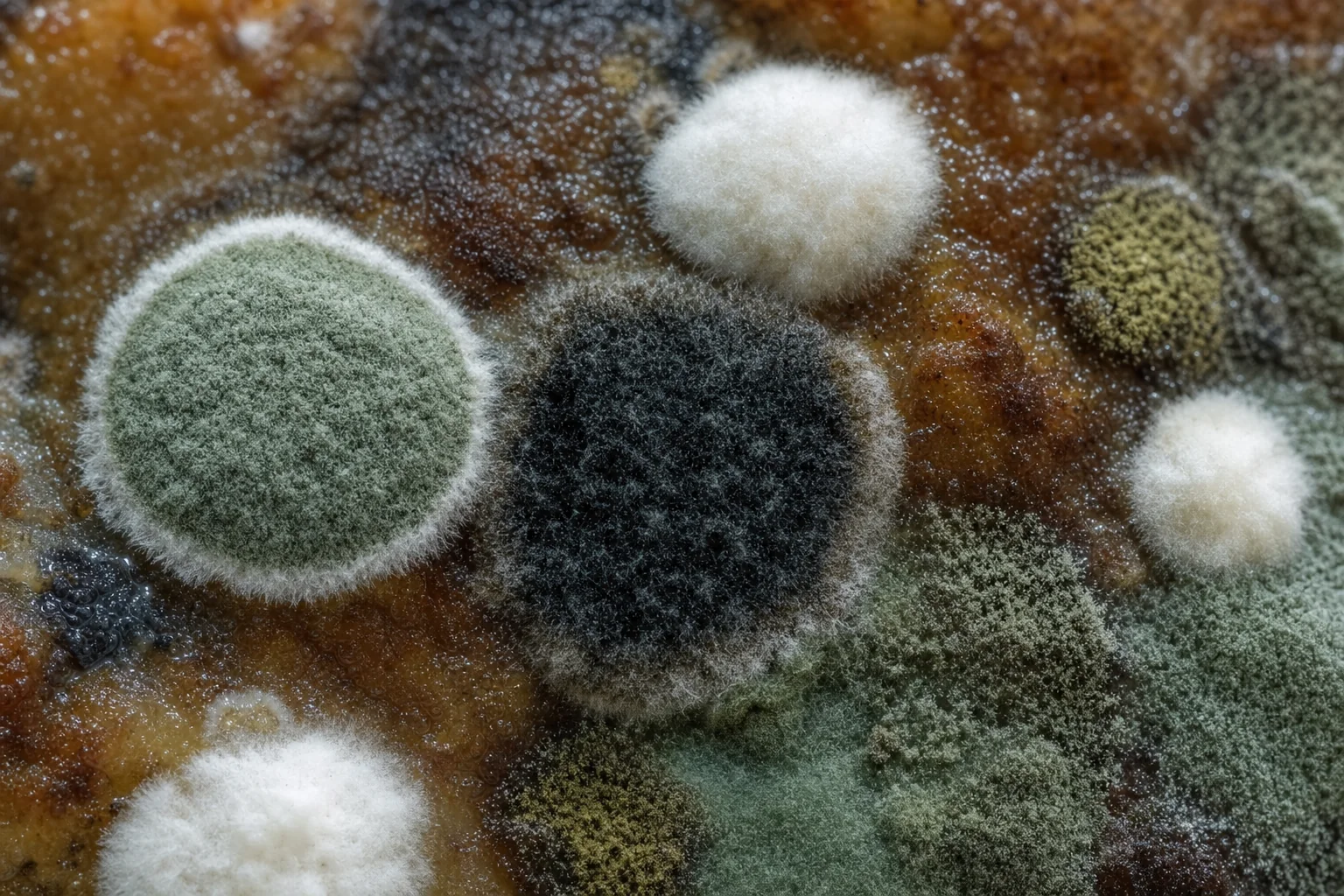
Black Mold (Stachybotrys)
The infamous greenish-black mold tied to chronic moisture and water damage; best handled by professionals.
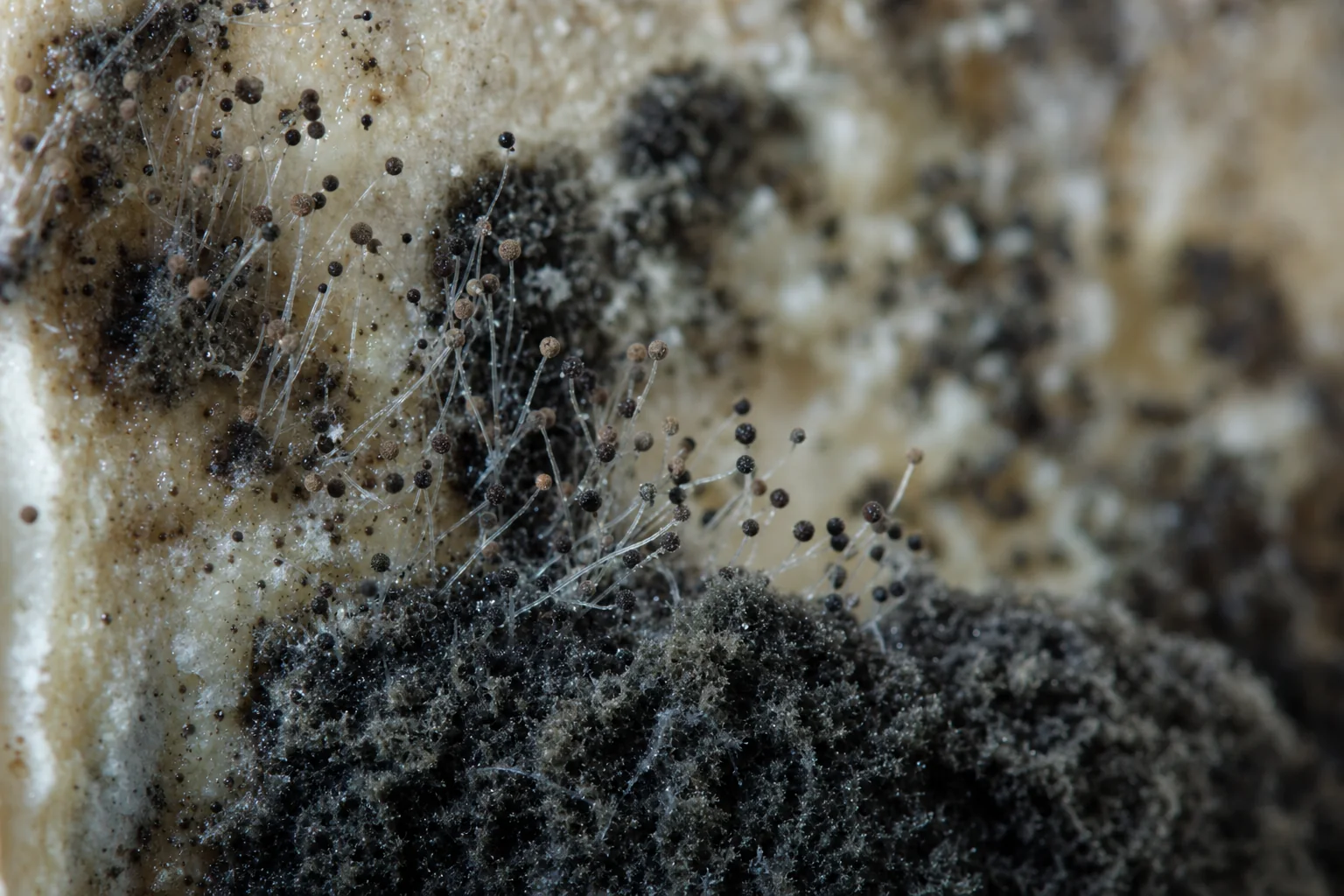
Mold, Explained · Northern Virginia
Mold is a fungus that grows almost anywhere moisture meets organic material — and indoors it can affect both your home and your health. This guide explains what mold is, what causes it, the warning signs, and when it’s time to call a professional. If you suspect mold, AZA Restoration’s certified team is one call away, 24/7. One call rebuilds it all.
Mold is a fungus that grows on damp organic materials and spreads by releasing airborne spores — it can begin colonizing a wet surface in as little as 24–48 hours. Small surface spots under about 10 square feet can sometimes be cleaned by a homeowner; anything larger, recurring, hidden, or tied to water damage should go to a professional. Professional mold removal in Northern Virginia typically runs $500–$6,000.
What Mold Is & Why It Matters
Where Mold Comes From
Slow drips under sinks, behind walls, or around fixtures keep materials wet enough for mold to thrive.
Storm water, burst pipes, and basement floods soak materials that breed mold within 24–48 hours.
Humidity above 60% — common in muggy NoVA summers — gives mold all the moisture it needs.
Bathrooms, kitchens, and laundry rooms without proper airflow trap steam and moisture indoors.
Cold windows, pipes, and walls collect condensation that feeds mold on nearby surfaces.
Dark, damp, poorly sealed crawlspaces and basements are some of the most common mold hotspots.
Know What You’re Dealing With
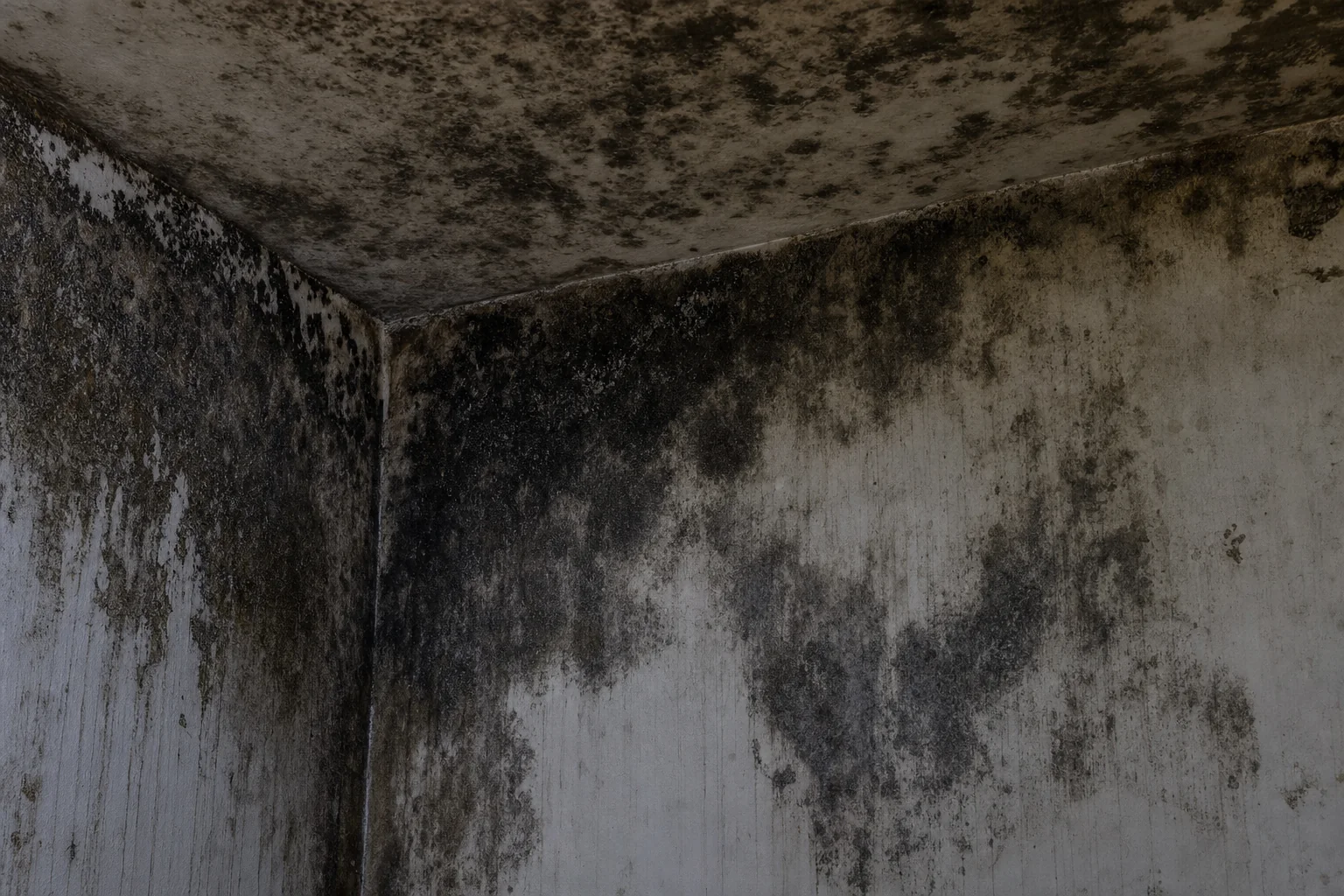
The infamous greenish-black mold tied to chronic moisture and water damage; best handled by professionals.
A very common indoor mold found on walls, insulation, and HVAC systems; some species can affect the lungs.
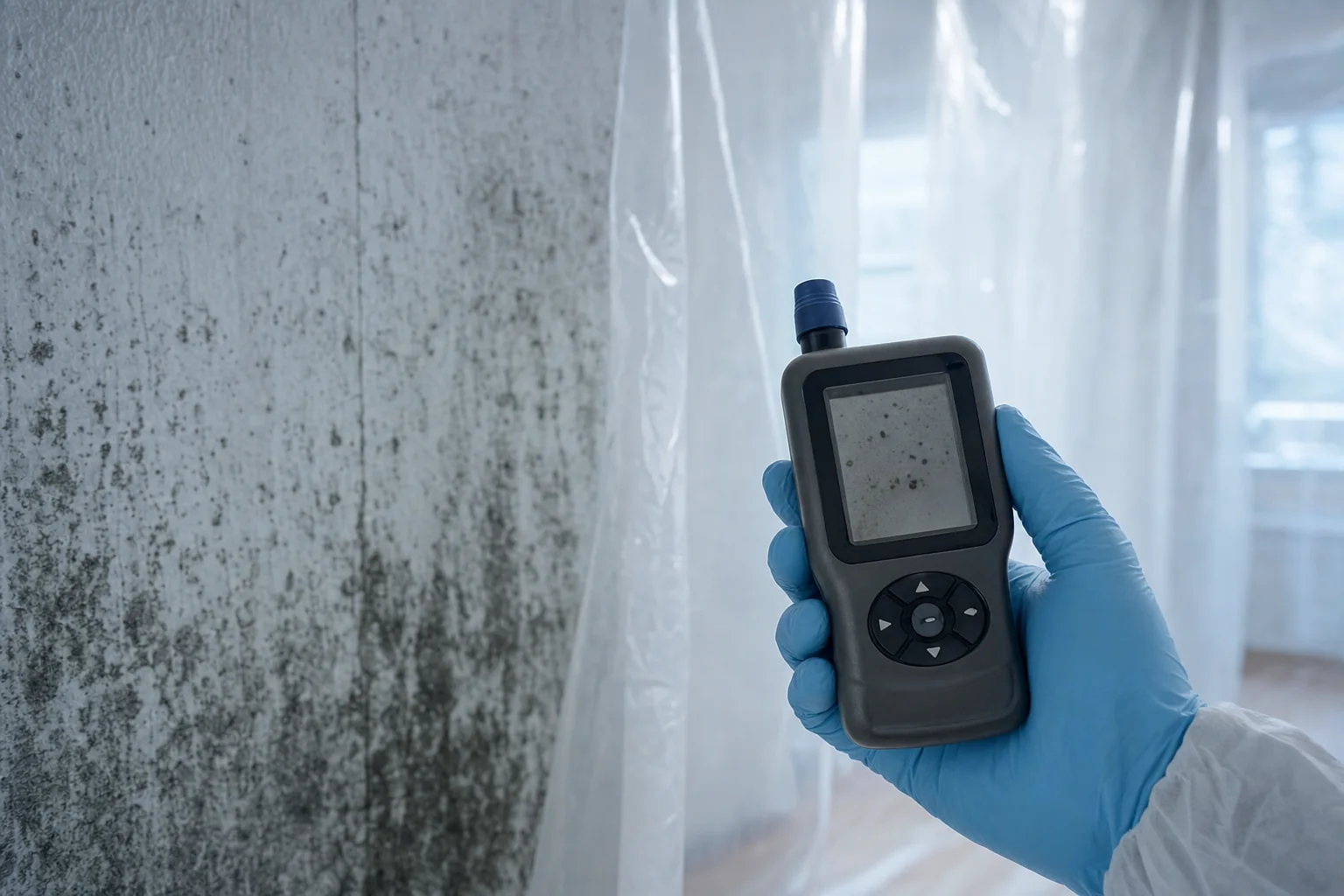
An olive-green to brown mold that grows on fabrics, carpets, and wood, indoors and out, year-round.
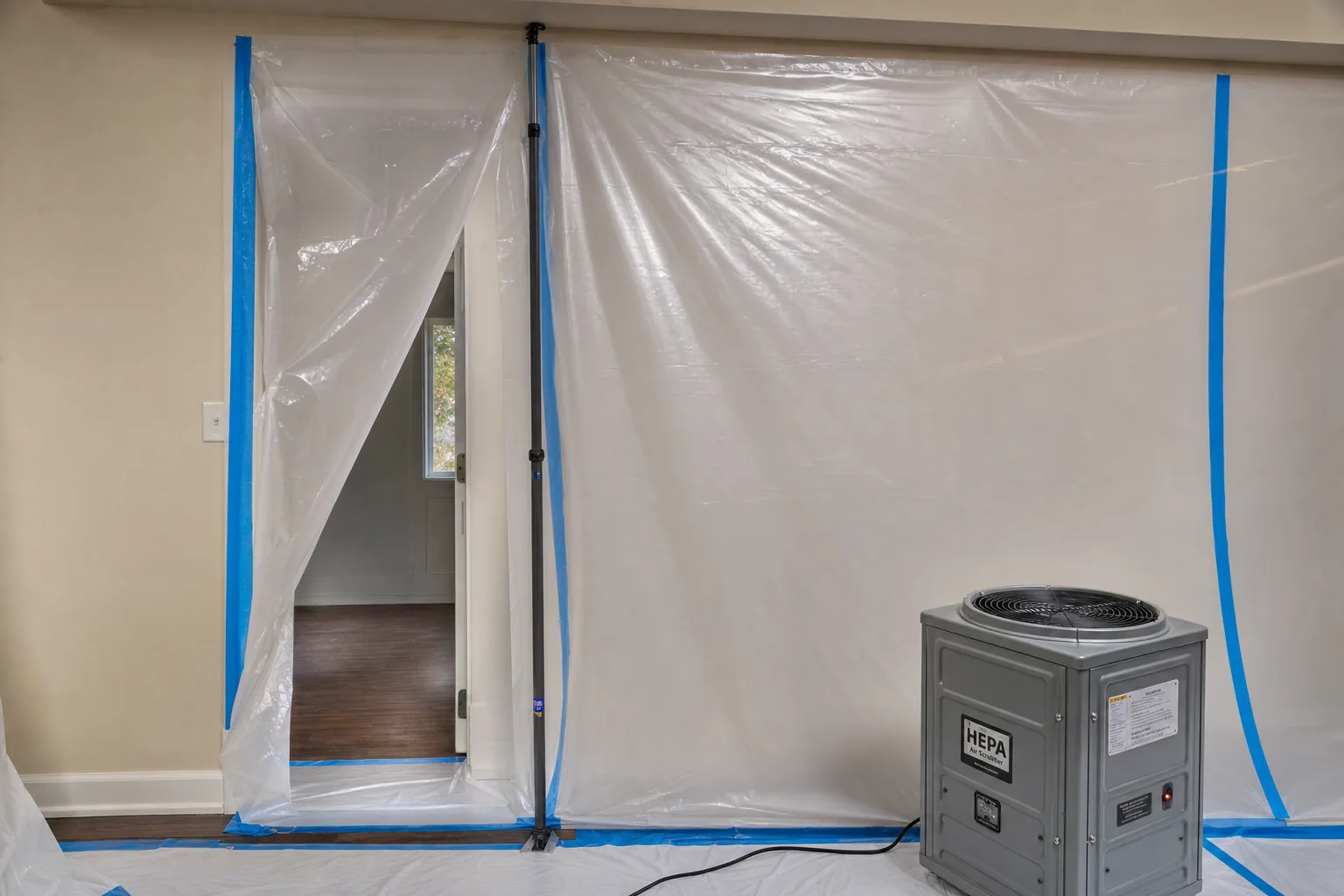
A blue-green mold that spreads quickly across water-damaged materials and is a frequent allergy trigger.
A fuzzy dark mold often found in showers, sinks, and damp spots; a well-known cause of allergic reactions.
You can’t identify a mold’s risk by color or sight alone. When in doubt, have AZA Restoration test and assess it.
Don’t Ignore the Clues
Mold often hides before you ever see it. If you notice any of these signs in your Northern Virginia home, it’s worth getting it checked.
Mold Inspection & Remediation Across Northern Virginia
From a musty basement in Fairfax to a leaky crawlspace in Loudoun or a humid attic in Prince William, AZA Restoration’s certified mold experts inspect, test, and remediate across every Northern Virginia county and city.
Why Northern Virginia Homeowners Trust Us
Certified and trained mold technicians who identify the moisture source first — so mold doesn’t just come back after it’s removed.
Free, no-pressure mold inspections with clear, honest assessments — we tell you what we find and what it actually needs.
A full-service, Class A licensed contractor that handles inspection, remediation, and repairs — and bills your insurance directly.
What Is Mold? FAQs
Most mold removal in Northern Virginia runs $500-$6,000, with larger or hidden infestations costing more. See our mold remediation service for a free assessment.
Small surface spots under about 10 square feet can often be cleaned yourself. Anything larger, recurring, behind walls, or tied to water damage should be handled professionally so the moisture source is found and fixed.
Mold is a type of fungus that grows in damp, humid conditions and feeds on organic materials like wood, drywall, fabric, and dust. It reproduces by releasing microscopic spores into the air, which then settle and grow on any surface with enough moisture. Indoors, mold most often appears after leaks, flooding, or chronic high humidity.
No — most household molds are not “toxic,” but many can still cause allergic reactions, asthma flare-ups, and respiratory irritation, especially in children, older adults, and people with sensitivities. Because you can’t judge a mold’s risk by its color or appearance, any significant indoor growth should be assessed and removed safely.
Mold can begin growing in as little as 24–48 hours once a surface stays wet, which is why fast cleanup after any water damage is so important. Within a few days to a week, a small colony can spread across walls, flooring, and into hidden areas like wall cavities and ductwork.
Small surface spots (under about 10 square feet) on non-porous surfaces can sometimes be cleaned by a homeowner with proper protection. But larger areas, hidden growth, mold in HVAC systems, or mold from contaminated water should be handled by professionals — DIY attempts often spread spores and leave the underlying moisture problem unsolved.
Call a professional if you see mold covering more than a small area, smell a persistent musty odor, have had water damage, notice mold returning after cleaning, or have household members with allergies or breathing issues. AZA Restoration offers free mold inspections and certified remediation, 24/7, across Northern Virginia. One call rebuilds it all.
Yes — AZA Restoration serves all of Northern Virginia: Fairfax, Loudoun, Prince William, Stafford, Fauquier, and Arlington counties, plus Alexandria, Falls Church, Herndon, Manassas, and Manassas Park. Call (571) 506-6668 to schedule a free mold inspection.
Think You Have Mold?
Talk to a live AZA Restoration mold expert right now. We’ll answer your questions, schedule a free inspection, and handle remediation and repairs from start to finish across Northern Virginia.
(571) 506-6668Live experts answer 24 hours · 7 days a week · 365 days a year