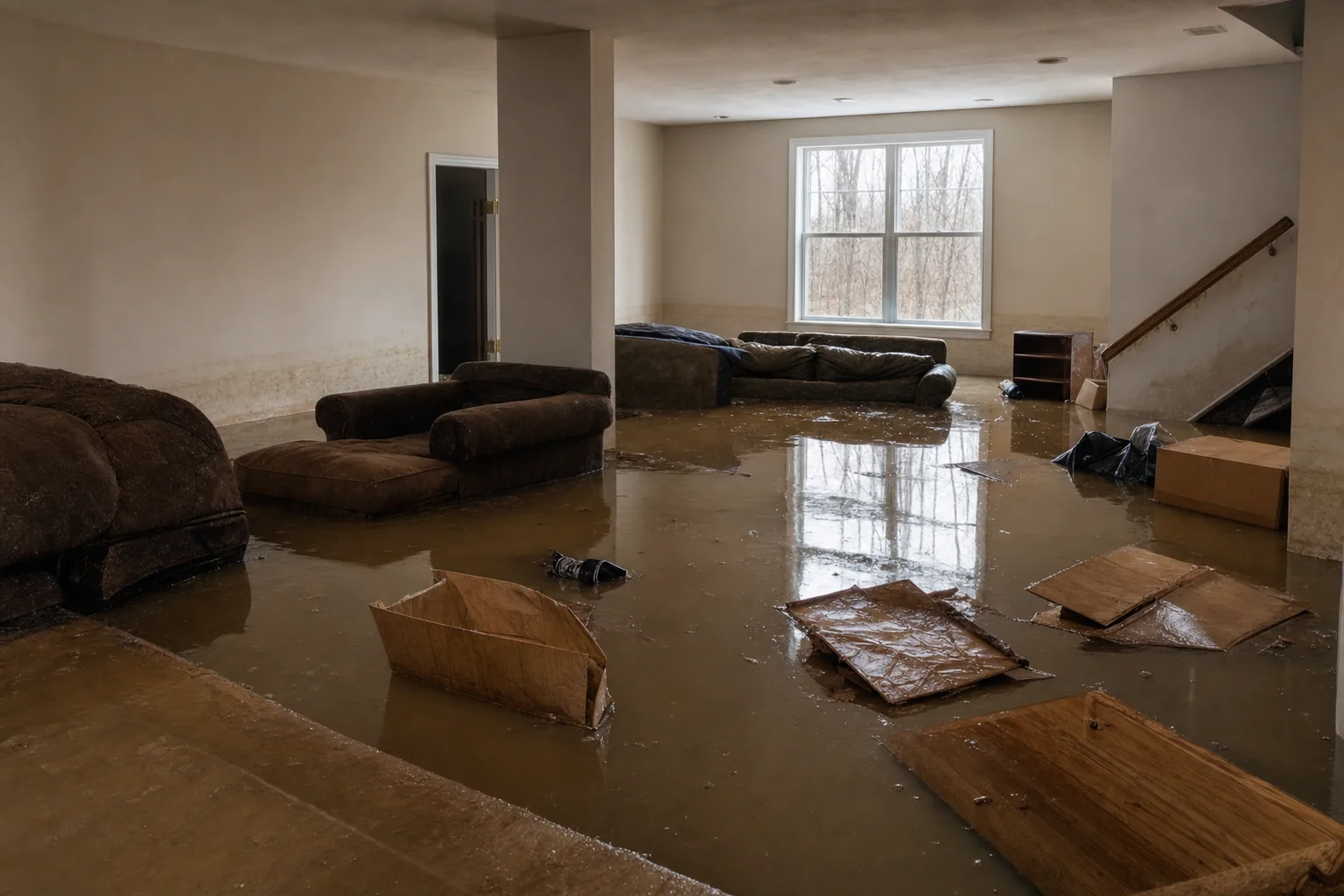
Basement flooding cleanup in Northern Virginia typically starts within the first 24 to 48 hours after water enters the space, and a properly handled job moves through four stages: emergency water extraction, structural drying, sanitizing, and repair or reconstruction. For a localized basement flood, most Northern Virginia homeowners pay roughly $1,200 to $5,500, while a major event involving finished walls, flooring, and contents can run $8,000 to $25,000 or more. The single most important factor is speed: standing water that sits for more than 48 hours begins to migrate into drywall, framing, and subfloor, and it creates the warm, damp conditions where mold colonizes within 24 to 72 hours. This guide explains why basements flood in our region, what professional cleanup actually involves, what it costs, and how to keep it from happening again.
Basements are the lowest point in your home, which makes them the natural collection point for water. In Northern Virginia, that water comes from a specific and predictable set of sources tied to our clay-heavy soils, our high water table near rivers and creeks, and the intense summer storms that roll through Fairfax, Loudoun, and Prince William counties. Understanding the cause is the first step in both cleaning up correctly and preventing the next flood.
Why Do Basements Flood in Northern Virginia?
Basement flooding in Northern Virginia is driven by a combination of regional geography, aging infrastructure, and heavy seasonal rainfall. The Potomac, Occoquan, and Bull Run watersheds, along with countless smaller creeks, keep groundwater levels high across much of the area. Our soils are dense clay that drains slowly, so after a heavy rain, water pools against foundation walls and pushes inward under hydrostatic pressure rather than soaking away. When you combine that with the violent summer thunderstorms and the occasional tropical-storm remnant that tracks up the I-95 corridor, basements take the brunt of it.
Here are the most common causes we see when we respond to basement flooding calls across the region:
- Hydrostatic pressure and foundation seepage. Saturated clay soil presses water through cracks in foundation walls, cold joints, and the cove where the wall meets the floor slab. This is the most common source of recurring basement water in older Fairfax and Arlington homes.
- Sump pump failure. A sump pump that fails during a storm, loses power, or simply wears out is one of the leading causes of catastrophic basement flooding. Power outages during storms make this worse precisely when the pump is needed most.
- Sewer and drain backups. Heavy rain overwhelms municipal and combined storm-sewer systems, forcing contaminated water back up floor drains and toilets. This is Category 3 "black water" and requires specialized handling.
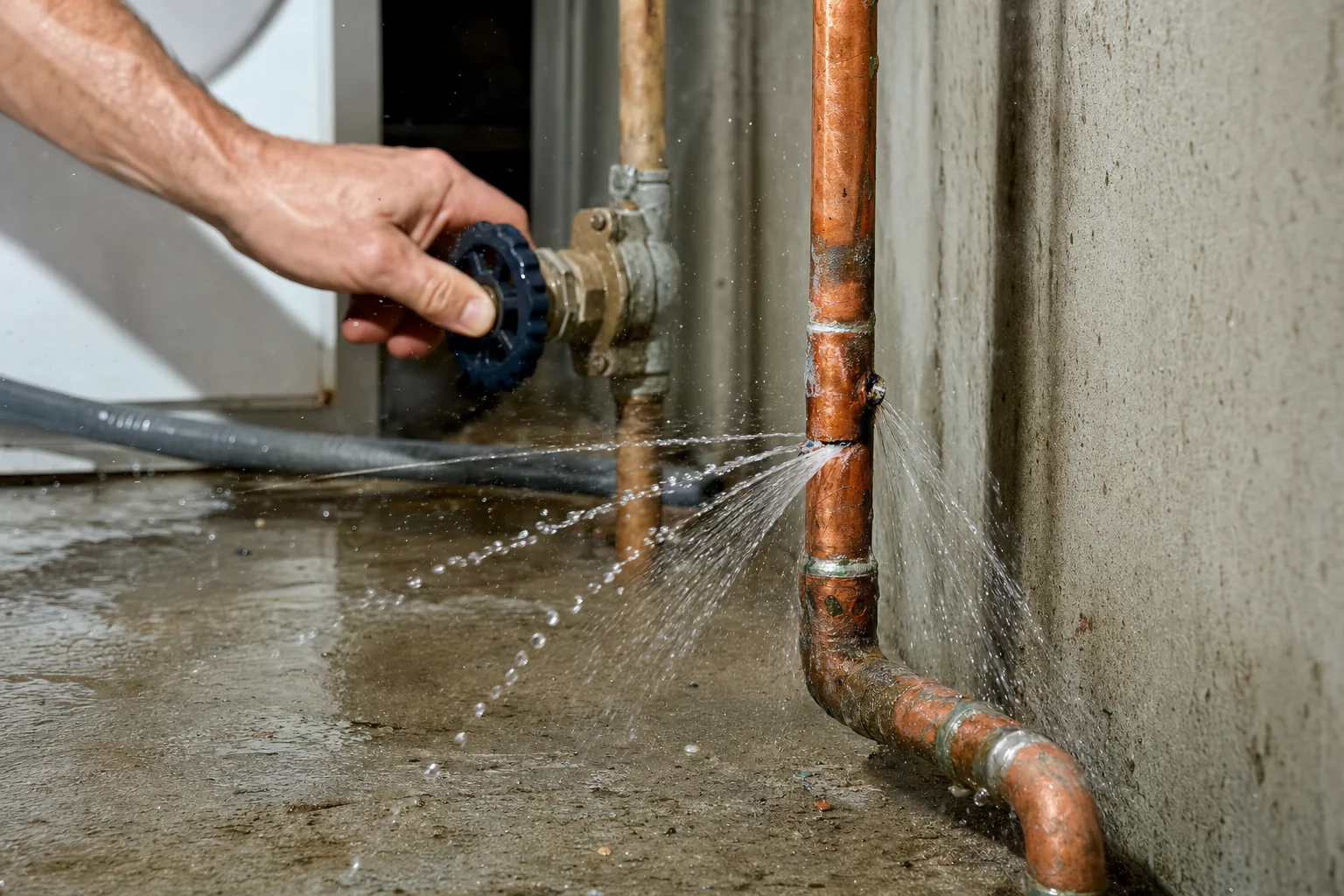
- Plumbing failures. Burst pipes, failed water heaters (often located in the basement), and leaking supply lines can dump hundreds of gallons before anyone notices.
- Surface water and grading problems. Downspouts that discharge against the foundation, negative grading that slopes toward the house, and clogged gutters all funnel rainwater straight to the basement walls.
- Window well flooding. Below-grade window wells fill during downpours and leak through the window frame if drains are clogged or missing.
Identifying the source matters because it determines the water category, the cleanup protocol, and whether the problem is likely to recur. A burst supply line is clean water and a one-time event; a sewer backup is hazardous and signals a systemic drainage issue that needs to be addressed during the repair phase.
Is the Water Clean, Gray, or Black? Understanding Water Categories
Restoration professionals classify floodwater into three categories, and the category dictates everything that follows. This is not a technicality. It governs what can be saved, what must be discarded, and how the space must be sanitized to be safe for your family.
| Category | Source | What It Means |
|---|---|---|
| Category 1 (Clean) | Burst supply line, water heater, rainwater seepage (initially) | Sanitary at the source. Most materials can be dried and saved if addressed quickly. |
| Category 2 (Gray) | Washing machine discharge, dishwasher overflow, sump pump overflow | Contains contaminants. Carpet pad and porous materials usually discarded; surfaces sanitized. |
| Category 3 (Black) | Sewage backup, river/creek floodwater, storm surge | Grossly contaminated and hazardous. Porous materials are removed; aggressive disinfection required. |
Two important points homeowners often miss. First, water degrades over time. Clean Category 1 water that sits for 48 hours becomes Category 2 as it absorbs contaminants and bacteria begins to grow. This is another reason fast response matters. Second, any flood that contacts sewage or natural floodwater is automatically Category 3 and falls under our flood damage restoration protocols, which include containment, controlled removal of contaminated materials, and verified disinfection before rebuilding begins.
What to Do Immediately When Your Basement Floods
The first hour matters more than any other. Acting quickly protects your safety, limits the damage, and strengthens your insurance claim. Follow these steps in order:
AZA Restoration answers 24/7 with a guaranteed 90-minute on-site response across Fairfax, Loudoun, Prince William, Stafford, Fauquier, and Arlington counties — plus Alexandria, Falls Church, Herndon, Manassas, and Manassas Park. We bill your insurance directly.
Call (571) 506-6668- Protect yourself from electrical hazards. Do not enter standing water in a basement that has live electrical outlets, a furnace, or a water heater. If you can safely reach the breaker panel without standing in water, shut off power to the basement. If you cannot, stay out and call an electrician or the utility.
- Identify and stop the source if you safely can. Shut off the main water valve for a plumbing leak. For groundwater or sewer backups, there is nothing to shut off, so move to the next step.
- Call a restoration professional. The sooner extraction begins, the more you save. AZA Restoration provides 24/7 emergency response with a guaranteed 90-minute on-site arrival across Northern Virginia. Call (571) 506-6668.
- Document everything for insurance. Photograph and video the water level, damaged contents, and the source before anything is moved or removed. This documentation is critical for your claim.
- Move valuables and lift what you can. If it is safe, move electronics, documents, and valuables to a dry upper floor and lift furniture off the wet floor onto blocks.
- Do not use household fans or shop vacuums on Category 2 or 3 water. Spreading contaminated water or aerosolizing sewage creates a health hazard. Leave hazardous water to trained specialists with proper equipment and personal protective equipment.
One thing to resist: the urge to "just dry it out yourself." Surface water you can see is only part of the problem. Water wicks up drywall, travels under flooring, and saturates the wall cavity and sill plate where you cannot see it. Without moisture meters and thermal imaging, hidden saturation goes undetected and becomes a mold problem weeks later.
The Professional Basement Flooding Cleanup Process, Step by Step
Professional water damage restoration follows a disciplined sequence built around industry restoration standards. Here is what actually happens when our crew arrives at a flooded basement.
1. Inspection and Water Category Assessment
The crew first assesses the water category and the extent of migration. Using moisture meters and thermal imaging cameras, we map exactly how far the water has traveled into walls, framing, and subfloor. This map drives every decision that follows and is documented for your insurer.
2. Water Extraction
Truck-mounted and portable extraction units remove standing water fast, often thousands of gallons in the first few hours. Submersible pumps handle deep water; weighted extraction tools pull water from carpet and padding. Getting standing water out quickly is the single biggest lever on the final repair bill.
3. Removal of Unsalvageable Materials
Saturated carpet pad, swollen baseboards, wet insulation, and drywall that has wicked water above the flood line are removed and bagged. We typically make a clean horizontal flood cut in drywall a foot or two above the waterline so the wall cavity can dry and the rest of the drywall stays intact. For Category 3 events, all porous contacted materials come out.
4. Structural Drying and Dehumidification
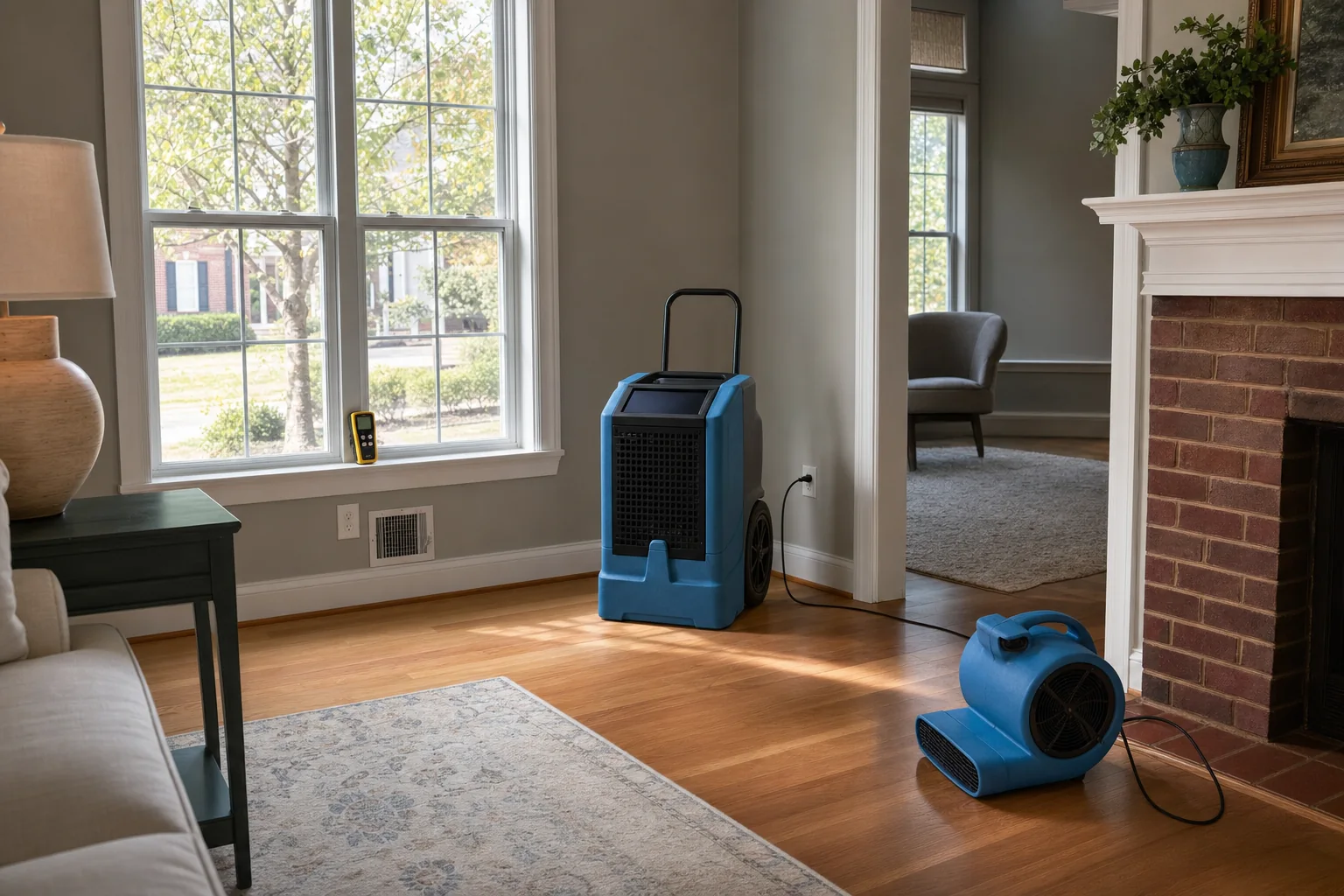
This is where professional equipment separates a real recovery from a future mold problem. We position air movers to create directed airflow and place commercial dehumidifiers (often LGR or desiccant units) to pull moisture out of the air and out of the structure. Drying a basement to a verified dry standard typically takes 3 to 5 days, and we monitor moisture readings daily, adjusting equipment until the framing and subfloor reach documented dry targets.
5. Cleaning, Sanitizing, and Deodorizing
Once dry, all affected surfaces are cleaned and treated with antimicrobial agents to prevent mold growth. Category 2 and 3 jobs receive full disinfection and odor control. If contents were affected, our pack-out service catalogs, cleans, and stores salvageable items off-site.
6. Repair and Reconstruction
Finally, we put the basement back. Because AZA Restoration is a licensed general contractor as well as a restoration company, we handle the rebuild in-house: new drywall, paint, flooring, trim, and any structural repairs. There is no second contractor to coordinate, which is the meaning behind our slogan, "One call rebuilds it all."
Basement flooding right now? Every hour standing water sits, the damage and the cost grow. AZA Restoration responds 24/7 with a guaranteed 90-minute on-site arrival and bills your insurance directly. Call (571) 506-6668 for immediate help anywhere in Northern Virginia.
How Much Does Basement Flooding Cleanup Cost in Northern Virginia?
Basement flooding cleanup in Northern Virginia generally costs between $1,200 and $5,500 for a localized flood and $8,000 to $25,000 or more for a major, whole-area event involving finished walls, flooring, and significant reconstruction. The final figure depends on four things: the volume of water, the water category, the square footage affected, and whether the basement is finished or unfinished. The ranges below are typical market figures, not specific quotes.
| Scenario | Typical Cost Range | Typical Timeline |
|---|---|---|
| Localized clean-water flood (small area, fast response) | $1,200 – $5,500 | 3 – 5 days drying |
| Major / whole-basement flood with reconstruction | $8,000 – $25,000+ | 1 – 3 weeks total |
| Sewage or storm-water (Category 3) flood | $3,000 – $15,000+ | 5 – 10 days cleanup + dry |
| Mold remediation (if flood was not addressed in time) | $500 – $6,000 (hidden/widespread can exceed $10,000) | 1 – 5 days |
| Single-room finished-basement reconstruction | From ~$10,000 | 2 – 4 weeks |
The biggest cost driver is time. A clean-water flood caught within hours and dried properly stays at the low end. The same flood ignored for a week becomes a contaminated, mold-laden tear-out at the high end. This is precisely why our 90-minute response exists: speed is the cheapest variable in the entire equation.
Does Insurance Cover Basement Flooding?
It depends on the source. Sudden, accidental water damage from an internal source, such as a burst pipe or a failed water heater, is typically covered by standard homeowners insurance. Damage from external flooding, meaning surface water and rising creeks or rivers, is generally not covered by a standard policy and requires separate flood insurance through the National Flood Insurance Program or a private flood policy. Sewer backups are often covered only if you carry a specific sewer-backup endorsement. AZA Restoration works directly with all major insurers and bills your carrier directly, which removes a major source of stress during an already difficult time. We document moisture readings, photos, and scope so your adjuster has everything needed to approve the claim.
Repair vs. Replace: What Can Be Saved After a Basement Flood?
One of the most common questions homeowners ask is whether their flooring, drywall, and belongings can be salvaged or must be replaced. The honest answer depends on the water category and how long materials stayed wet. Here is the general rule of thumb our crews use in the field.
| Material | Clean Water (Cat 1), Fast Response | Contaminated or Prolonged Exposure |
|---|---|---|
| Carpet | Often salvageable; pad usually replaced | Replace (both carpet and pad) |
| Drywall | Dry in place if wicking is minor | Flood-cut and replace affected sections |
| Hardwood flooring | Sometimes saved with specialized drying | Replace |
| Engineered/laminate flooring | Usually replaced once swollen | Replace |
| Framing/studs | Dry and save | Dry and save if structurally sound; sanitize |
| Insulation (fiberglass/foam) | Usually replaced once wet | Replace |
| Upholstered furniture | Often salvageable with cleaning | Usually discarded |
The principle is simple: non-porous and semi-porous materials can usually be cleaned, dried, and saved. Porous materials that absorbed contaminated water cannot be reliably sanitized and are replaced. A trained restoration specialist makes these calls with moisture data, not guesswork, and documents each decision for your insurer so there are no disputes later.
Do You Need a Permit to Rebuild a Flooded Basement in Virginia?
It depends on the scope of the work. Like-for-like repairs, such as replacing drywall, painting, drying the structure, and installing the same type of flooring, are generally exempt from permit requirements. However, work that touches structure, electrical, or plumbing systems requires a permit under the Virginia Uniform Statewide Building Code (USBC), issued by the relevant county or city building office. In Fairfax County, that is Land Development Services; Loudoun, Prince William, and Arlington have their own permitting offices.
For a finished basement that took on significant water, the rebuild often involves moving or replacing wiring, GFCI outlets, or plumbing for a basement bathroom, all of which trigger permit and inspection requirements. As a Class A licensed restoration and general contractor, AZA Restoration pulls the required permits, coordinates inspections, and builds to current code, so your rebuilt basement is both safe and properly documented. This protects you at resale and ensures the work passes muster with your insurer. Skipping permits to save time is a false economy that can create serious problems when you sell the home.
How Do You Prevent Basement Flooding in Northern Virginia?
The best basement flood is the one that never happens. Because our region's clay soils and high water table make groundwater intrusion a chronic risk, prevention is about controlling water before it reaches the foundation and having a backup for when it does. Here are the measures that deliver the most protection for the cost.
Manage Surface Water Around the Foundation
- Extend downspouts at least 4 to 6 feet away from the foundation, or further on a sloped lot. This single step prevents a surprising share of seepage problems.
- Fix the grading so soil slopes away from the house. Negative grading that funnels water toward the foundation is a leading cause of chronic seepage in NoVA homes.
- Clean gutters at least twice a year, especially after the heavy spring and fall leaf drops, so they actually carry water away instead of overflowing against the wall.
Protect the Interior Drainage System
- Install or maintain a sump pump and test it before storm season. A pump that has not run in months can seize when you need it most.
- Add a battery or water-powered backup pump so the system keeps working when storm-related power outages hit, which is exactly when basement flooding peaks.
- Install a backwater valve on the sewer line if your home has experienced sewer backups, to prevent municipal-system overflows from entering your basement.
Seal and Monitor the Foundation
- Seal visible foundation and cove cracks and address window-well drainage before they become entry points.
- Install water sensors and a smart water-shutoff near the water heater, sump pit, and laundry to catch leaks early.
- Keep stored items off the floor on shelving so a minor intrusion does not become a major loss.
For homeowners in our western and southern service areas, prevention is especially important given proximity to creeks and the Occoquan watershed. We see this firsthand in communities like Burke, where mature trees, clay soils, and storm runoff combine to put steady pressure on basement foundations. You can learn more about our work in this community on our Burke service area page, and our Burke single-family basement flood case study walks through a real recovery from extraction through reconstruction.
Why the First 48 Hours Decide Everything
If there is one idea to take from this guide, it is that basement flooding is a race against the clock. Mold begins to colonize within 24 to 72 hours of materials staying wet. Clean water turns contaminated within 48 hours. Drywall, framing, and subfloor that could have been dried in place become tear-and-replace work once saturation sets in. The difference between a $2,000 cleanup and a $20,000 reconstruction is very often nothing more than how quickly the water came out and the drying began.
That is the entire logic behind our guaranteed 90-minute on-site arrival across Northern Virginia. Trained restoration specialists, truck-mounted extraction, and commercial drying equipment on site within an hour and a half is what keeps your flood at the low end of the cost range and your home free of mold. Combined with direct insurance billing and in-house reconstruction, it means one call handles the entire problem from the first wet step to the final coat of paint.
Don't wait for the water to spread. AZA Restoration is Class A licensed, fully insured, and available 24/7 with a guaranteed 90-minute response throughout Fairfax, Loudoun, Prince William, Stafford, Fauquier, and Arlington counties. We extract, dry, sanitize, and rebuild, and we bill your insurance directly. Call (571) 506-6668 now. One call rebuilds it all.
Frequently Asked Questions
How long does it take to clean up a flooded basement?
For a localized clean-water basement flood, structural drying typically takes 3 to 5 days, with extraction and cleanup completed on the first day. A major flood involving sewage, extensive contamination, or significant reconstruction can take 1 to 3 weeks from start to finish. The drying phase cannot be rushed safely; materials must reach verified dry standards before rebuilding begins, or hidden moisture will cause mold and structural problems later.
Will mold grow after a basement flood?
Mold can begin to colonize within 24 to 72 hours of materials staying wet, which is why fast professional drying is critical. If a basement is extracted and dried to verified dry standards within the first day or two and treated with antimicrobial agents, mold growth is usually prevented. If water sits for several days or hidden moisture is left in wall cavities and subfloor, mold remediation often becomes necessary, adding $500 to $6,000 or more to the total cost.
Does homeowners insurance cover basement flooding in Virginia?
It depends on the source. Sudden internal water damage, such as a burst pipe or failed water heater, is typically covered by standard homeowners insurance. External flooding from surface water, creeks, or rivers is generally not covered and requires separate flood insurance through the National Flood Insurance Program or a private policy. Sewer backups are usually covered only with a specific endorsement. AZA Restoration bills insurance directly and documents the loss thoroughly to support your claim.
Can I clean up a flooded basement myself?
You can handle a very minor clean-water intrusion if you act immediately and have a wet/dry vacuum and fans, but most basement floods require professional equipment. Surface water you can see is only part of the problem; water wicks into drywall, framing, and subfloor where it cannot be detected without moisture meters and thermal imaging. Never attempt to clean up gray or black water yourself, as sewage and contaminated floodwater pose serious health hazards that require trained specialists and protective equipment.
Why does my basement flood every time it rains heavily?
Recurring basement flooding during heavy rain almost always points to hydrostatic pressure, poor surface drainage, or a failing sump pump. In Northern Virginia, dense clay soils hold water against the foundation and force it through cracks and the wall-floor cove. The fixes usually combine exterior drainage corrections such as extended downspouts and regrading, interior measures such as a sump pump with battery backup, and sealing foundation cracks. A restoration and general contractor can diagnose the specific cause and address it during the repair phase.
What is the difference between water damage restoration and flood restoration?
Water damage restoration generally addresses clean or gray water from internal sources like burst pipes, while flood restoration handles external floodwater and sewage, which is Category 3 contaminated water requiring containment, controlled removal of porous materials, and verified disinfection. The cleanup steps overlap, but flood restoration involves stricter safety protocols and more material removal. AZA Restoration provides both, along with the in-house reconstruction needed to put your basement back together afterward.