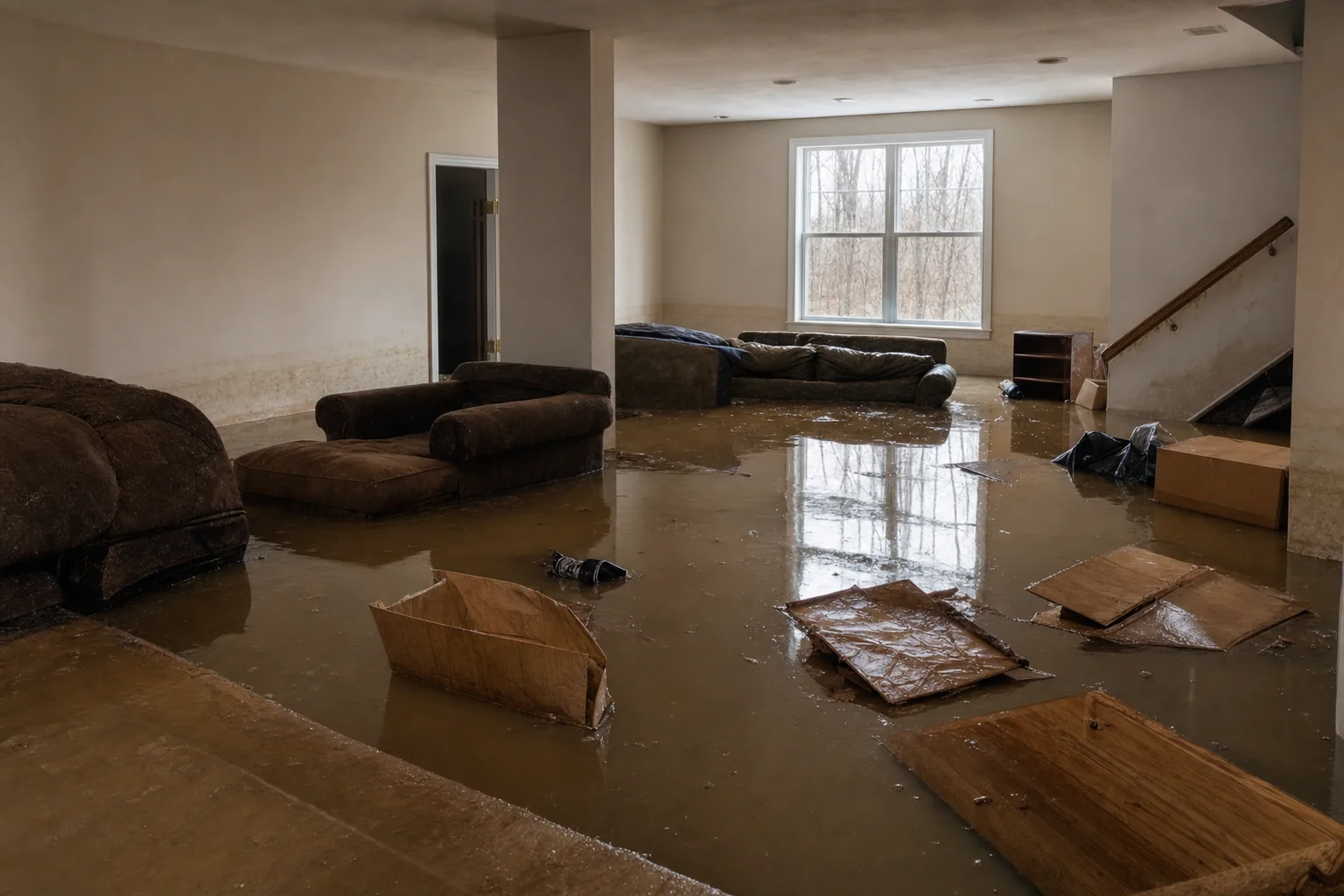
In the first 24 hours after a burst pipe, shut off your home's main water supply, cut electricity to affected areas, and call a 24/7 restoration team to begin water extraction and structural drying immediately. Acting within that first day is the single biggest factor in whether you face a $1,200 localized repair or an $8,000-to-$25,000 whole-home reconstruction. Water spreads fast, drywall wicks moisture upward within hours, and mold can begin colonizing damp materials in as little as 24 to 48 hours. This guide walks you through exactly what to do after a burst pipe, in the right order, with a Northern Virginia homeowner in mind.
At AZA Restoration, we respond to burst-pipe emergencies across Fairfax, Loudoun, Prince William, Stafford, Fauquier, and Arlington counties year-round. The steps below are the same triage sequence our trained restoration specialists follow on every call, adapted so you can start protecting your home before help arrives.
What Should You Do in the First Five Minutes After a Pipe Bursts?
The first five minutes matter more than any other part of the timeline. A half-inch supply line under city pressure can release several hundred gallons of water per hour. Your immediate job is to stop the flow and remove electrical hazards, in that order.
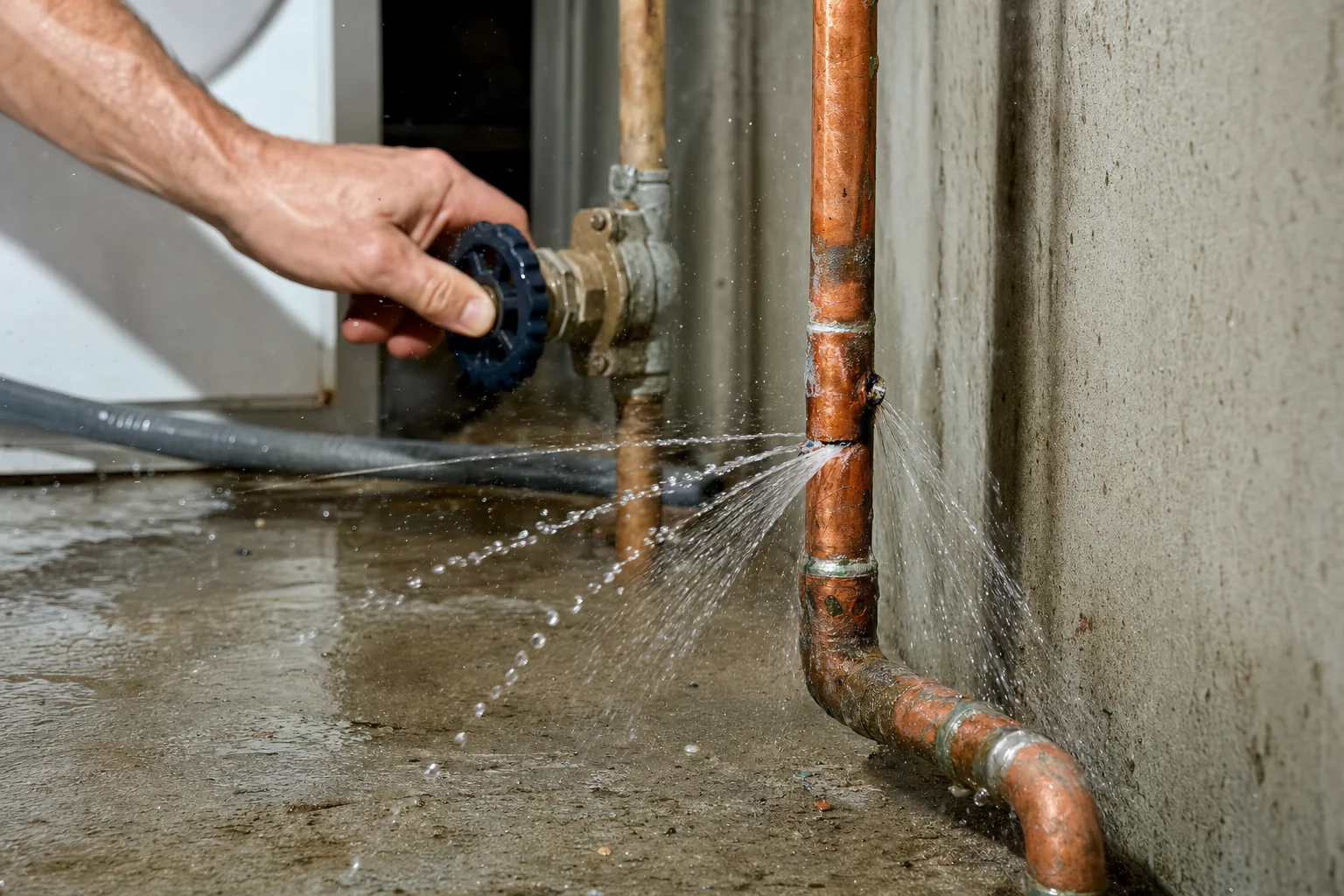
Step 1: Shut Off the Main Water Supply
Locate your home's main water shutoff valve and turn it clockwise until it stops. In most Northern Virginia homes, the main valve sits where the water line enters the house, commonly in the basement, a utility closet, the garage, or near the water heater. Homes on crawl spaces may have the valve closer to the front foundation wall. If the burst is isolated to one fixture, such as a toilet or sink, you can use the smaller local shutoff valve at that fixture instead, but when in doubt, shut off the main. Knowing where this valve is before an emergency happens can save you thousands of dollars, so locate it today if you do not already know.
Step 2: Cut the Power to Affected Areas
Water and electricity are a lethal combination. If water is near outlets, light fixtures, your electrical panel, or any appliance, switch off the relevant breakers at your electrical panel before stepping into standing water. If the panel itself is in a flooded area or you would have to stand in water to reach it, do not touch it. Leave the home and call an electrician or your utility. Never wade into standing water that may be energized.
Step 3: Open Faucets to Relieve Pressure
After the main is closed, open a few cold-water faucets and flush a toilet to drain the remaining water out of the pipes. This relieves residual pressure in the system and reduces how much more water leaks from the break while you assess the damage.
How Do You Limit the Damage Before Help Arrives?
Once the water is off and the area is electrically safe, your next priority is containment. Every item you move and every gallon you remove now is something a restoration crew will not have to treat later. Work quickly but safely, and do not put yourself at risk to save belongings.
- Move belongings out of the water. Lift furniture, electronics, rugs, boxes, and anything porous off wet flooring. Place aluminum foil or wood blocks under furniture legs to stop staining and wicking.
- Soak up what you can. Use towels, a mop, or a wet/dry shop vacuum to pull up surface water. Do not use a standard household vacuum.
- Protect documents and valuables. Move photos, paperwork, and irreplaceable items to a dry area immediately, as paper and ink degrade fast.
- Increase airflow. Open windows if the weather is dry, and run fans to start moving air across wet surfaces. This slows mold growth but does not replace professional structural drying.
- Do not remove water from ceilings yourself. A sagging, water-filled ceiling can collapse. Keep people and pets away from it.
One thing not to do: do not start tearing out drywall, pulling up flooring, or running heaters to "dry it out fast." Aggressive heat can drive moisture deeper into materials and warp wood, and uncontrolled demolition can disturb hidden hazards. Leave structural drying to professionals who measure moisture and dry materials in a controlled way.
When Should You Call a Restoration Company?
Call a professional water damage restoration company immediately, even while you are still mopping. The clock on secondary damage and mold starts the moment water touches your materials, and the faster extraction and drying begin, the more of your home you save. You do not need to wait until "morning" or until you have called your insurer first.
AZA Restoration answers 24/7 with a guaranteed 90-minute on-site response across Fairfax, Loudoun, Prince William, Stafford, Fauquier, and Arlington counties — plus Alexandria, Falls Church, Herndon, Manassas, and Manassas Park. We bill your insurance directly.
Call (571) 506-6668AZA Restoration provides 24/7 emergency response with a guaranteed 90-minute on-site arrival anywhere in Northern Virginia. When you call (571) 506-6668, you reach a real team that dispatches a crew with truck-mounted extractors, commercial air movers, and moisture meters. Because we are a full emergency restoration provider and licensed general contractor, the same company that dries your home can also rebuild it, so you are never left coordinating multiple contractors after the water is gone.
Pipe just burst? Do not wait for the damage to spread. Call AZA Restoration now at (571) 506-6668 for 24/7 emergency response, guaranteed 90-minute on-site arrival across Northern Virginia, and direct insurance billing. One call rebuilds it all.
How Does Professional Water Damage Restoration Work?
Understanding the restoration process helps you know what to expect and why speed matters. When our crew arrives, we follow a proven sequence designed to stop damage, dry the structure completely, and prevent mold before it starts.
Inspection and Water Categorization
We first identify the source and category of water. Clean water from a burst supply line is Category 1, gray water from appliances is Category 2, and contaminated water from sewage or prolonged standing is Category 3. The category determines how materials are handled and what must be removed versus dried in place. A fresh burst pipe is usually Category 1, but clean water left sitting for more than 48 hours can degrade to a higher category.
Water Extraction
Standing water is removed first using truck-mounted and portable extraction units. Fast, thorough water extraction and drying is the foundation of a successful restoration, because the less moisture left behind, the less likely you are to face warped subfloors, delaminated hardwood, or hidden mold weeks later.
Structural Drying and Dehumidification
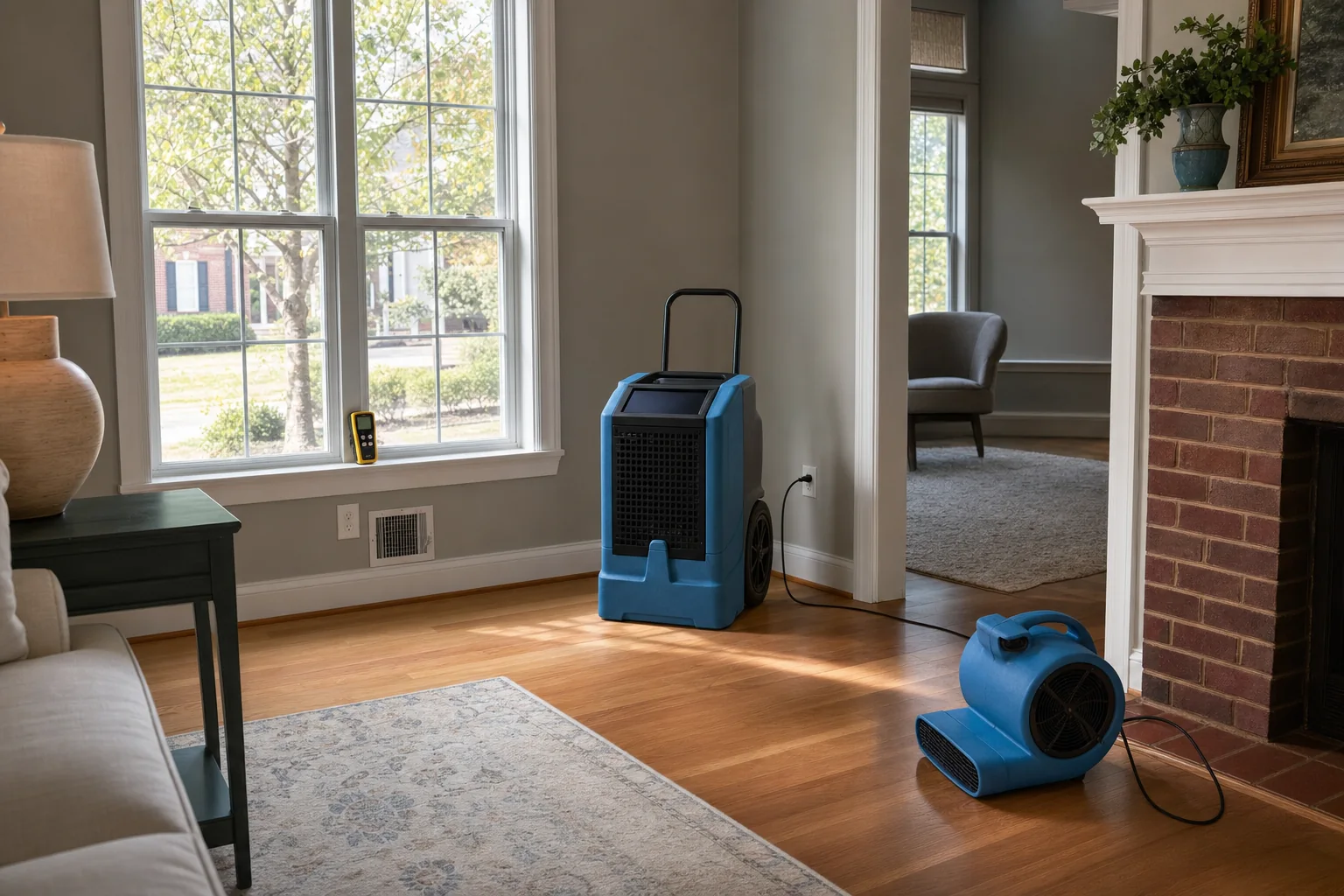
After extraction, we place commercial air movers and dehumidifiers to pull moisture out of drywall, framing, subflooring, and insulation. We use moisture meters and sometimes thermal imaging to find water that has wicked into wall cavities and under flooring where you cannot see it. Structural drying typically takes three to five days, and we monitor moisture readings daily until materials return to a dry, stable standard.
Cleaning, Sanitizing, and Repairs
Once everything is dry, we clean and sanitize affected surfaces, then move into repairs or full reconstruction. This may mean replacing drywall and trim, refinishing or replacing flooring, repainting, and rebuilding any structure that had to be removed. Because AZA Restoration is a Class A licensed general contractor, we handle the rebuild start to finish and build everything back to code.
What Does Burst Pipe Water Damage Cost in Virginia?
The cost of burst pipe restoration depends almost entirely on how far the water spread and how long it sat before drying began. A small, quickly contained leak in one room is dramatically cheaper than water that traveled through multiple floors. The table below shows typical market ranges for water damage restoration in Northern Virginia, framed as ranges rather than fixed quotes.
| Scope of Damage | Typical Market Range | Typical Timeline |
|---|---|---|
| Localized water damage (one room, fast response) | $1,200 – $5,500 | 3 – 5 days drying |
| Major or whole-home water damage | $8,000 – $25,000+ | 5 – 10+ days, plus rebuild |
| Mold remediation (if drying was delayed) | $500 – $6,000 (hidden/widespread $10,000+) | 1 – 5 days |
| Reconstruction (single room to major rebuild) | $10,000 – $100,000+ | Weeks, scope dependent |
These figures illustrate why the first 24 hours are so financially important. A burst pipe caught and dried quickly often lands in the localized range. The same pipe ignored overnight, with water seeping into subfloors and wall cavities, can push into the major or whole-home range and add mold remediation on top. Direct insurance billing, which AZA Restoration offers, also affects your out-of-pocket cost, since most homeowner policies cover sudden and accidental pipe bursts.
Should You Repair or Replace Water-Damaged Materials?
One of the most common questions homeowners ask after a burst pipe is whether damaged materials can be saved or must be replaced. The answer depends on the material, the water category, and how long it stayed wet. Here is a practical breakdown of how restoration professionals make that call.
| Material | Often Salvageable | Usually Replaced |
|---|---|---|
| Drywall | Dried quickly, clean water, no swelling | Swollen, crumbling, or saturated more than 48 hours |
| Hardwood flooring | Minor surface water, dried fast | Cupping, buckling, or gaps after drying |
| Carpet | Clean water, dried within 48 hours, pad replaced | Gray or black water exposure, delamination |
| Insulation | Rarely, if it was only lightly damp | Most wet fiberglass and cellulose insulation |
| Cabinetry | Solid wood, caught early | Particleboard or MDF that swelled |
As a general rule, the faster the drying starts, the more we can save. Materials exposed to clean water and dried within 48 hours have the best odds. Once water sits longer, the line moves toward replacement, and porous materials that contacted contaminated water are removed regardless of timing for health and safety reasons.
Why Do Pipes Burst in Northern Virginia, and When?
Northern Virginia sees a specific pattern of burst-pipe risk driven by the region's climate. Winters here swing between mild spells and sharp cold snaps, and that freeze-thaw cycle is hard on plumbing. Understanding the local causes helps you prevent the next one.
Winter Freezes Are the Top Cause
The most common cause of burst pipes in our service area is freezing. When water inside a pipe freezes, it expands and creates pressure that can rupture the pipe, often where it runs through unheated spaces. The damage frequently does not show until the ice thaws and water gushes out. Pipes in attics, garages, crawl spaces, exterior walls, and basements are the most vulnerable in homes from Arlington and Falls Church out to Loudoun and Fauquier.
Older Plumbing and Pressure Issues
Many established neighborhoods across Fairfax County and the City of Alexandria have older homes with aging galvanized or polybutylene plumbing that becomes brittle and prone to failure. Excessively high water pressure, corrosion, and previously stressed joints also contribute to sudden bursts, sometimes with no warning at all.
How to Prevent the Next Burst Pipe
- Insulate vulnerable pipes in attics, garages, crawl spaces, and along exterior walls with foam pipe sleeves before winter.
- Let faucets drip during hard freezes so moving water resists freezing.
- Keep your thermostat at 55 degrees or higher even when away, and open cabinet doors under sinks on exterior walls to let warm air reach the pipes.
- Disconnect and drain garden hoses in fall and shut off exterior spigots.
- Know your main shutoff location and consider a smart water leak detector that can alert you or shut off automatically.
For homeowners and property managers in dense, high-value areas like Tysons, where a single burst pipe in a multi-story home or condo can affect units below, fast response is especially critical. Our Tysons restoration team is positioned to meet the 90-minute arrival window across the Tysons corridor and surrounding communities.
Do You Need a Permit to Repair Burst Pipe Damage in Virginia?
Whether you need a permit depends on the scope of the work. Like-for-like drying and minor surface repairs, such as drying out walls and repainting, are generally exempt from permitting. However, structural, electrical, or plumbing rebuilds typically require a permit under the Virginia Uniform Statewide Building Code, or USBC.
That permit is issued by the building office for your jurisdiction, such as Fairfax County Land Development Services, the Loudoun County Department of Building and Development, or the relevant city office in Alexandria, Falls Church, Manassas, or Manassas Park. If your burst pipe damaged framing, required new wiring, or involved replacing plumbing, that work must be permitted and inspected. AZA Restoration pulls the required permits and builds everything back to code, so you are not left navigating county permitting offices on your own while recovering from a flood inside your home.
How Insurance Works After a Burst Pipe
Most standard homeowner insurance policies in Virginia cover sudden and accidental water damage from a burst pipe, including the cost of water extraction, drying, and repairs to restore your home. Coverage usually does not extend to damage caused by long-term neglect, such as a slow leak you knew about and ignored, which is one more reason prompt action protects you both physically and financially.
To make your claim go smoothly, follow these steps:
- Document everything before cleanup. Take photos and videos of the standing water, damaged materials, and affected belongings.
- Stop the damage from worsening. Your policy expects you to take reasonable steps to mitigate further loss, which is exactly what shutting off the water and calling a restoration crew accomplishes.
- Call your insurer to open a claim, and keep receipts for any emergency expenses.
- Let your restoration company bill insurance directly. AZA Restoration offers direct insurance billing and works with adjusters using detailed documentation and industry restoration standards, reducing your paperwork and out-of-pocket stress.
Frequently Asked Questions
How quickly does mold grow after a burst pipe?
Mold can begin growing on damp materials within 24 to 48 hours of water exposure. That short window is why immediate water extraction and structural drying are so important. Materials that are dried thoroughly within that period have a much lower chance of developing mold, while water left to sit for several days often leads to remediation costs ranging from $500 to over $6,000.
Should I turn off electricity after a pipe bursts?
Yes. If water has reached outlets, light fixtures, appliances, or your electrical panel, switch off the affected breakers before entering standing water. If you would have to stand in water to reach your panel, do not touch it. Leave the area and call an electrician or utility. Never wade into water that may be electrically charged.
Will my homeowner's insurance cover a burst pipe?
Most standard homeowner policies in Virginia cover sudden and accidental burst pipe damage, including extraction, drying, and repairs. Damage from long-term, known leaks is typically excluded. Document the damage with photos before cleanup, take steps to prevent it from spreading, and open a claim promptly. AZA Restoration offers direct insurance billing to simplify the process.
How long does it take to dry out a house after a burst pipe?
Structural drying after a burst pipe typically takes three to five days for localized damage, and longer for major or whole-home flooding. The exact time depends on how much water spread, the materials affected, and how soon drying began. Professional crews monitor moisture readings daily and continue drying until materials return to a stable, dry standard.
Can I clean up burst pipe water damage myself?
You can and should take immediate steps such as shutting off the water, removing standing water with a wet/dry vacuum, and moving belongings to safety. However, full drying requires commercial air movers, dehumidifiers, and moisture meters to reach water hidden in walls and subfloors. Surface drying alone often leaves hidden moisture that leads to mold and structural damage later, so professional restoration is strongly recommended for anything beyond a minor spill.
Why does the first 24 hours matter so much after a burst pipe?
The first 24 hours determine how far water spreads and whether mold takes hold. Acting fast can keep a burst pipe in the localized $1,200 to $5,500 range, while delay can push it into the $8,000 to $25,000-plus whole-home range and add mold remediation. Fast extraction and drying preserve more of your home's structure and belongings and lower your total cost.
A burst pipe never waits for business hours, and neither do we. AZA Restoration provides 24/7 emergency water damage response across Fairfax, Loudoun, Prince William, Stafford, Fauquier, and Arlington counties, with a guaranteed 90-minute on-site arrival and direct insurance billing. Call (571) 506-6668 now to stop the damage, dry your home, and rebuild it right. One call rebuilds it all.