Most residential water damage restoration takes 3 to 7 days from start to finish, with structural drying alone accounting for 3 to 5 of those days. A small, clean-water leak caught early can be dried and repaired in as little as 2 to 4 days, while major flooding, contaminated water, or jobs that require rebuilding finished surfaces can stretch to 2 to 4 weeks or longer. The honest answer is that "restoration" is really two phases stacked together: the mitigation and drying phase (fast, urgent, measured in days) and the reconstruction phase (slower, measured in days to weeks), and how long each takes depends on how much water there is, what it touched, how contaminated it is, and how quickly the work starts.
At AZA Restoration, we work across Northern Virginia's older neighborhoods and newer subdivisions alike, and the single biggest variable we see is response time. Water that sits for 24 hours behaves very differently than water extracted within the first two hours. Below, we break down the full timeline phase by phase, explain what makes a job faster or slower, and give you the typical ranges so you know what to expect before you call.
What is the typical water damage restoration timeline?
Water damage restoration follows a predictable sequence of stages. Each stage has its own purpose, and skipping or rushing one almost always lengthens the overall project. Here is the standard order of operations our trained restoration specialists follow on virtually every job, from a burst supply line in a Fairfax basement to storm flooding in a Manassas commercial space.
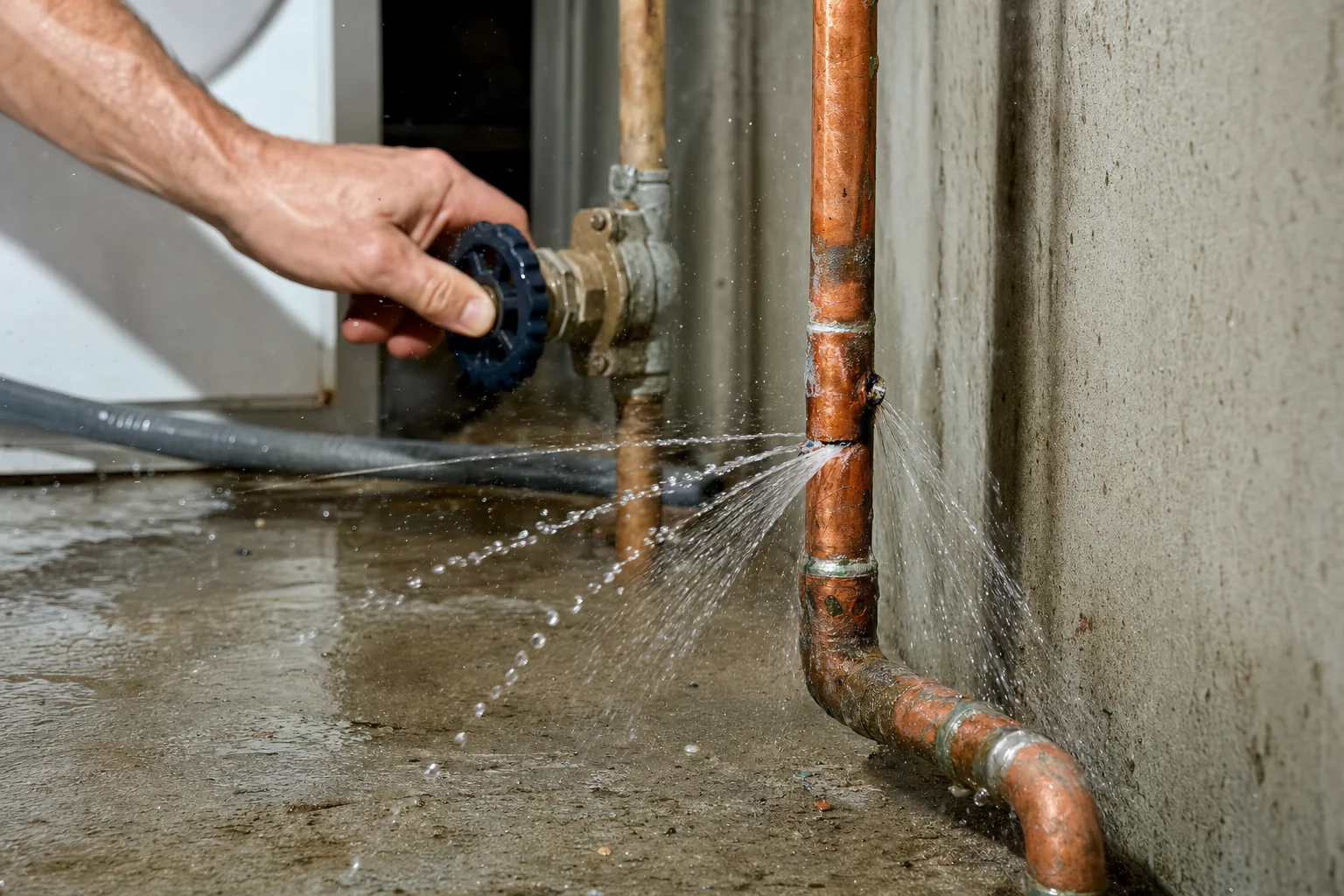
- Emergency response and inspection (hours 0–2): Crews arrive, stop the water source if it is still active, and assess the damage with moisture meters and thermal imaging.
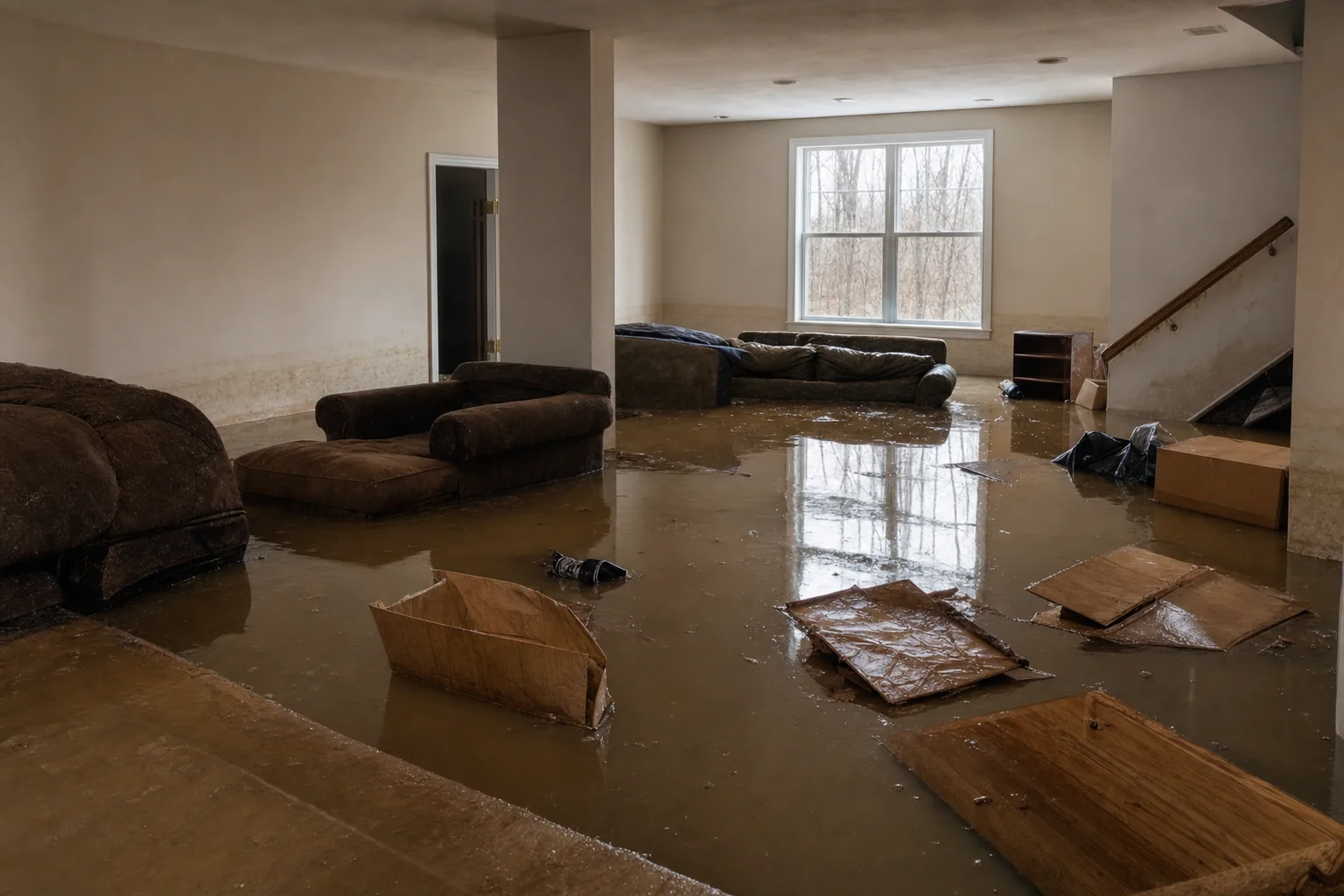
- Water extraction (hours 1–6): Standing water is removed with truck-mounted and portable extractors.
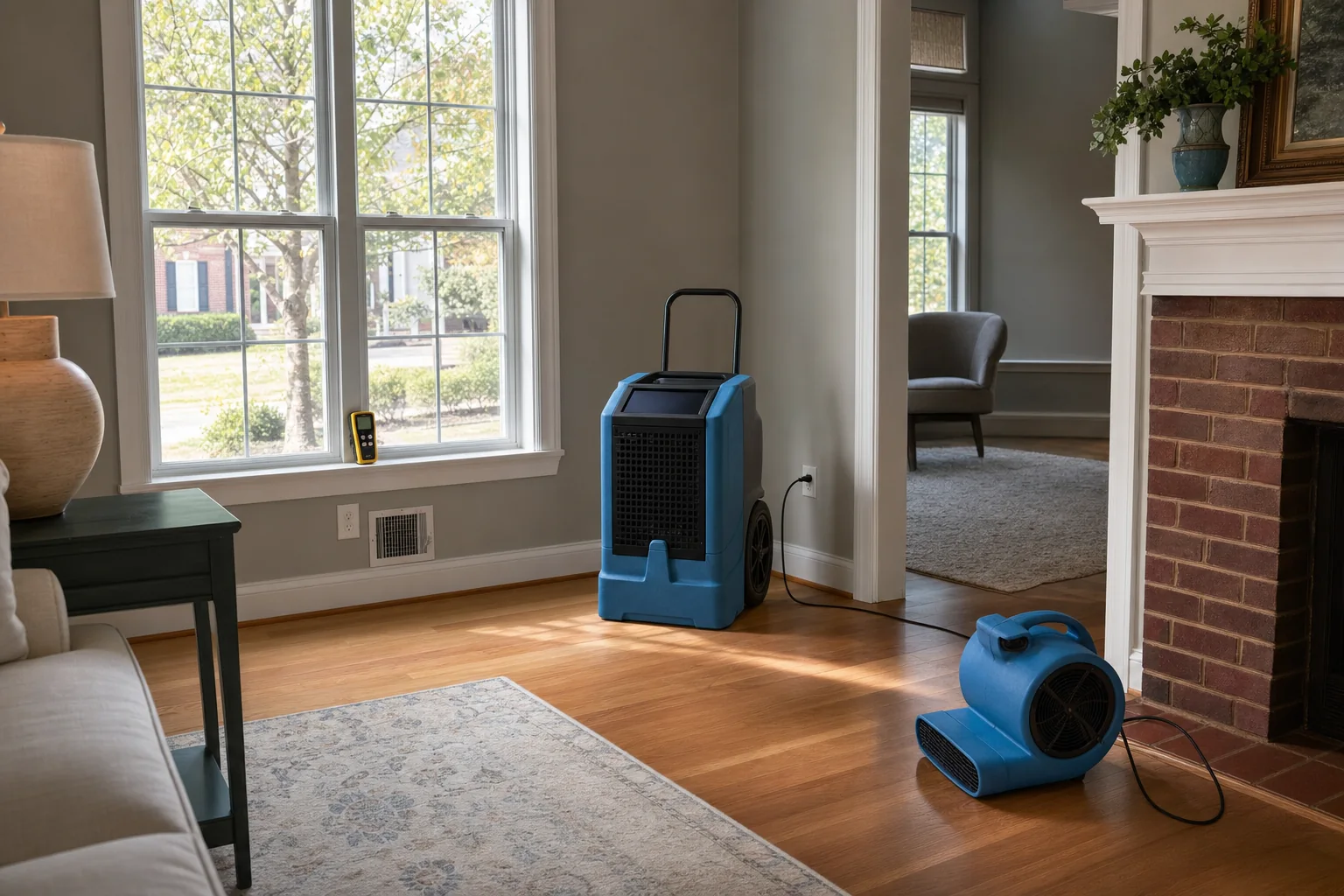
- Structural drying and dehumidification (days 1–5): Air movers and dehumidifiers pull moisture out of framing, drywall, and subfloors until materials return to a dry standard.
- Cleaning, sanitizing, and antimicrobial treatment (days 1–3, overlapping): Affected surfaces are cleaned and treated to prevent mold and odor.
- Reconstruction and finishing (days 2–21+): Damaged drywall, flooring, trim, and paint are repaired or replaced.
The first four stages make up mitigation—the emergency work that stops damage from spreading. The fifth stage, reconstruction, is what restores your home to its pre-loss condition. A leak that only soaked a small area may finish mitigation and need almost no reconstruction, wrapping in 2 to 4 days. A job that destroyed flooring, cabinets, and drywall across multiple rooms will move from mitigation into a full reconstruction phase that adds weeks.
A realistic phase-by-phase breakdown
| Phase | What happens | Typical duration |
|---|---|---|
| Emergency arrival & assessment | Source control, inspection, moisture mapping, scope | Within 90 minutes of your call; on-site work 1–2 hours |
| Water extraction | Removing standing water and saturated materials | 2–6 hours (longer for large volumes) |
| Structural drying | Air movers + dehumidifiers running continuously | 3–5 days (up to 7+ for hardwood/concrete) |
| Cleaning & antimicrobial | Sanitizing, deodorizing, mold prevention | 1–3 days (overlaps drying) |
| Reconstruction | Drywall, flooring, trim, cabinetry, paint | 2 days to 3+ weeks depending on scope |
| Total (mitigation only) | Drying small to moderate loss | 3–7 days |
| Total (with reconstruction) | Full restoration to pre-loss condition | 1–4+ weeks |
How long does the emergency response and water extraction take?
The emergency response itself should take minutes, not days. AZA Restoration guarantees a 90-minute on-site arrival across Northern Virginia, 24 hours a day, 7 days a week, because the clock starts working against you the moment water escapes. Within the first hour or two on site, crews stop the active source, perform a moisture inspection with meters and infrared cameras, and begin pulling out standing water.
Water extraction—the physical removal of standing and pooled water—usually takes 2 to 6 hours for a typical residential loss. A single flooded bathroom may take under two hours, while a finished basement with several inches of standing water can take most of a day. The faster extraction happens, the less water soaks into porous materials, and the shorter the drying phase becomes. This is exactly why professional water extraction and drying done immediately can shave days off the total project. Every additional hour water sits, it wicks deeper into drywall, baseboards, subfloor, and framing, turning a 3-day dry-out into a 5- or 6-day one.
Why early extraction shortens the whole project
Think of it like a sponge. Water sitting on a tile floor is easy to vacuum up. Water that has soaked into the drywall, traveled down the wall cavity, and saturated the bottom plate of the framing has to be coaxed out slowly with controlled airflow and dehumidification. Speed at the front end compounds: fast extraction means less saturated material, which means fewer drying days, which means reconstruction can start sooner. A homeowner who calls within the first hour of discovering a leak routinely sees a dramatically shorter timeline than one who waits a day to "see if it dries on its own."
How long does structural drying actually take?
Structural drying typically takes 3 to 5 days, and this is the phase most people underestimate. It is not finished when surfaces feel dry to the touch—it is finished when moisture meters confirm building materials have returned to their normal dry baseline. Drywall, wood framing, subflooring, and concrete all hold moisture invisibly, and pulling that moisture out is a controlled process, not something that can be safely rushed with a household fan.
AZA Restoration answers 24/7 with a guaranteed 90-minute on-site response across Fairfax, Loudoun, Prince William, Stafford, Fauquier, and Arlington counties — plus Alexandria, Falls Church, Herndon, Manassas, and Manassas Park. We bill your insurance directly.
Call (571) 506-6668During drying, crews place commercial air movers and dehumidifiers and let them run continuously, day and night. Moisture readings are taken daily and documented. The equipment stays until the numbers say the structure is dry. Several factors push drying to the longer end of the range:
- Material type: Drywall and carpet dry quickly; hardwood, plaster, and concrete can take a week or more.
- How long water sat: Older saturation means deeper penetration and longer drying.
- How much got wet: A single wall versus an entire finished basement.
- Humidity and season: Northern Virginia's humid summers slow evaporation; crews compensate with more dehumidification capacity.
- Hidden moisture: Water behind cabinets, under flooring, and inside wall cavities extends the timeline if not caught early.
Do not unplug or move the drying equipment, even though it is loud and runs up the electric bill a bit. Every interruption resets progress and adds time. The equipment is sized and placed deliberately to create the airflow and dehumidification balance that dries materials fastest.
Water spreading right now? Don't wait for it to "dry on its own"—every hour it sits adds days to your restoration. Call AZA Restoration at (571) 506-6668 for guaranteed 90-minute emergency response across Northern Virginia. We bill your insurance directly so you can focus on your home, not paperwork.
How does the type of water affect the timeline?
The category of water is one of the biggest timeline drivers, because contaminated water requires extra removal, disposal, and disinfection steps that clean water does not. Restoration professionals classify water into three categories, and each carries a different process and duration.
| Category | Source | Process impact | Effect on timeline |
|---|---|---|---|
| Category 1 (Clean) | Supply lines, sink overflow, rainwater | Extract and dry; most materials salvageable | Fastest—often 3–5 days for mitigation |
| Category 2 (Gray) | Washing machine, dishwasher, toilet overflow (no solids) | Some materials removed; sanitizing required | Moderate—adds 1–2 days for cleaning |
| Category 3 (Black) | Sewage, flooding from rivers/storm drains, standing contaminated water | Porous materials discarded; full disinfection | Longest—5–10+ days plus rebuild |
Clean Category 1 water that is extracted quickly often lets us save drywall, carpet, and trim, keeping reconstruction minimal. Category 3 water—sewage backups or storm flooding through the foundation, which we see in low-lying parts of Prince William and Stafford counties after heavy rain—is a different animal. Contaminated porous materials cannot be safely dried and reused; they have to be removed and replaced, which automatically pushes the job toward two weeks or more once reconstruction is included. If you are dealing with a sewage backup, see our guidance on the difference between clean and contaminated losses, and never wade into Category 3 water without protective gear.
How long does reconstruction add to the timeline?
Reconstruction is what turns a one-week job into a multi-week one, and it is the phase with the widest range. Once the structure is dry, anything that was removed or destroyed has to be rebuilt: drywall hung and finished, flooring installed, trim and baseboards replaced, cabinets reset, and everything painted to match. A single dried-out room that only needs new baseboards and a coat of paint might take 2 to 3 days. A whole-floor rebuild with new flooring, drywall, and cabinetry can run 2 to 4 weeks or more.
Because AZA Restoration is a Class A licensed restoration and general contractor, we handle both mitigation and the rebuild under one roof—"one call rebuilds it all." That continuity matters for the timeline: when the same company that dried your home also rebuilds it, there is no gap waiting for a separate contractor to bid, schedule, and mobilize. That handoff gap, when it exists, frequently adds one to three weeks to a project on its own.
Repair versus replace: how the decision affects your timeline
One of the first reconstruction questions we answer on site is whether a material can be dried and saved or has to be replaced. The choice has real timeline consequences:
- Drywall: If only the bottom few inches wicked water, we often cut a "flood cut" and replace just that strip—faster than replacing whole sheets. Heavily saturated or contaminated drywall is replaced outright.
- Hardwood flooring: Sometimes salvageable with specialized drying mats over 7–14 days; if cupped or buckled beyond recovery, replacement plus acclimation adds time.
- Carpet and pad: Pad is almost always replaced; carpet from clean water can often be dried in place and reinstalled.
- Cabinets: Solid wood may dry; particleboard typically swells and is replaced.
In general, drying and repairing in place is faster than tearing out and replacing—another reason rapid extraction pays off, because it keeps more materials in the "repairable" column.
What factors make Northern Virginia water damage jobs faster or slower?
Local conditions genuinely affect how long restoration takes here. Northern Virginia's climate and housing stock create their own patterns. Our humid, storm-prone summers—driven by moisture moving up the Potomac and Occoquan watersheds—mean ambient humidity is often high, which slows natural evaporation and requires more aggressive dehumidification during the drying phase. Older homes in Falls Church, Alexandria, and established Arlington neighborhoods may have plaster walls and original hardwood that dry more slowly than modern drywall. Newer subdivisions in Loudoun and western Fairfax tend to dry faster but often have finished basements where water travels far before it is noticed.
Do permits affect the restoration timeline?
Sometimes, yes. Most like-for-like drying and surface repairs—swapping out the same drywall, reinstalling the same flooring, repainting—are generally exempt from permitting. But when restoration involves structural framing, electrical, or plumbing work, a permit is required under the Virginia Uniform Statewide Building Code (USBC), issued by the relevant county or city building office, such as Fairfax County Land Development Services. Permit review and inspection scheduling can add a few days to the reconstruction phase. AZA Restoration pulls all required permits and builds to code, so this is handled for you—but it is a real factor on larger rebuilds, and it is one reason a structural job runs longer than a simple dry-out.
The insurance factor
Insurance coordination can either slow a job down or, done right, keep it moving. Waiting on adjuster approval before starting work is a common source of delay. Because AZA Restoration offers direct insurance billing and documents the loss thoroughly from the first inspection, we can begin emergency mitigation immediately—protecting your property—while the claim is processed in parallel. That overlap, rather than a sequential "wait, then work" approach, keeps the timeline tight.
How can you speed up your water damage restoration?
You have more control over the timeline than you might think, especially in the first hours. Here is what genuinely shortens restoration, in order of impact:
- Call immediately. The single biggest lever is response time. Water removed in the first two hours dries far faster than water that sat overnight.
- Stop the source if you safely can. Shut off the water main or the supply valve to the fixture. Do not touch electrical equipment in standing water.
- Move what you can. Lift furniture legs onto blocks, pick up rugs, and move valuables and electronics to a dry area to limit secondary damage.
- Let the equipment run. Resist turning off the loud air movers and dehumidifiers—they are doing the work, and interruptions add days.
- Choose one company for mitigation and rebuild. Avoiding the handoff gap between a separate mitigation crew and a reconstruction contractor can save weeks.
- Document for insurance early. Photos and a clear scope from the outset prevent claim delays that stall reconstruction.
What you should not do is wait to "see if it dries." Drywall, framing, and subfloor that stay wet beyond 24 to 48 hours become a mold problem, and mold remediation adds its own 1 to 5 days plus additional cost on top of the original water job. Acting fast keeps a water loss from quietly becoming a bigger, slower, more expensive one.
Frequently Asked Questions
How long does water damage restoration take on average?
On average, water damage restoration takes 3 to 7 days for the mitigation and drying phase, with structural drying alone accounting for 3 to 5 of those days. If reconstruction is needed—replacing drywall, flooring, or cabinetry—the full project commonly runs 1 to 4 weeks. Small, clean-water losses caught early can finish in 2 to 4 days, while major flooding or contaminated water can take several weeks.
How long does it take for water damage to dry out?
Professional structural drying typically takes 3 to 5 days, sometimes up to a week or more for dense materials like hardwood, plaster, or concrete. Drying is complete only when moisture meters confirm building materials have returned to their normal dry baseline—not simply when surfaces feel dry. Commercial air movers and dehumidifiers run continuously throughout, and they should not be turned off, as interruptions extend the timeline.
Can water damage be fixed in one day?
A very small, clean-water spill caught within minutes can sometimes be extracted and set up for drying in a single day, but full restoration almost never finishes in one day. Even minor losses require 3 to 5 days of structural drying to prevent mold, and any damage to drywall or flooring adds reconstruction time. The emergency response and extraction can happen the same day you call—AZA Restoration arrives within 90 minutes—but the drying phase still takes days.
Why does water damage restoration take so long?
The drying phase is the bottleneck. Building materials like framing, subfloor, and concrete hold moisture invisibly, and pulling it out safely is a controlled process that takes 3 to 5 days—rushing it leaves hidden moisture that causes mold and warping later. Contaminated water, high local humidity, hidden saturation in wall cavities, and any needed reconstruction or permitting all add time. The fastest path is immediate extraction, which keeps more materials dry and salvageable.
Does insurance cover water damage restoration in Virginia?
Most homeowners policies in Virginia cover sudden, accidental water damage—such as a burst pipe or appliance failure—while gradual leaks and surface flooding may be excluded or require separate flood coverage. AZA Restoration offers direct insurance billing and documents the loss from the first inspection, which lets emergency work begin right away while the claim is processed. Coverage specifics depend on your policy, so review it or ask your adjuster about your particular situation.
How fast can AZA Restoration respond in Northern Virginia?
AZA Restoration guarantees a 90-minute on-site arrival anywhere in our Northern Virginia service area, 24 hours a day, 7 days a week. We serve Fairfax, Loudoun, Prince William, Stafford, Fauquier, and Arlington counties, plus Alexandria, Falls Church, Herndon, Manassas, and Manassas Park. Fast arrival is the most important factor in shortening your overall restoration timeline, because rapid extraction prevents water from soaking deeper into your home.
The sooner you call, the sooner you're dry. AZA Restoration provides 24/7 emergency water damage restoration across Northern Virginia with a guaranteed 90-minute response and direct insurance billing—and because we're a Class A licensed restoration and general contractor, we handle drying through full reconstruction under one roof. One call rebuilds it all. Call (571) 506-6668 now.