Commercial water damage restoration for a typical Northern Virginia business is completed in roughly 5 to 10 days for structural drying and cleanup, with full reconstruction adding days to several weeks depending on scope. Costs commonly run from about $8,000 to $25,000+ for a mid-size commercial loss, and the single biggest driver of total cost is not the water itself but the downtime it forces on your operation. The faster a qualified crew extracts water, stabilizes the structure, and begins controlled drying, the less revenue you lose and the less likely you are to face secondary damage like mold, warped flooring, or ruined inventory. That is the core principle of minimizing downtime: speed of response and a documented, code-compliant plan matter more than almost anything else.
If your building is taking on water right now, the most important action is to stop reading and call a 24/7 restoration team. AZA Restoration's commercial restoration crews guarantee a 90-minute on-site arrival anywhere in Northern Virginia. Call (571) 506-6668 immediately, then come back to this guide to understand what happens next and how to protect your business through the entire process.
What counts as commercial water damage, and why does it shut businesses down?
Commercial water damage is any unwanted intrusion of water into a business property that threatens the structure, building systems, inventory, equipment, or the ability to operate. It differs from residential water damage in scale, complexity, and the financial stakes attached to every hour of downtime. A flooded office in Reston, a burst supply line in a Tysons restaurant, or a roof breach in a Manassas warehouse all share the same urgent clock: the longer water sits, the deeper it migrates and the more it costs to reverse.
Water shuts businesses down for three connected reasons. First, it creates immediate safety and code issues—energized electrical panels, slip hazards, and contaminated standing water—that force you to close the doors. Second, water is relentless about migrating into wall cavities, subfloors, insulation, and HVAC chases where it is invisible but actively feeding mold and rot. Third, modern commercial spaces are full of moisture-sensitive assets: servers, point-of-sale systems, document archives, medical equipment, and finished inventory that can be lost in hours.
Common sources of commercial water loss in Northern Virginia
- Plumbing failures: burst supply lines, failed water heaters, ruptured fire-suppression pipes, and backed-up drains—often discovered Monday morning after a weekend leak.
- Roof and envelope breaches: aging flat commercial roofs, failed flashing, and clogged drains that pond water during heavy rain.
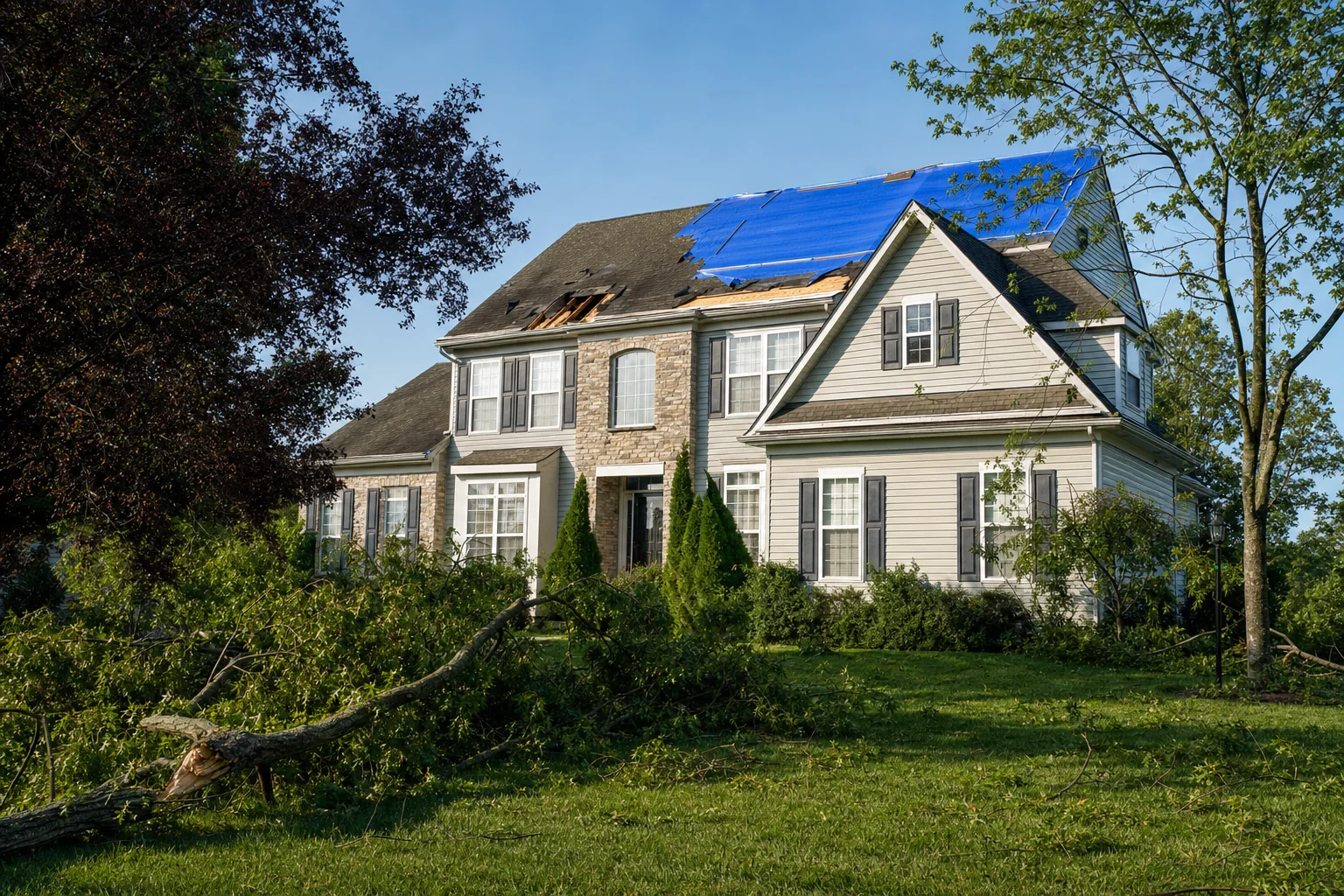
- Storm and flash flooding: the region's clay-heavy soils and dense development push stormwater toward low-lying parking structures, basements, and ground-floor suites.
- HVAC and condensation: failed condensate lines and chiller leaks in large mechanical systems.
- Sewage and Category 3 backups: contaminated water that demands specialized water damage restoration and disinfection protocols before reoccupancy.
How fast does commercial water damage need to be addressed?
Commercial water damage needs to be addressed within the first 24 to 48 hours to prevent the loss from escalating from a manageable cleanup into a structural and microbial problem. The damage timeline is predictable, which is exactly why a fast, professional response is so valuable.
| Time elapsed | What is happening inside the building |
|---|---|
| 0–24 hours | Water spreads horizontally and wicks up drywall. Finishes swell, laminate delaminates, and inventory begins absorbing moisture. Damage is still largely reversible. |
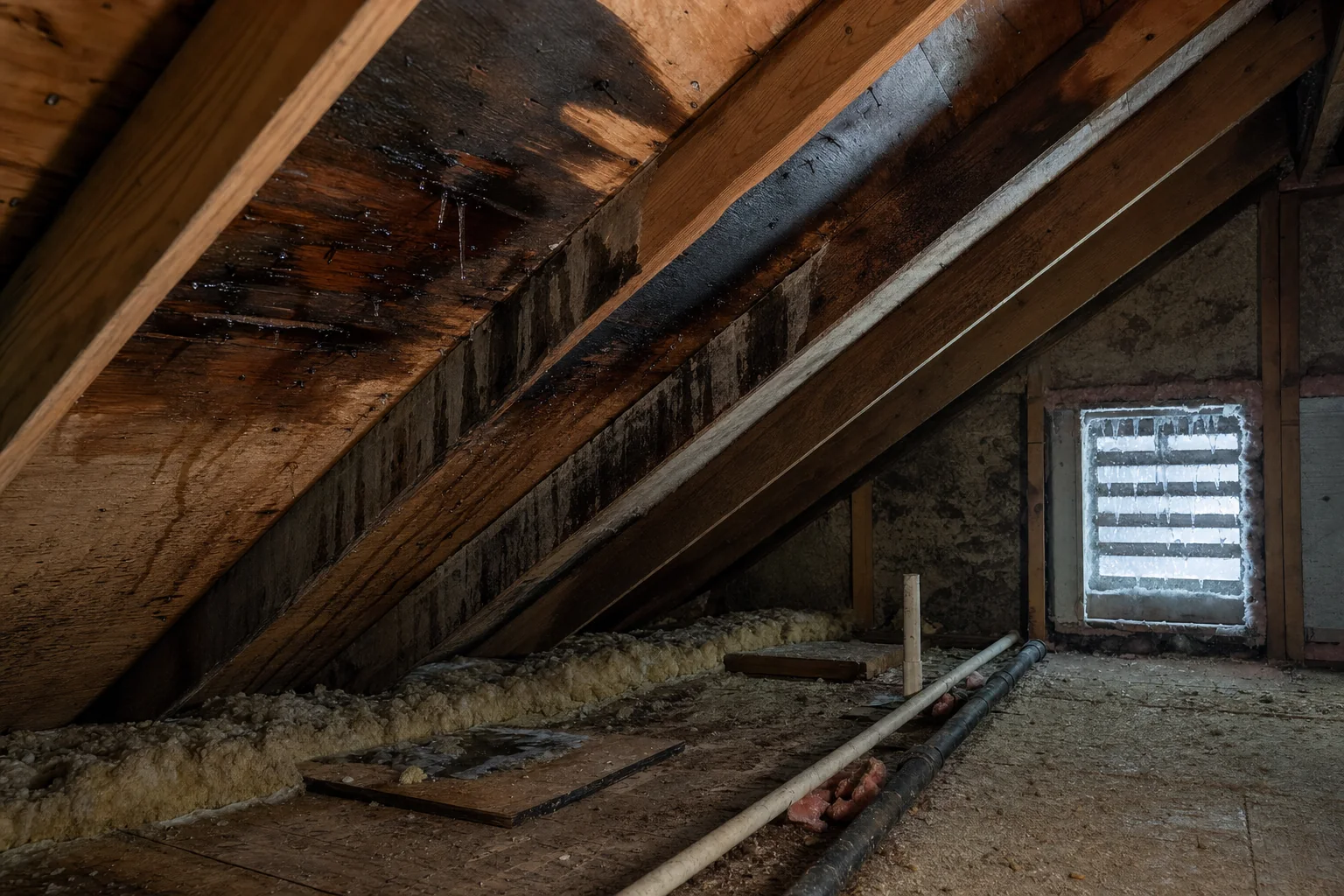
| 24–48 hours | Mold spores activate in damp materials. Drywall and insulation lose integrity. Metal fixtures begin corroding; wood swells and warps. Odors set in. |
| 2–7 days | Visible mold growth spreads. Structural materials weaken. Costs climb sharply as more materials must be removed rather than dried in place. |
| 7+ days | Serious structural risk, widespread microbial contamination, and potential conditions. Reconstruction scope expands and reoccupancy is delayed significantly. |
The lesson for any business owner is simple: the cost of a restoration project and the length of your downtime both rise on a curve, not a straight line. A loss addressed in hour two is a fraction of the cost of the same loss addressed on day four. That is why a guaranteed 90-minute on-site arrival is not a marketing line—it is the single most effective lever for protecting your bottom line.
What is the step-by-step commercial water damage restoration process?
A professional commercial restoration follows a disciplined sequence built to minimize downtime while meeting industry restoration standards and the Virginia Uniform Statewide Building Code (USBC). Knowing the steps helps you understand what your crew is doing and why each phase matters.
AZA Restoration answers 24/7 with a guaranteed 90-minute on-site response across Fairfax, Loudoun, Prince William, Stafford, Fauquier, and Arlington counties — plus Alexandria, Falls Church, Herndon, Manassas, and Manassas Park. We bill your insurance directly.
Call (571) 506-6668- Emergency response and safety lockout. Crews arrive, shut off the water source, de-energize affected electrical, and identify hazards. Standing water is assessed for contamination category. Occupant safety and site security come first.
- Rapid water extraction. Truck-mounted and portable extraction units remove standing water fast. The faster bulk water is gone, the less it migrates into cavities and the shorter the drying phase becomes.
- Inspection and moisture mapping. Technicians use moisture meters, thermal imaging, and hygrometers to map hidden moisture behind walls, under flooring, and inside cavities. This prevents the classic mistake of drying only what is visible.
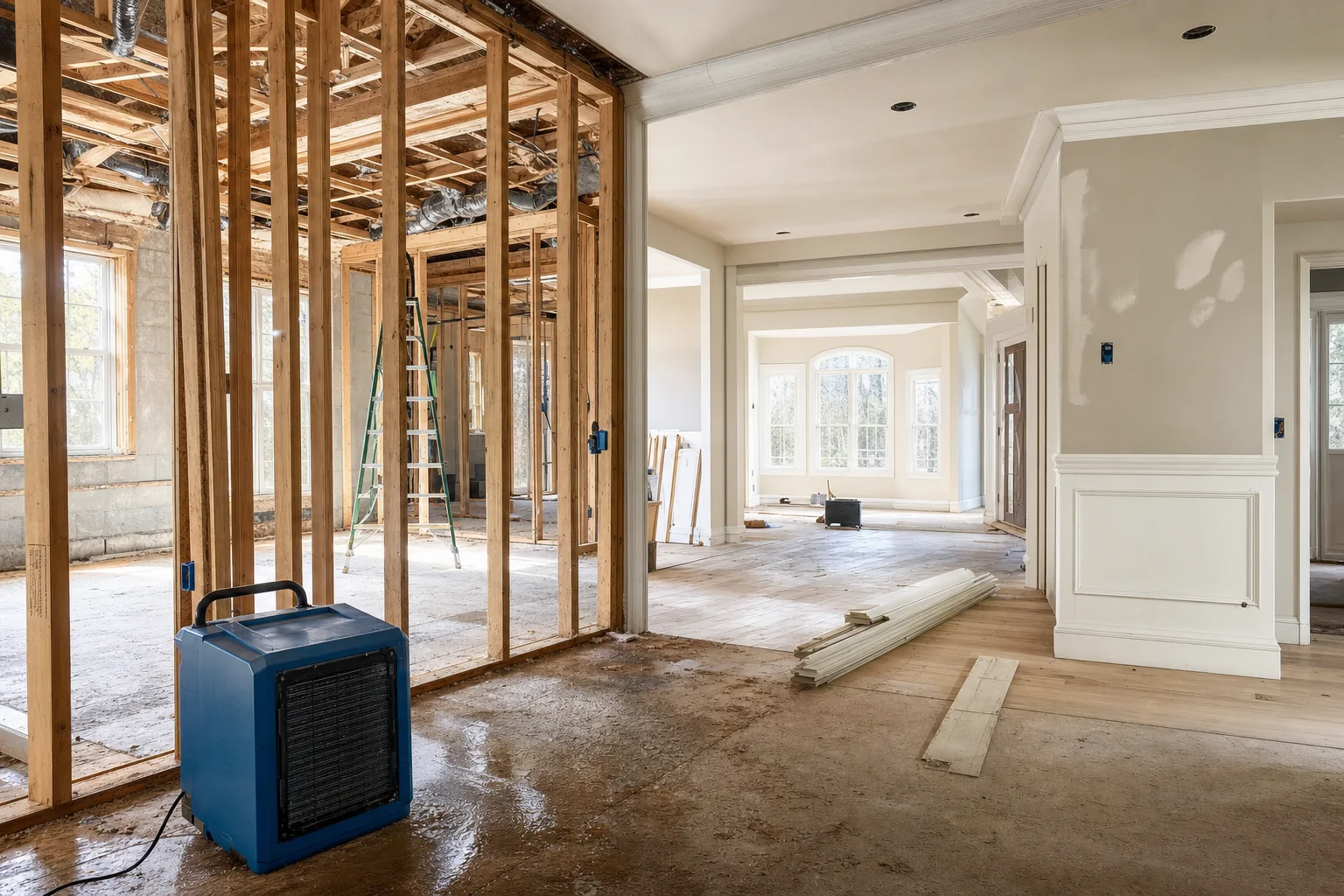
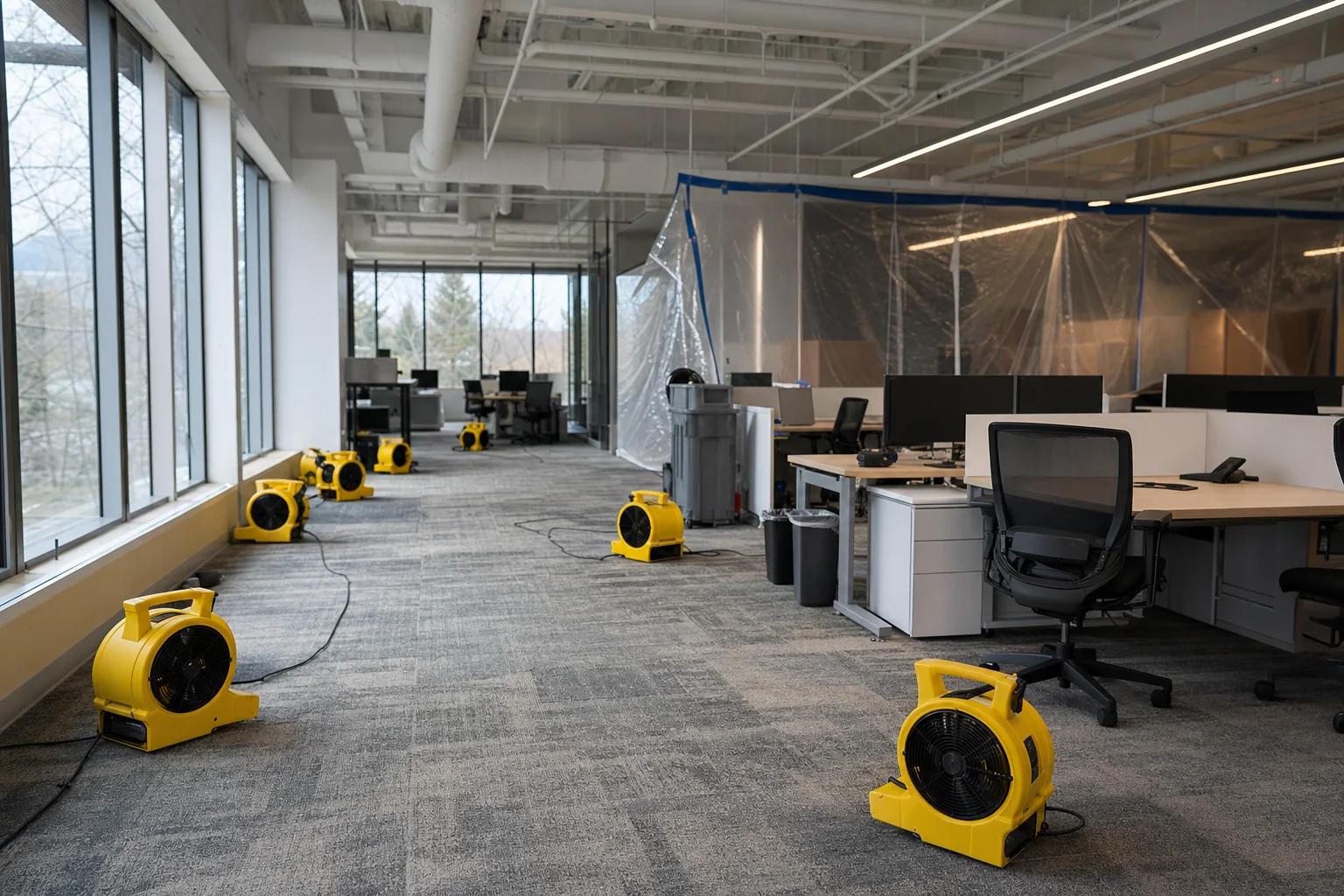
- Controlled structural drying. Commercial-grade air movers and dehumidifiers create a balanced drying environment. Crews monitor moisture content daily and adjust equipment until materials return to dry standard—typically a 3 to 5 day process.
- Containment and selective demolition. Unsalvageable materials—saturated drywall, ruined carpet pad, contaminated ceiling tile—are removed under containment to protect clean areas and air quality.
- Cleaning, sanitizing, and deodorizing. Affected surfaces are cleaned and disinfected. For Category 2 and 3 water, antimicrobial treatment is essential before any rebuilding begins.
- Reconstruction and reinstatement. Drywall, flooring, paint, trim, and building systems are rebuilt to code. A single licensed contractor handling both mitigation and rebuild eliminates costly handoffs.
- Final verification and documentation. Moisture readings confirm the building is dry, and a complete documentation package supports the insurance claim.
Because AZA Restoration is a Class A licensed general contractor as well as a restoration company, the same team carries your project from extraction through final reconstruction. That continuity—captured in our Reston commercial office water loss case study—is one of the most effective ways to compress the overall timeline and avoid the gaps where projects usually stall.
Water in your commercial space cannot wait. AZA Restoration responds 24/7 with a guaranteed 90-minute on-site arrival across Northern Virginia and bills your insurance directly. Call (571) 506-6668 now to get a crew rolling and protect your revenue.
How much does commercial water damage restoration cost?
Commercial water damage restoration typically costs between $8,000 and $25,000 or more for a mid-size loss, while a small, contained event affecting one room or suite may fall in the $1,200 to $5,500 range. Flood events, especially those involving contaminated Category 3 water, often run $3,000 to $15,000+ for cleanup and drying alone, before any reconstruction. These are typical market ranges; every loss is priced from its actual scope, square footage, water category, and the materials involved.
| Scenario | Typical market range | Typical timeline |
|---|---|---|
| Localized loss (one suite/room) | $1,200 – $5,500 | 3–5 days drying |
| Mid-size to whole-building water loss | $8,000 – $25,000+ | 5–10 days cleanup + dry |
| Flood / Category 3 water event | $3,000 – $15,000+ | 5–10 days |
| Mold remediation (if growth has begun) | $500 – $6,000 (hidden can exceed $10,000) | 1–5 days |
| Full reconstruction | $10,000 (single room) – $100,000+ (major rebuild) | Weeks, scope-dependent |
What drives the price up or down?
- Water category: clean (Category 1) water dries cheaply; gray and black water (Categories 2 and 3) require removal, disinfection, and often more demolition.
- Time to response: every hour of delay adds materials that must be removed instead of dried, plus mold risk.
- Square footage and ceiling height: large open commercial spaces need more drying equipment and runtime.
- Specialty contents: document recovery, electronics, and equipment restoration add cost but can save assets worth far more than the loss.
- Reconstruction finishes: a basic warehouse rebuild costs far less per square foot than a finished medical suite or restaurant.
The most important budgeting insight for owners is that downtime is the hidden line item. A retail store losing thousands in daily sales, a clinic turning away patients, or a restaurant with a dark dining room can lose more in a week of closure than the entire restoration bill. Minimizing downtime is, in dollar terms, usually the highest-return decision you will make.
Repair or replace? Making the right call on commercial materials
One of the most consequential decisions in any commercial water loss is whether to dry and restore a material or remove and replace it. Dry-in-place is faster and cheaper when it is safe; replacement is the right call when materials are saturated, contaminated, or structurally compromised. Getting this judgment right is where experienced restoration specialists earn their value.
| Material / asset | Often restorable | Usually replace |
|---|---|---|
| Drywall | Minor Category 1 wetting, dried quickly | Saturated, swollen, or any contaminated water exposure |
| Carpet | Category 1, dried within 48 hours | Pad almost always replaced; carpet replaced for Category 2/3 |
| Hardwood flooring | Specialty drying systems can save some floors | Severe cupping/crowning or delamination |
| Insulation | Rarely—closed-cell types occasionally | Wet fiberglass/cellulose nearly always replaced |
| Electronics & documents | Often recoverable with prompt specialty treatment | When delay or contamination is severe |
| Structural framing | Most framing dries and is salvageable | Rot, prolonged saturation, or compromised load capacity |
The right answer is rarely "replace everything"—that is wasteful and slow—nor "dry everything," which risks trapping moisture and mold behind new finishes. A documented, moisture-meter-driven decision for each material is what keeps both cost and timeline under control while satisfying USBC requirements for the rebuild.
The Northern Virginia angle: climate, watersheds, and local code
Northern Virginia presents a specific set of water-damage risks that shape how commercial losses unfold here. Understanding the local landscape helps owners anticipate problems and respond correctly.
Climate and watersheds
The region sees humid summers, freeze-thaw winter cycles that crack pipes and joints, and intense seasonal storms that overwhelm drainage. Much of Fairfax, Loudoun, and Prince William counties drains toward the Potomac River and its tributaries—Difficult Run, Bull Run, Cameron Run, and the Occoquan watershed among them. Commercial corridors built on the area's heavy clay soils sit in zones where stormwater runs off fast and ponds against foundations, loading dock wells, and below-grade levels. Properties near Cameron Run in Alexandria and along the Occoquan in Prince William have well-documented flash-flood exposure. High humidity also means that any moisture left in a building dries slowly on its own and feeds mold quickly—making active, equipment-driven drying essential rather than optional.
Do you need a permit to rebuild after water damage?
In Virginia, like-for-like drying and surface repairs—replacing drywall, repainting, swapping out the same flooring—are generally exempt from permitting. However, any work touching structure, electrical, or plumbing typically requires a permit under the Virginia Uniform Statewide Building Code (USBC), issued by the relevant county or city building office. For example, structural reconstruction in Fairfax County is permitted through Fairfax County Land Development Services; Loudoun, Prince William, Arlington, and the cities of Alexandria, Manassas, and Falls Church each operate their own building departments.
This matters for downtime because pulling permits, scheduling inspections, and building to code adds time that an inexperienced contractor often fails to plan for—stalling a reopening. AZA Restoration pulls all required permits and builds to code as part of the project, so the rebuild does not stop at an inspection failure. Serving Fairfax, Loudoun, Prince William, Stafford, Fauquier, and Arlington counties, plus Alexandria, Falls Church, Herndon, Manassas, and Manassas Park, our crews know each jurisdiction's process firsthand.
How can businesses minimize downtime during restoration?
Businesses minimize downtime by combining a fast professional response with smart operational decisions made in the first hours. Restoration speed is partly the contractor's job and partly the owner's—here is how to hold up your end.
- Call a 24/7 restoration team immediately. The clock starts the moment water appears. A guaranteed 90-minute arrival across Northern Virginia means extraction begins while the loss is still small.
- Document everything before cleanup. Photograph and video the damage and affected inventory. This accelerates the insurance claim and your reimbursement.
- Choose one contractor for mitigation and rebuild. A single licensed firm handling drying through reconstruction eliminates the handoff gaps where projects stall for days.
- Phase the work to keep part of the business open. Containment lets crews dry and rebuild one zone while you operate from another—often the difference between partial operation and full closure.
- Protect and relocate critical assets fast. Pack-out and contents services move servers, records, and inventory to safe storage so they are not damaged further or trapped behind containment.
- Use direct insurance billing. When the restoration company bills your insurer directly, you are not waiting on out-of-pocket cash flow to authorize each phase.
Why a single accountable contractor shortens the timeline
The most common cause of extended commercial downtime is the seam between mitigation and reconstruction. When a separate drying company hands off to a general contractor, the project frequently waits days for the rebuild firm to scope, bid, and schedule—often after demolition has already exposed surprises. Because AZA Restoration self-performs both phases as a Class A licensed restoration and general contractor, there is no handoff. The team that dried your building is the team that rebuilds it, working from a single plan with the insurer. That continuity is exactly why our commercial restoration service is structured around one accountable point of contact and the slogan we stand behind: one call rebuilds it all.
What should you do in the first hour of a commercial water loss?
In the first hour, your priorities are safety, source control, documentation, and the right phone call—in that order. Acting decisively now prevents the cascade of escalating damage described earlier.
- Ensure safety first. If water is near electrical equipment, do not enter—shut off power at the panel only if it is safe to reach, and keep employees and customers clear.
- Stop the source if you can. Close the building's main water valve for a plumbing failure. For roof or storm intrusion, this step waits for crews.
- Move what you can safely. Relocate critical documents, electronics, and inventory out of standing water.
- Document the loss. Photos and video of every affected area and asset, time-stamped, before anything is moved or cleaned.
- Call a professional restoration team. Reach AZA Restoration at (571) 506-6668 for a 24/7 response and a guaranteed 90-minute on-site arrival.
- Notify your insurer. Open the claim early; a restoration partner that offers direct insurance billing will coordinate the rest.
Avoid two common mistakes: do not run your HVAC system if water may have entered the ductwork (it spreads contamination building-wide), and do not assume a surface that "looks dry" actually is. Moisture hides in cavities for days, and only metered verification confirms a building is truly dry.
Frequently Asked Questions
How long does commercial water damage restoration take?
Structural drying and cleanup for a typical commercial water loss in Northern Virginia takes about 5 to 10 days, with simple localized losses drying in 3 to 5 days. If reconstruction is required, that adds anywhere from several days to several weeks depending on the scope of rebuilding, permits, and inspections. The single biggest factor in the timeline is how quickly extraction and drying begin, which is why a 90-minute emergency response matters so much.
How much does commercial water damage restoration cost?
A mid-size to whole-building commercial water loss typically costs $8,000 to $25,000 or more, while a small contained loss may run $1,200 to $5,500. Flood and Category 3 contaminated-water events commonly cost $3,000 to $15,000+ for cleanup and drying before reconstruction, and full rebuilds can range from about $10,000 for a single room to $100,000+ for a major project. These are typical market ranges; final pricing depends on water category, square footage, materials, and how fast the response began.
Does insurance cover commercial water damage?
Most commercial property policies cover sudden and accidental water damage, such as a burst pipe or appliance failure, while gradual leaks and certain flood events may require separate coverage. The key to a smooth claim is fast documentation and a restoration partner experienced with the process. AZA Restoration offers direct insurance billing, working with your carrier so you are not fronting costs to keep the project moving.
Do I need a permit to rebuild my commercial space after water damage?
Like-for-like drying and surface repairs are generally exempt from permitting in Virginia, but any structural, electrical, or plumbing work requires a permit under the Virginia Uniform Statewide Building Code, issued by your county or city building office—such as Fairfax County Land Development Services. AZA Restoration pulls all required permits and builds to code as part of the reconstruction, so the rebuild does not stall at an inspection failure.
Can my business stay open during water damage restoration?
Often yes. Using containment, crews can dry and rebuild one zone while you continue operating from another, and pack-out services protect critical assets so they are not trapped behind work areas. Phasing the project this way is one of the most effective strategies for keeping at least part of your business generating revenue throughout the restoration.
What is the difference between commercial and residential water damage restoration?
Commercial water damage restoration involves larger square footage, more complex building systems, higher-value contents like servers and inventory, and far greater financial stakes from downtime. It frequently requires more drying equipment, formal coordination with insurers, USBC permitting for rebuilds, and phased work to keep the business operating. The core science of drying is the same, but the scale, documentation, and downtime management are substantially more demanding.
Every hour of downtime costs your business—act now. AZA Restoration provides 24/7 commercial water damage restoration across Northern Virginia with a guaranteed 90-minute on-site arrival, direct insurance billing, and a Class A licensed team that handles everything from extraction through full reconstruction. One call rebuilds it all. Call (571) 506-6668 today.