A water damaged hardwood floor can often be saved if it is dried within 24 to 72 hours, before the wood absorbs enough moisture to warp, cup, or grow mold. Whether your floor survives depends on three things: how long the water sat, how much water there was, and what kind of water it was. Clean water caught quickly is the best case and usually restorable. Standing water, sewage, or moisture that has soaked into the subfloor for days often pushes the decision toward replacement. In Northern Virginia, where humid summers and freeze-thaw winters work against fast drying, the speed of your response is the single biggest factor in whether you keep your floors or rebuild them.
This guide explains how restoration professionals decide whether hardwood can be saved, what the warning signs mean, what realistic costs and timelines look like, and how local code and climate factors affect the outcome here in Fairfax, Loudoun, Prince William, and the surrounding counties.
Can a water damaged hardwood floor be saved?
Yes, in many cases hardwood flooring can be restored rather than replaced, but the window is narrow. Solid hardwood is remarkably durable, yet it is also hygroscopic, meaning it constantly absorbs and releases moisture from the air around it. When liquid water sits on or under the boards, the wood swells. If that swelling is caught and reversed quickly through controlled drying, the floor frequently returns to its original dimensions with no lasting damage. If the wood stays saturated, the cell structure deforms permanently.
The professionals who handle water damage restoration every day evaluate a wet floor against a simple framework. The faster water is removed and the drier the surrounding structure, the higher the odds of saving the floor.
The three factors that decide save vs. replace
- Time: Hardwood that is dried within 24 to 48 hours has the best survival rate. Past 72 hours, the chance of permanent warping and mold rises sharply.
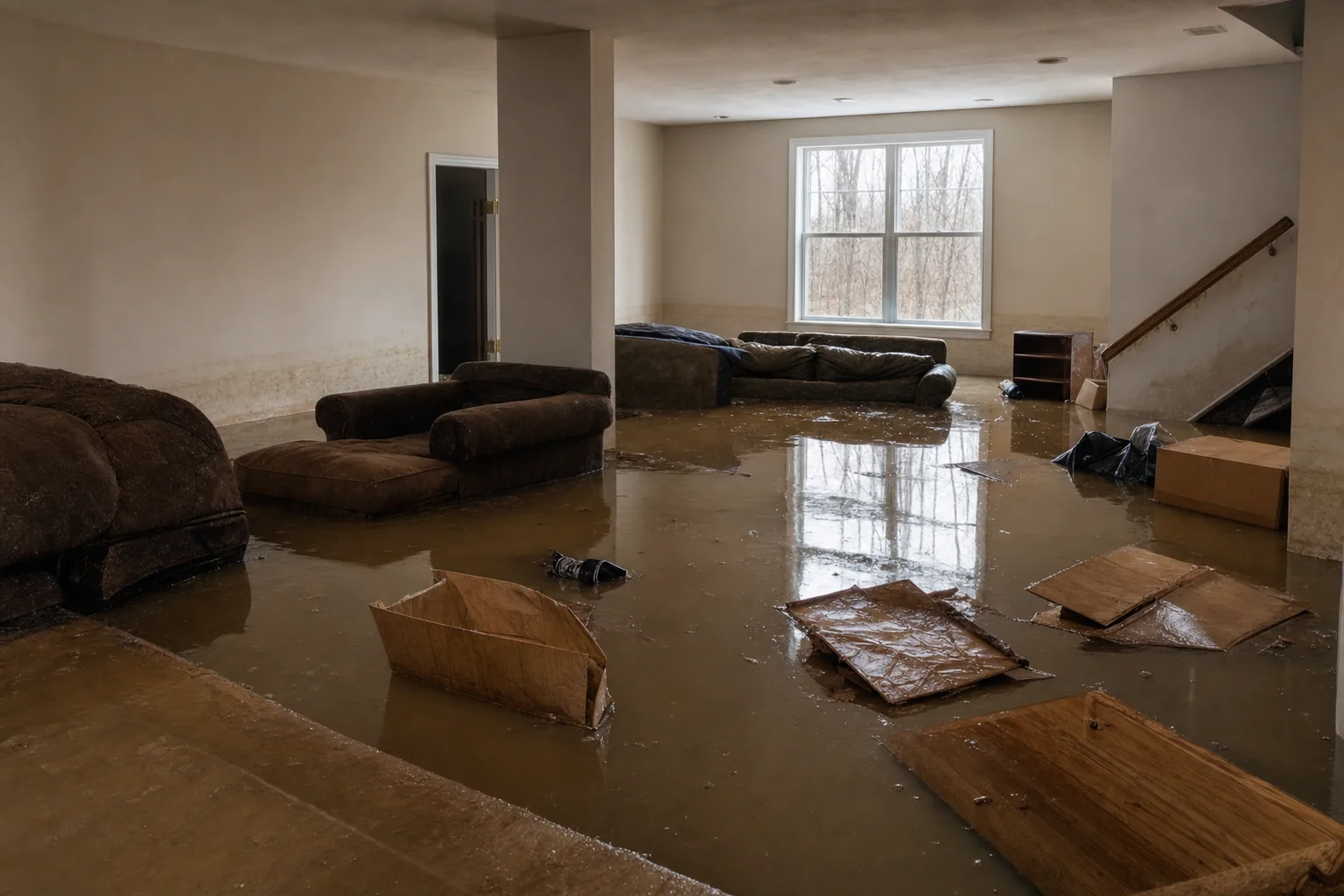
- Water category: Clean water from a supply line or rain (Category 1) is the most recoverable. Gray water from appliances (Category 2) is borderline. Black water from sewage or flooding (Category 3) almost always means the flooring must be removed for health reasons, regardless of its physical condition.
- Saturation depth: Surface wetting is easier to reverse than water that has wicked into the tongue-and-groove joints, the subfloor, and the floor joists below.
How to tell if your hardwood floor is damaged: cupping, crowning, and buckling
Water damage in hardwood shows up in predictable, recognizable shapes. Learning to read them tells you how deep the problem goes and helps a restoration crew choose the right drying strategy. These are the four signs to look for.
Cupping
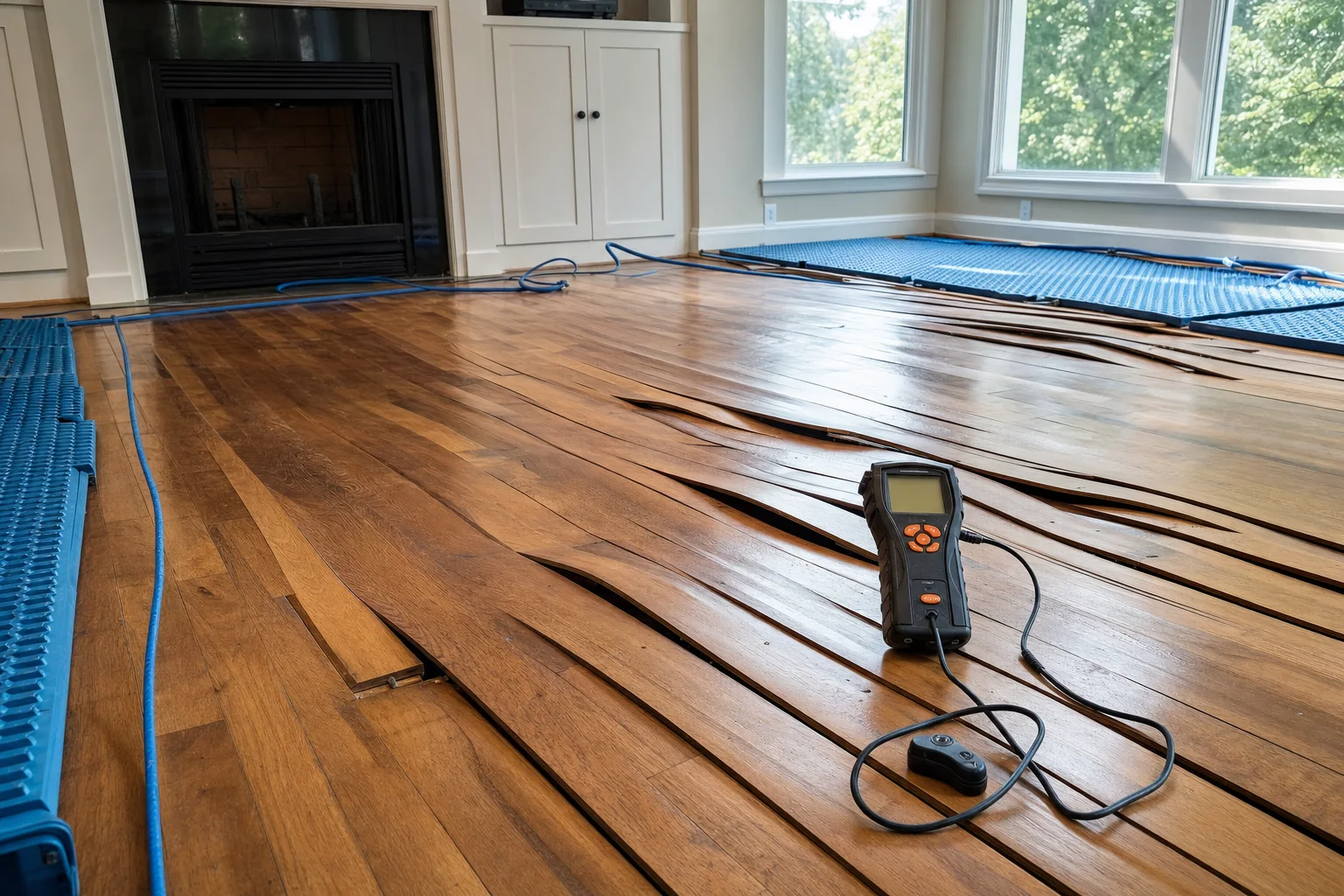
Cupping is when the edges of each board rise higher than the center, creating a concave, washboard-like surface. It is the most common early sign of water damage and happens because the underside of the board absorbs more moisture than the finished top. Cupping is often reversible with proper drying if addressed quickly, because the wood is swollen but not yet permanently deformed.
Crowning
Crowning is the opposite of cupping: the center of the board is higher than the edges. It usually appears after a cupped floor has been sanded too early, or after prolonged moisture exposure. Crowning typically signals that drying was delayed or done incorrectly, and these boards often need replacement.
Buckling
Buckling is the most severe sign. The boards lift completely away from the subfloor, sometimes by several inches, because the wood has expanded with nowhere to go. Buckling almost always means significant water volume and a long exposure time. Buckled boards rarely return to their original position and usually require removal and reconstruction of the affected area.
Staining, gaps, and a musty smell
Dark stains, white haze in the finish, widening gaps between boards as they later dry out, and a persistent musty odor all point to moisture that has penetrated deep. A musty smell in particular is a red flag for mold beneath the surface.
What does the drying and restoration process actually involve?
Saving a water damaged hardwood floor is not as simple as running a household fan over it. The water you can see on top is only part of the problem; the real challenge is the moisture trapped in the subfloor and between the flooring layers. Professional water extraction and structural drying uses specialized equipment and moisture readings to dry the entire floor assembly from the inside out. Here is the sequence a trained crew follows.
AZA Restoration answers 24/7 with a guaranteed 90-minute on-site response across Fairfax, Loudoun, Prince William, Stafford, Fauquier, and Arlington counties — plus Alexandria, Falls Church, Herndon, Manassas, and Manassas Park. We bill your insurance directly.
Call (571) 506-6668- Stop the source and assess. The leak, burst pipe, or water entry point is shut off first. Crews then identify the water category and map the wet area with moisture meters and thermal imaging cameras that reveal hidden water behind baseboards and under cabinets.
- Extract standing water. Truck-mounted and portable extractors remove surface water, and specialized hardwood floor extraction systems pull water from between the boards and the subfloor using suction mats.
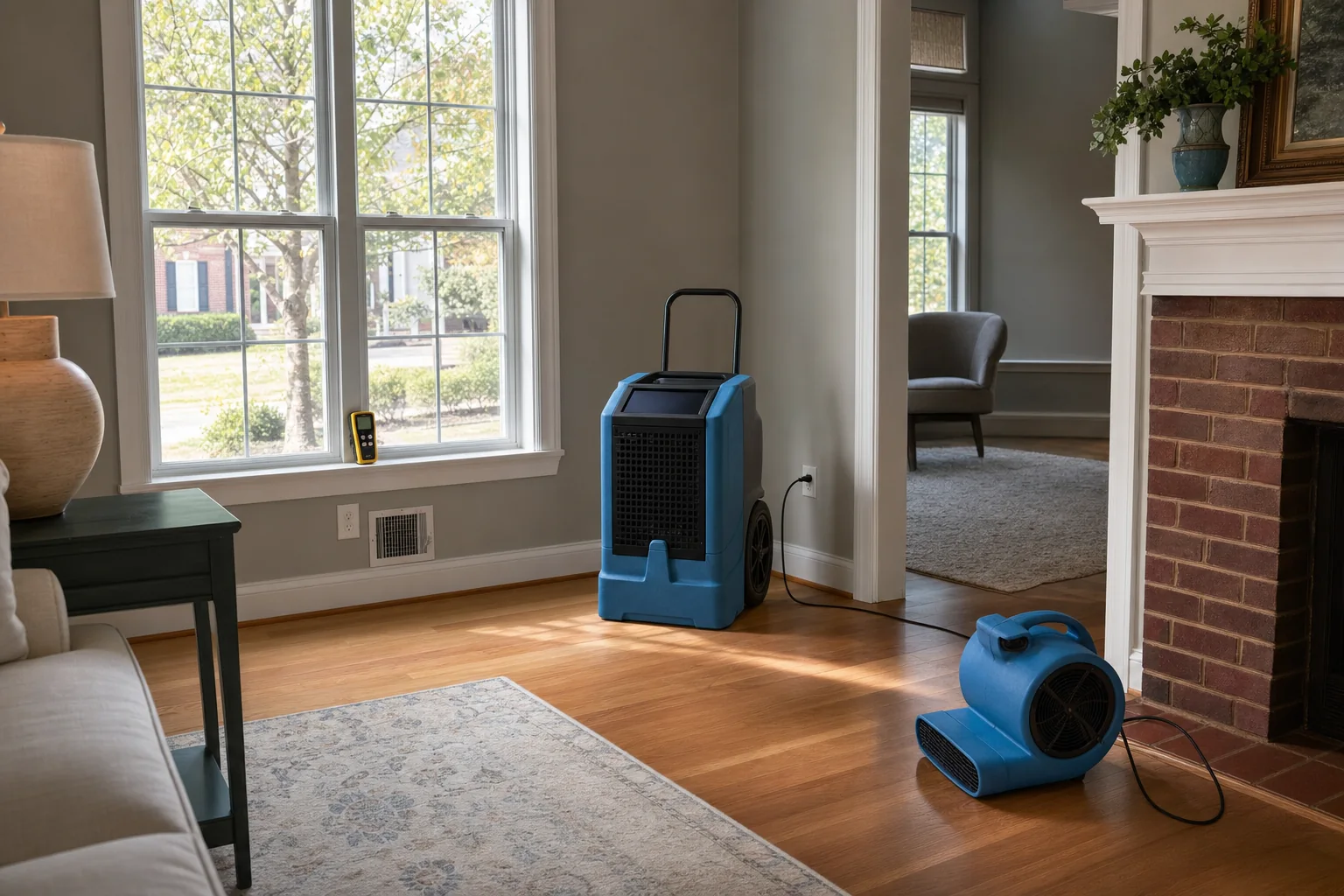
- Set up controlled drying. Air movers create directed airflow across the floor while commercial dehumidifiers pull moisture out of the air so the wood releases it rather than reabsorbing it. Specialty mat systems may be placed directly on the floor to draw moisture upward through the boards.
- Monitor moisture daily. Technicians take daily moisture readings of the wood and subfloor, comparing them to a dry baseline from an unaffected area. Drying continues until the wood returns to its normal moisture content, typically 6 to 9 percent in our region.
- Address mold if present. If moisture sat long enough for mold to begin, the affected materials are treated or removed under containment before any rebuilding starts.
- Refinish or rebuild. Once the floor is verified dry and stable, it can be sanded and refinished. Where boards are too damaged, the affected sections are replaced and blended into the existing floor.
The reason this matters: a floor that looks dry on the surface can still hold dangerous moisture underneath. Closing up a floor that reads as wet on a meter is the most common cause of mold and recurring damage months later. Daily monitoring with documented readings, not guesswork, is the standard a reputable restoration company holds itself to.
Water on your hardwood floors right now? Every hour counts. Call AZA Restoration at (571) 506-6668 for 24/7 emergency response with a guaranteed 90-minute on-site arrival across Northern Virginia. We extract, dry, and document everything for direct insurance billing.
Repair vs. replace: when is hardwood worth saving?
The decision to restore or replace comes down to a cost-and-condition calculation. Restoration is almost always less expensive and less disruptive than a full replacement when the floor is salvageable. But there is a point where throwing drying equipment at a ruined floor wastes money and time. The table below summarizes how professionals weigh the two paths.
| Factor | Lean toward repair / dry-in-place | Lean toward replacement |
|---|---|---|
| Time water sat | Under 48 to 72 hours | Several days or unknown duration |
| Water category | Clean water (supply line, rain) | Sewage or floodwater (Category 3) |
| Visible damage | Mild cupping, staining | Buckling, crowning, splitting |
| Subfloor condition | Dries to normal moisture level | Delaminated, soft, or rotted |
| Mold presence | None detected | Active growth under boards |
| Floor age / finish | Solid hardwood, refinishable | Engineered floor with delaminated veneer |
Solid hardwood vs. engineered hardwood
The type of flooring strongly affects the outcome. Solid hardwood is a single piece of wood and can be sanded and refinished multiple times, so it tolerates drying and minor repair well. Engineered hardwood is a thin wood veneer bonded over plywood layers. When that veneer gets wet, the layers often delaminate and bubble, and because the wear layer is thin, refinishing is rarely an option. As a general rule, solid hardwood is more likely to be saved, while engineered flooring with delamination usually needs to be replaced.
The hidden cost: the subfloor
Homeowners focus on the visible boards, but the subfloor underneath is often the deciding factor. Plywood and oriented strand board (OSB) subfloors swell and lose strength when saturated. If the subfloor has delaminated or grown soft, it must be replaced regardless of the hardwood on top, because the new flooring needs a sound, flat, dry base. This is where a project can shift from a drying job into flooring reconstruction, and why a thorough moisture assessment of the entire floor assembly is essential before committing to a plan.
What does it cost to fix a water damaged hardwood floor?
Costs vary widely based on how much area is affected, whether the subfloor is involved, and whether mold remediation is needed. The figures below reflect typical market ranges for Northern Virginia projects, not fixed quotes. A localized leak caught early sits at the low end; a whole-room event with subfloor and reconstruction sits at the high end.
| Scope of work | Typical market range | Typical timeline |
|---|---|---|
| Localized water extraction and structural drying | $1,200 - $5,500 | 3 - 5 days of drying |
| Major or whole-home water damage | $8,000 - $25,000+ | Days to dry, weeks to rebuild |
| Mold remediation (if present) | $500 - $6,000 (hidden/widespread can exceed $10,000) | 1 - 5 days |
| Subfloor and flooring reconstruction | From ~$10,000 for a single room | Weeks, depending on scope |
Refinishing a successfully dried floor is generally far cheaper than replacing it, which is the financial case for fast action. The longer water sits, the more likely you are to pay for replacement, subfloor work, and mold remediation instead of a simple dry-and-refinish. Acting within the first day or two keeps the entire project in the lowest cost bracket.
Will insurance cover it?
Sudden and accidental water damage, such as a burst pipe or an overflowing appliance, is typically covered by homeowners insurance. Gradual leaks that were neglected over time and certain types of flooding often are not, which is why prompt documentation matters. A restoration company that performs documented water damage restoration records moisture readings, photographs, and a scope of work that supports your claim. AZA Restoration offers direct insurance billing, meaning we work with your carrier directly so you are not fronting the full cost out of pocket.
Why Northern Virginia hardwood floors face extra risk
Geography and climate make this region especially hard on wet hardwood. Understanding the local factors explains why fast professional drying matters more here than in a drier climate.
Humidity and seasonal swings
Northern Virginia summers are humid, and high ambient humidity slows natural drying dramatically. Wood that might air-dry in a few days in a desert climate can stay dangerously wet for weeks here, giving mold time to take hold. Winters bring freeze-thaw cycles and indoor heating that swing humidity the other way, stressing wood that is already compromised. This wide annual moisture swing is why controlled drying with commercial dehumidifiers, rather than open windows and box fans, is the reliable path to saving a floor.
Watersheds, basements, and storm exposure
Much of the region drains toward the Potomac River and Occoquan watersheds, and low-lying neighborhoods across Fairfax, Prince William, and Loudoun counties are prone to stormwater intrusion and basement flooding. Heavy rain and the occasional remnant of a tropical system can overwhelm sump pumps and grading, sending water across finished hardwood on ground and basement levels. Homes in older communities around Alexandria, Falls Church, and Herndon often pair premium hardwood with aging plumbing, a combination that raises both the risk and the stakes.
Local building code and permits
In Virginia, restoration work is governed by the Virginia Uniform Statewide Building Code (USBC). Like-for-like drying and surface repairs, such as drying a floor in place or refinishing it, generally do not require a permit. But once the work involves structural elements, such as replacing floor joists, or touches electrical or plumbing systems during a rebuild, a permit is required and is issued by the relevant county or city building office, for example Fairfax County Land Development Services. AZA Restoration pulls the required permits and builds to code, so a floor that needs structural reconstruction is restored legally and safely, protecting your home's value and resale standing.
What should you do in the first hours after a flood?
What you do in the first few hours has an outsized effect on whether your floor survives. These steps protect both your floor and your safety while professional help is on the way.
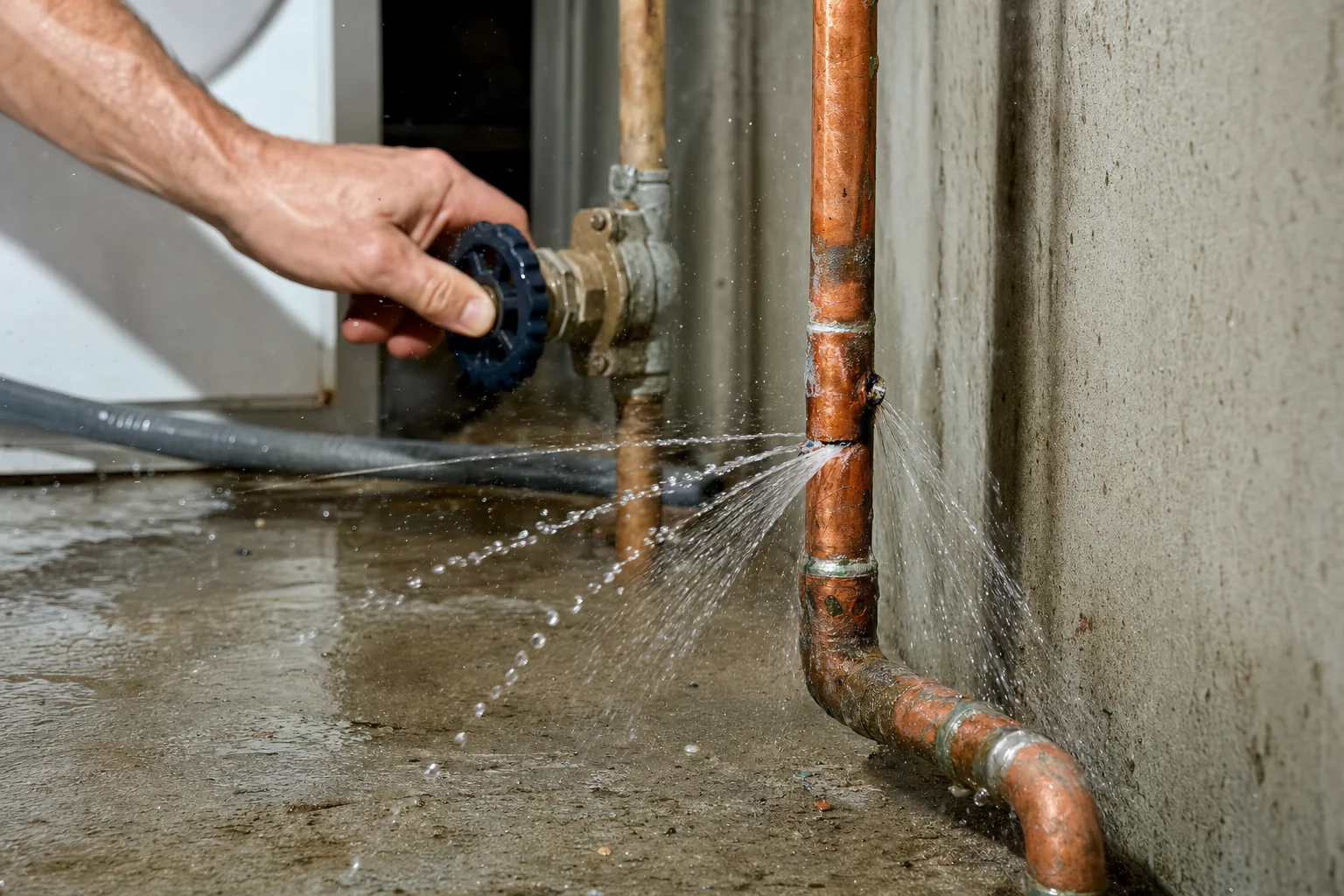
- Stop the water source if it is safe to do so, by shutting off the supply valve or the main water shutoff.
- Cut electricity to the area if water is near outlets or appliances, but never enter standing water to reach a panel.
- Remove standing water with a wet vacuum, towels, or a mop to reduce the volume sitting on the wood.
- Lift area rugs and move furniture off the wet floor so trapped moisture cannot create stains or pockets of slow drying.
- Do not crank the heat or use a hair dryer on the boards. Forcing the surface to dry while the underside stays wet is what causes crowning and cracking.
- Photograph everything for your insurance claim before anything is moved or cleaned up.
- Call a professional restoration team immediately. Household fans cannot pull moisture from the subfloor, and the 24-to-72-hour window closes fast.
The single most important step is the last one. Surface drying with consumer equipment regularly traps moisture below the boards, where it quietly feeds mold and warps the subfloor over the following weeks. Professional-grade extraction and dehumidification, with daily moisture verification, is what separates a saved floor from one torn out months later.
How AZA Restoration approaches a wet hardwood floor
When AZA Restoration responds to a water damaged hardwood floor, the goal is always to save what can be saved and to be honest when it cannot. Our process is built around three commitments. First, speed: a guaranteed 90-minute on-site arrival anywhere in our Northern Virginia service area, because the drying window is everything. Second, evidence: documented moisture readings and photographs that justify the restore-or-replace decision and support your insurance claim. Third, full-service capability, summed up by our slogan: "One call rebuilds it all."
Because AZA Restoration is a Class A licensed and fully insured restoration and general contractor, we can take a project from the first emergency extraction all the way through complete reconstruction if your floor and subfloor cannot be saved. There is no handoff to a separate contractor and no gap in accountability. Whether the answer is dry-in-place or rebuild, the same team carries it through to a finished, code-compliant floor.
Frequently Asked Questions
How long can hardwood floors stay wet before they are ruined?
Hardwood floors generally have a 24-to-72-hour window before water damage becomes permanent. Within the first 24 to 48 hours, professional drying has the best chance of fully restoring the wood. After about 72 hours, the wood is far more likely to warp, crown, or buckle permanently, and the risk of mold growth in the subfloor rises sharply. The exact window depends on water volume, water type, and humidity, which is why fast professional response is critical in Northern Virginia.
Can cupped hardwood floors go back to normal?
Often yes, if the cupping is caught early and the floor is dried with professional equipment. Cupping means the wood has absorbed moisture and swelled at the edges, but the boards are not yet permanently deformed. Controlled drying that removes moisture evenly from the top and the underside of the floor frequently allows cupped boards to flatten back out over days or weeks. If the floor is sanded flat before it has fully dried, it will likely crown later, so patience and proper moisture verification matter.
Does homeowners insurance cover water damaged hardwood floors?
In most cases, sudden and accidental water damage, such as a burst pipe or an overflowing dishwasher, is covered by standard homeowners insurance, including the hardwood flooring it damages. Gradual leaks that went unaddressed and certain flood events are commonly excluded. Documentation makes or breaks a claim, so a restoration company that records moisture readings, photos, and a detailed scope of work strengthens your position. AZA Restoration provides direct insurance billing and works with your carrier on your behalf.
Is it cheaper to repair or replace water damaged hardwood?
Repairing and refinishing a salvageable floor is almost always cheaper than full replacement, which is the financial argument for acting fast. Localized extraction and drying typically falls in the $1,200 to $5,500 range, while replacement that involves subfloor work and reconstruction can start around $10,000 for a single room. The longer water sits, the more likely you are to need the costlier path, so the most economical move is to call for professional drying immediately.
Will mold grow under my hardwood floor after water damage?
Mold can begin to grow within 24 to 48 hours when moisture is trapped beneath hardwood and in the subfloor, especially in our humid climate. A musty smell, dark staining, or recurring cupping after a floor appeared to dry are warning signs of hidden mold. This is why surface-only drying with household fans is risky: it leaves the subfloor wet. Professional drying with daily moisture verification, and mold remediation when needed, is the reliable way to prevent it.
Do I need a permit to repair my hardwood floor in Fairfax County?
Like-for-like repairs such as drying a floor in place, replacing a few boards, or refinishing generally do not require a permit under the Virginia Uniform Statewide Building Code. A permit is required when the work becomes structural, such as replacing floor joists, or when it involves electrical or plumbing changes during a rebuild. Permits are issued by the local building office, such as Fairfax County Land Development Services. AZA Restoration pulls all required permits and builds to code on every reconstruction project.
Don't wait and watch your floors warp. AZA Restoration is standing by 24/7 with a guaranteed 90-minute on-site arrival across Fairfax, Loudoun, Prince William, Stafford, Fauquier, Arlington, and beyond. Call (571) 506-6668 now for emergency water extraction, structural drying, and direct insurance billing. One call rebuilds it all.