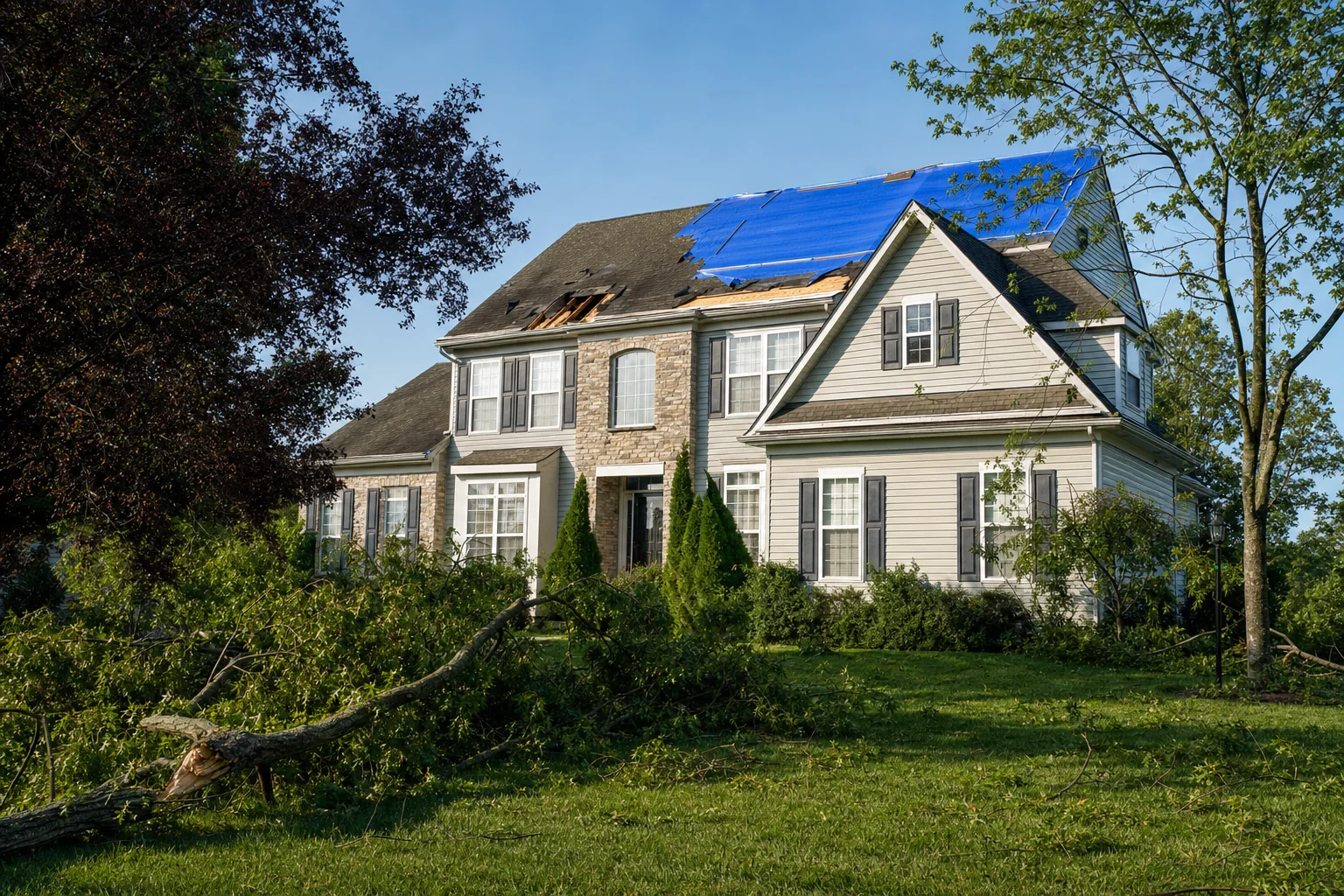
A small roof leak ignored through a single Virginia winter typically costs between $3,000 and $12,000 to repair, and a hidden or neglected one can climb past $25,000 once it reaches framing, insulation, drywall, and mold. What starts as a $300 to $800 flashing repair in October becomes a multi-trade reconstruction by March, because the freeze-thaw cycle, ice damming, and saturated insulation that define a Northern Virginia winter turn a slow drip into structural roof leak water damage. The cheapest day to fix a roof leak is always the day you first notice the stain on the ceiling. Every day after that, the math gets worse.
This guide breaks down how a small leak escalates, what each stage costs in our local market, why Virginia's winter accelerates the damage, and when an insurance claim and a permit come into play, so you can make a clear-eyed decision before the next cold snap.
What Does a Small Roof Leak Actually Cost If You Ignore It?
The cost of ignoring a leak is rarely the cost of the leak itself. A pinhole around a nail pop, a cracked plumbing boot, or a single lifted shingle might let in a teaspoon of water during one rainstorm. Caught early, that is a minor repair. Left alone through months of freezing nights and thawing afternoons, that same opening feeds water into the parts of your home you cannot see, and the bill compounds across every material the water touches.
Here is how the same leak prices out depending on when you address it. These are typical Northern Virginia market ranges, not specific quotes; your home's size, roof pitch, and the water's path will move the numbers.
| Stage of neglect | What is happening | Typical cost range |
|---|---|---|
| Week 1 — leak first noticed | Flashing reseal, boot replacement, or a few shingles; no interior damage yet | $300 - $1,500 |
| 1-3 months — ceiling staining | Wet drywall, ruined insulation, surface repair plus targeted drying | $1,200 - $5,500 |
| One winter — hidden saturation | Rotted decking, wet framing, mold colonization, multi-room repair | $8,000 - $25,000+ |
| Neglected long-term | Structural framing replacement, full reconstruction of affected areas | $25,000 - $100,000+ |
Notice the jump between the second and third rows. That gap is where most homeowners get hurt, and it is almost entirely a function of winter. A leak that would have been a tidy drywall patch in autumn becomes a structural and microbial problem by spring because Virginia's cold season is uniquely good at hiding and amplifying water intrusion.
Why Does a Virginia Winter Make a Roof Leak So Much Worse?
Northern Virginia sits in a climate zone that punishes small roof openings. Our winters are not the coldest in the country, but they deliver something more destructive: repeated swings across the freezing point. Fairfax, Loudoun, and Prince William counties routinely see daytime temperatures above freezing followed by nights well below it. That daily cycle is the engine of roof damage.
The freeze-thaw cycle pries your roof apart
When water seeps into a hairline crack in flashing, a shingle, or the roof deck, it expands as it freezes overnight, widening the gap. When it thaws the next afternoon, more water flows into the larger opening, then freezes again. Over a single winter, a crack you could barely see in November becomes a channel wide enough to soak the decking beneath. This is why a leak that seemed stable in early winter often accelerates dramatically by February.
Ice dams trap water behind a frozen wall
Ice dams form when heat escaping through your attic melts snow on the upper roof, the meltwater runs down to the cold eaves, and it refreezes into a ridge of ice. That ridge traps the next round of meltwater, forcing it backward and upward under your shingles, exactly the direction shingles are not designed to resist. Homes in higher-elevation and tree-shaded areas of western Loudoun and Fauquier counties are especially prone to ice damming because snow lingers longer there. A roof that sheds rain perfectly can still leak badly under an ice dam.
Cold air hides the evidence until spring
In winter, low humidity and constant furnace heat dry the visible underside of a ceiling faster than water arrives, so the telltale brown stain may not appear until a thaw dumps a larger volume at once. Meanwhile, the water has been quietly saturating insulation and framing for weeks. Many of the worst storm and wind damage cases we respond to in March began as a small, unnoticed leak back in December. The damage was always there; winter simply kept it out of sight.
Wet insulation stops insulating, and your bills prove it
Fiberglass and cellulose insulation lose most of their R-value the moment they get wet and do not recover when they dry. A leak that soaks the attic insulation above a bedroom can raise that room's heating cost for the rest of the winter, an invisible surcharge on top of the eventual repair. If your heating bill jumped and you cannot explain it, a roof leak is worth ruling out.
How a Small Leak Becomes Structural Damage: The Chain Reaction
Understanding the sequence shows why early action saves so much money. Water from a roof leak rarely stays where it enters; it follows gravity through your home's assemblies, damaging materials in a predictable order:
AZA Restoration answers 24/7 with a guaranteed 90-minute on-site response across Fairfax, Loudoun, Prince William, Stafford, Fauquier, and Arlington counties — plus Alexandria, Falls Church, Herndon, Manassas, and Manassas Park. We bill your insurance directly.
Call (571) 506-6668- Roof deck and underlayment. Water soaks the plywood or OSB decking; repeated wetting delaminates and rots the wood from the top down.
- Attic insulation. Saturated insulation compresses, loses R-value, and becomes a damp reservoir that keeps surrounding wood wet.
- Framing and rafters. Sustained moisture invites wood rot and, in older homes, wood-destroying insects that thrive in softened framing.
- Ceiling drywall. Gypsum board absorbs water, sags, stains, and eventually fails, sometimes collapsing a section of ceiling.
- Wall cavities and electrical. Water travels down wall framing, soaking lower-floor drywall and, at worst, reaching electrical boxes and wiring.
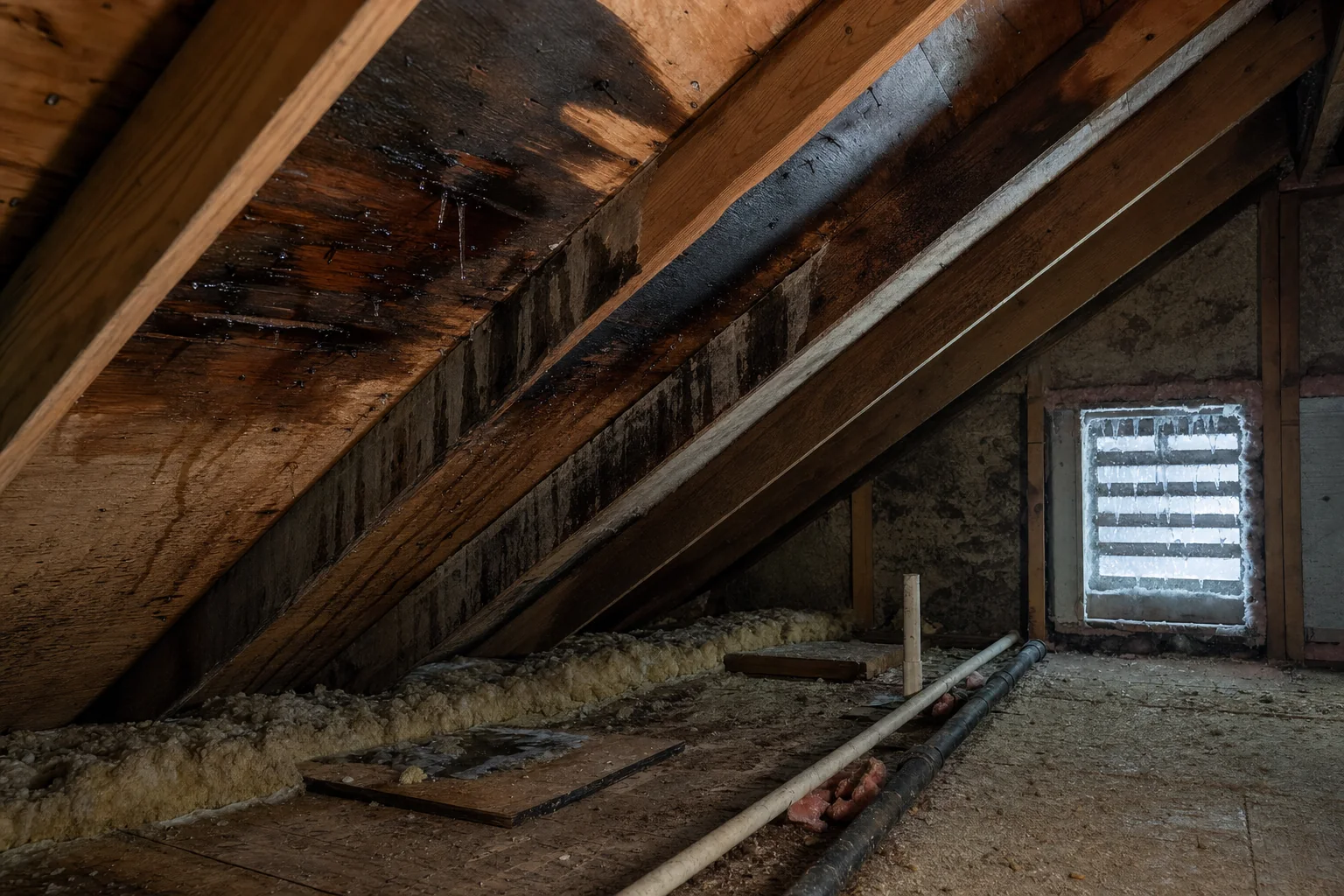
- Mold colonization. In a heated home, hidden mold can establish within 24 to 72 hours of materials staying wet and spreads steadily all winter.
By the time most homeowners see a problem on the ceiling, the chain has already reached step four or five. That is why a leak quoted at a few hundred dollars in autumn so often becomes a job involving a roofer, a drying crew, a mold specialist, and a finish carpenter by spring. The best way to break the chain is to call for professional water damage restoration the moment you suspect intrusion, before the water has had a full season to migrate.
Spotted a stain, a drip, or a musty smell after a cold snap? Do not wait for spring to find out how far the water traveled. Call AZA Restoration at (571) 506-6668 for 24/7 emergency response, guaranteed 90-minute on-site arrival across Northern Virginia, and direct insurance billing.
What Does Hidden Mold From a Roof Leak Cost to Remediate?
Mold is the silent multiplier in any winter roof leak. Professional mold remediation in Northern Virginia typically runs $500 to $6,000, but widespread or hidden growth fed by a season of roof moisture can exceed $10,000, and that is before the drywall, insulation, and framing repairs that follow. The cost is driven less by the mold itself than by how much material has to be removed, contained, and rebuilt.
A roof leak is the ideal mold incubator: a steady moisture source, the dark of an attic or wall cavity, and a heated home that keeps temperatures in the comfortable range mold prefers. Because the colony is hidden, it often grows undisturbed all winter. Homeowners frequently discover it only when the musty odor becomes impossible to ignore or when a contractor opens a wall during what they assumed would be a simple repair.
Repair vs. replace: when mold-damaged material can be saved
A common question is whether mold-affected materials can be cleaned or must be torn out. The general rule used by trained restoration specialists is straightforward, and knowing it helps you read a quote:
| Material | Usually cleaned and saved | Usually removed and replaced |
|---|---|---|
| Solid framing lumber | Surface mold, structurally sound — clean and treat | Rotted or softened wood — replace |
| Drywall | Rarely; only very minor surface spotting | Any saturated or visibly colonized board — replace |
| Insulation | Almost never | Wet or moldy insulation — replace |
| Roof decking | Surface staining, still solid — clean | Delaminated or rotted decking — replace |
Porous materials that have been wet and colonized generally cannot be reliably cleaned and should be replaced; sound structural wood can often be cleaned, treated, and kept. If you are facing visible growth or a persistent musty smell, our mold remediation process starts with containment and testing, so you are not paying to demolish materials that could have been saved, nor saving materials that should have come out.
Will Homeowners Insurance Cover Roof Leak Water Damage?
This is where ignoring a leak gets financially dangerous. Most standard Virginia homeowners policies cover water damage that is sudden and accidental, such as a wind-torn shingle during a storm that lets rain in. What they typically do not cover is damage from long-term neglect or lack of maintenance. That distinction is the entire game.
When you report a leak promptly, the damage looks sudden and accidental, and a claim is far more likely to be approved. When you let a leak run all winter, the resulting rot and mold can be classified as a maintenance failure, and the insurer may reduce or deny the claim. In other words, waiting does not just increase the repair bill; it can shift the entire bill from the insurer to you.
How to protect your claim
- Document immediately. Photograph the stain, the drip, and the source the day you notice it, with a timestamp.
- Mitigate promptly. Policies require reasonable steps to prevent further damage; an emergency tarp or board-up demonstrates good faith and stops the loss from growing.
- Keep records. Save receipts and contractor reports; they establish the timeline of a sudden event.
- Call professionals who bill insurance directly. A contractor who works with adjusters daily can document the loss properly from the start.
AZA Restoration offers direct insurance billing and works alongside your adjuster, removing a major source of stress when you are already dealing with a damaged home. The faster you engage the process, the stronger your claim and the smaller the loss.
Do You Need a Permit to Repair Roof Leak Damage in Northern Virginia?
Whether a permit is required depends on the scope of work, and this is another place where the difference between an early fix and a neglected one shows up. Under the Virginia Uniform Statewide Building Code (USBC), like-for-like surface repairs and structural drying are generally exempt from permitting, while work that touches structural framing, electrical, or plumbing requires a permit issued by your local building office.
If you caught the leak early and the job is reshingling a small section, resealing flashing, drying the area, and patching drywall, you are usually in exempt, like-for-like territory: no permit, faster turnaround, lower cost. But once a winter of neglect has rotted the rafters and decking, the repair becomes structural reconstruction, which must be permitted and built to code. In Fairfax County, that permit comes through Land Development Services; Loudoun, Prince William, Stafford, Fauquier, and Arlington counties, along with the cities of Alexandria, Falls Church, Manassas, and Manassas Park, each have their own building offices that issue and inspect these permits.
AZA Restoration is a Class A licensed restoration and general contractor, fully insured, and we pull every required permit and build to USBC code. That matters at resale, too: unpermitted structural work discovered during a home inspection can derail a sale or force expensive retroactive corrections. Letting a leak escalate into permitted reconstruction is one more hidden cost of waiting.
Roof Leak Warning Signs Every Northern Virginia Homeowner Should Know
You cannot act early on a leak you do not notice. Because winter hides the evidence, the smartest homeowners learn to spot the subtle indicators rather than waiting for water to pour through a light fixture. Watch for these signs, especially after a freeze-thaw swing or a snow melt:
- Faint ceiling discoloration. A yellow or brown ring means water has already reached the drywall.
- A musty or earthy smell. Often the first sign of hidden mold or wet insulation.
- Peeling paint or bubbling on ceilings or upper walls. Trapped moisture lifting the finish.
- Granules in the gutters. Excessive shingle granule loss signals aging or storm-damaged shingles starting to fail.
- Icicles or an ice ridge at the eaves. A classic ice dam in progress, even if no leak is visible yet.
- An unexplained jump in your heating bill. Wet insulation that has stopped working.
- Damp or stained attic decking and rafters. The most reliable place to catch a leak early; inspect after major weather.
A simple winter inspection routine
After every significant rain, snow, or freeze-thaw cycle, take five minutes: step into the attic with a flashlight and look at the underside of the roof deck for dark stains or active drips; check the ceilings of upper-floor rooms and closets for discoloration; and walk the exterior for missing shingles, lifted flashing, or ice buildup at the eaves. Catching a leak during this routine, while it is still a $300 to $800 fix, is the entire point of this article.
The Smart Sequence: How AZA Restoration Stops a Roof Leak From Escalating
When you call us about a roof leak, we follow a deliberate process designed to stop the chain reaction and document the loss for your insurer. Each step protects both your home and your wallet:
- Emergency response and source control. We arrive within 90 minutes anywhere in Northern Virginia, locate the entry point, and install an emergency tarp or board-up to stop further intrusion. This typically runs $300 to $1,500 and is the most important dollar you spend.
- Moisture mapping. Using moisture meters and thermal imaging, we trace how far the water has traveled, including into framing and wall cavities you cannot see, so nothing hidden is left to fester.
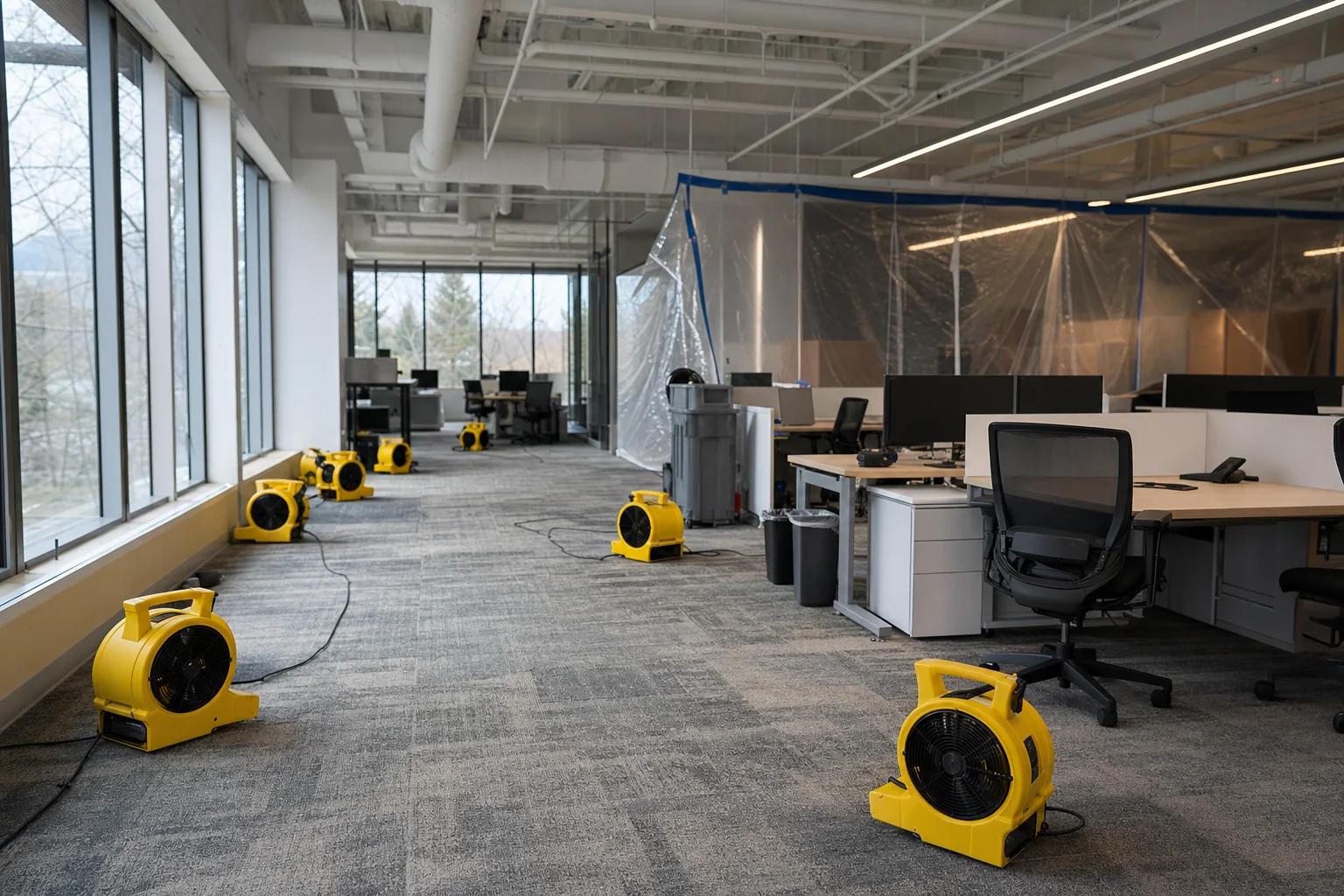
- Water extraction and structural drying. We remove standing water and dry the structure to industry restoration standards, usually over three to five days, before any rebuilding begins. Drying a wet assembly properly is what prevents mold in the first place.
- Mold containment and remediation. If colonization has begun, we contain the area, remove affected porous materials, treat sound surfaces, and verify the space is clean before closing it up.
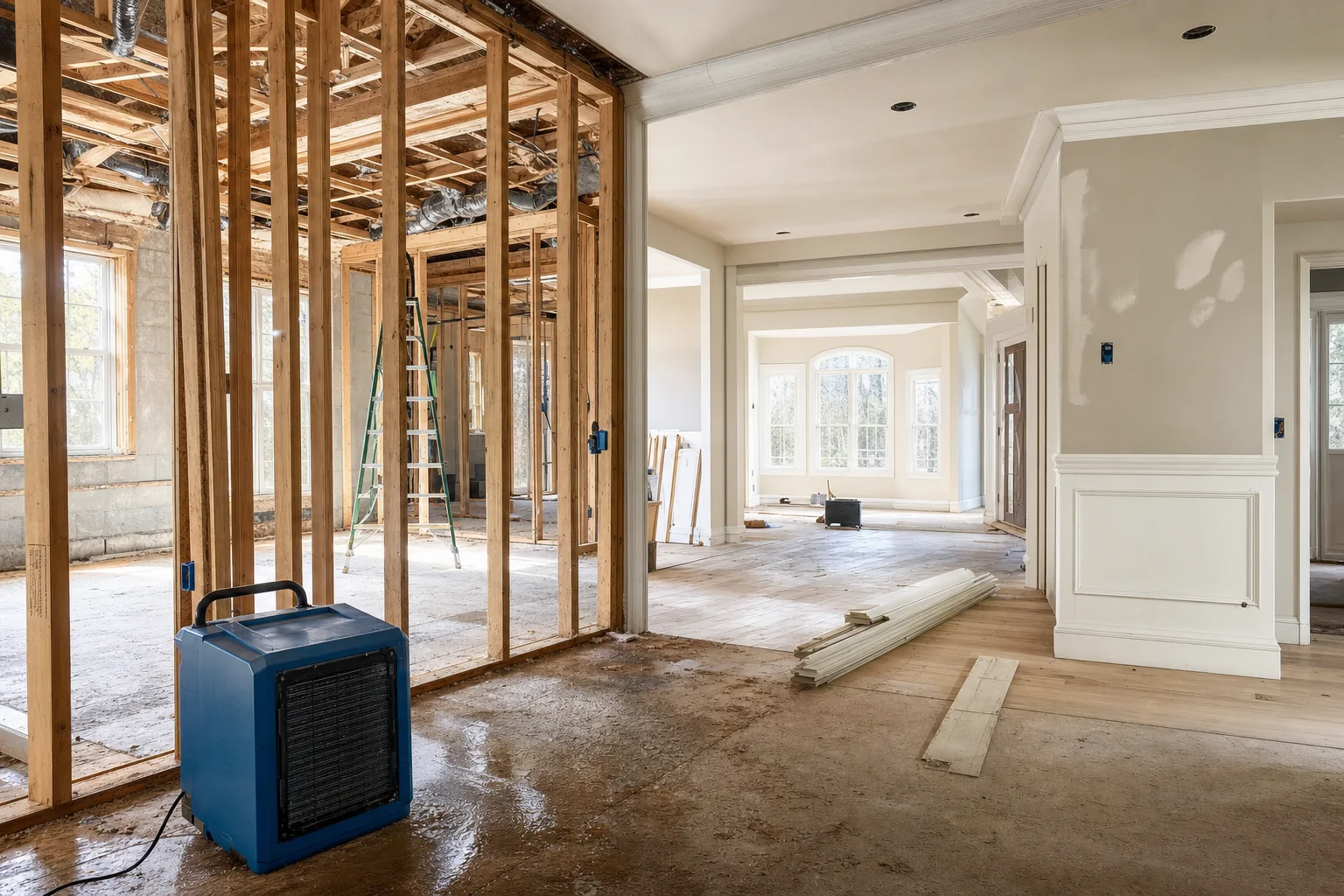
- Reconstruction. As a general contractor, we rebuild what was removed, from drywall and insulation to framing and roofing, pulling required permits and building to USBC code.
- Insurance coordination. Throughout, we document the loss and bill your insurer directly, so you are not caught between trades and adjusters.
Because we handle water, mold, and reconstruction under one roof, you avoid the costly gaps and finger-pointing that happen when a homeowner has to coordinate a roofer, a drying company, a mold contractor, and a builder separately. That single-source approach is the practical meaning of our slogan: one call rebuilds it all.
The Bottom Line: Waiting Is the Most Expensive Option
A small roof leak addressed the week you notice it is a $300 to $1,500 repair with no permit, no insurance complications, and no mold. The same leak ignored through one Virginia winter routinely becomes an $8,000 to $25,000 reconstruction involving multiple trades, a permit, possible mold remediation, and an insurance claim that may be reduced because the damage now looks like neglect. The leak did not get more expensive because it grew; it got more expensive because winter gave it time and cold to do its work unseen. The decision in front of you is not really about a leak; it is about whether you pay the small number now or the large number later.
Stop the clock on roof leak water damage before winter makes it worse. AZA Restoration responds 24/7 with guaranteed 90-minute on-site arrival across Fairfax, Loudoun, Prince William, Stafford, Fauquier, and Arlington counties and the surrounding cities. We are Class A licensed, fully insured, and we bill your insurance directly. Call (571) 506-6668 now, and let one call rebuild it all.
Frequently Asked Questions
How much does it cost to fix a small roof leak in Virginia?
Caught early, a small roof leak in Northern Virginia typically costs $300 to $1,500 to repair, covering work like resealing flashing, replacing a plumbing boot, or swapping a few shingles. If the leak has already reached interior materials, surface repair plus targeted drying runs $1,200 to $5,500. Once a leak has been neglected through a winter and reached framing or caused mold, costs commonly rise to $8,000 to $25,000 or more. The earlier you act, the lower the bill.
How fast can a roof leak cause mold?
Mold can begin colonizing wet materials within 24 to 72 hours when moisture and a comfortable temperature are present, and a heated home in winter provides ideal conditions. Because a roof leak delivers a continuous moisture source into dark attic and wall spaces, an unnoticed leak can support hidden mold growth for an entire season. Prompt drying after any water intrusion is the most effective way to prevent a mold problem and its remediation cost.
Will my homeowners insurance cover roof leak water damage?
Most standard Virginia homeowners policies cover water damage that is sudden and accidental, such as a storm tearing shingles loose, but they typically exclude damage from long-term neglect or lack of maintenance. Reporting and mitigating a leak promptly keeps the loss in the covered, sudden-and-accidental category, while letting it run all winter risks a reduced or denied claim. Document the damage immediately, take reasonable steps to stop further loss, and engage a contractor who bills insurance directly to protect your claim.
Why do roof leaks get worse in winter in Northern Virginia?
Northern Virginia winters bring repeated freeze-thaw cycles, where water enters a small crack, freezes and expands overnight, widens the opening, and thaws to let in more water the next day. Ice dams at the eaves trap meltwater and force it backward under shingles, and cold dry indoor air can hide ceiling stains until a thaw releases a larger volume at once. Together these conditions turn a minor autumn leak into structural saturation and mold by spring.
Do I need a permit to repair roof leak damage?
Under the Virginia Uniform Statewide Building Code, like-for-like surface repairs and structural drying are generally exempt from permitting, so an early-stage fix usually needs no permit. However, once a leak has rotted framing or decking, the repair becomes structural reconstruction that requires a permit from your local building office, such as Fairfax County Land Development Services or the equivalent in Loudoun, Prince William, Stafford, Fauquier, Arlington, or your city. AZA Restoration pulls all required permits and builds to code.
What should I do the moment I notice a roof leak?
Contain the immediate damage by placing a bucket under active drips and moving valuables away from the water, then photograph the leak and any staining with a timestamp for your insurance records. Call a restoration professional right away so the source can be controlled with an emergency tarp or board-up and the structure dried before mold sets in. AZA Restoration offers 24/7 emergency response with guaranteed 90-minute on-site arrival across Northern Virginia at (571) 506-6668.