A restoration and reconstruction contractor is a single licensed company that handles your entire disaster recovery from the first emergency call through the final coat of paint, which is exactly why one-stop restoration saves Northern Virginia homeowners money, time, and stress. Instead of hiring one firm to dry out the water, another to remediate the mold, and a third general contractor to rebuild the walls, you work with one team that owns the whole timeline, talks directly to your insurance adjuster, and is accountable for the result. For most Fairfax, Loudoun, and Prince William County homeowners, that consolidation cuts weeks off the recovery and eliminates the finger-pointing that drains both budgets and patience.
At AZA Restoration, "One call rebuilds it all" is not a tagline; it describes how the work actually flows. Below, we explain what reconstruction after a disaster really involves, why splitting mitigation and rebuilding across separate vendors costs you, what the local code and permitting picture looks like in Northern Virginia, and how to choose a contractor who can carry you from emergency stabilization all the way to a finished, livable home.
What does a restoration and reconstruction contractor actually do?
A restoration and reconstruction contractor performs two distinct phases of disaster recovery under one roof. The first phase, mitigation, stops the damage from spreading and stabilizes the property. The second phase, reconstruction, rebuilds everything the disaster destroyed back to a finished, pre-loss condition. Companies that only do one half hand you off at the most fragile point in the process. A true one-stop firm owns both.
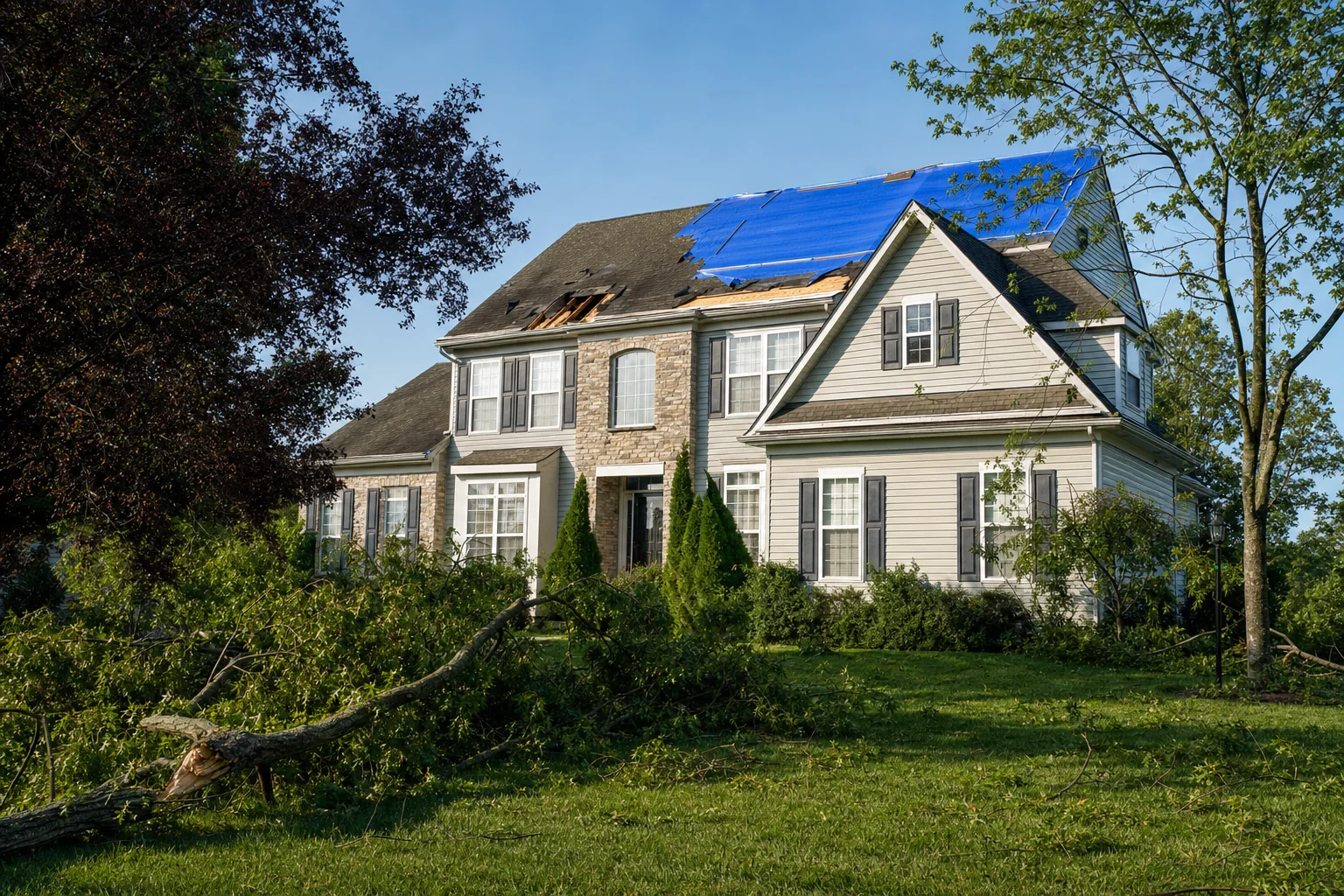
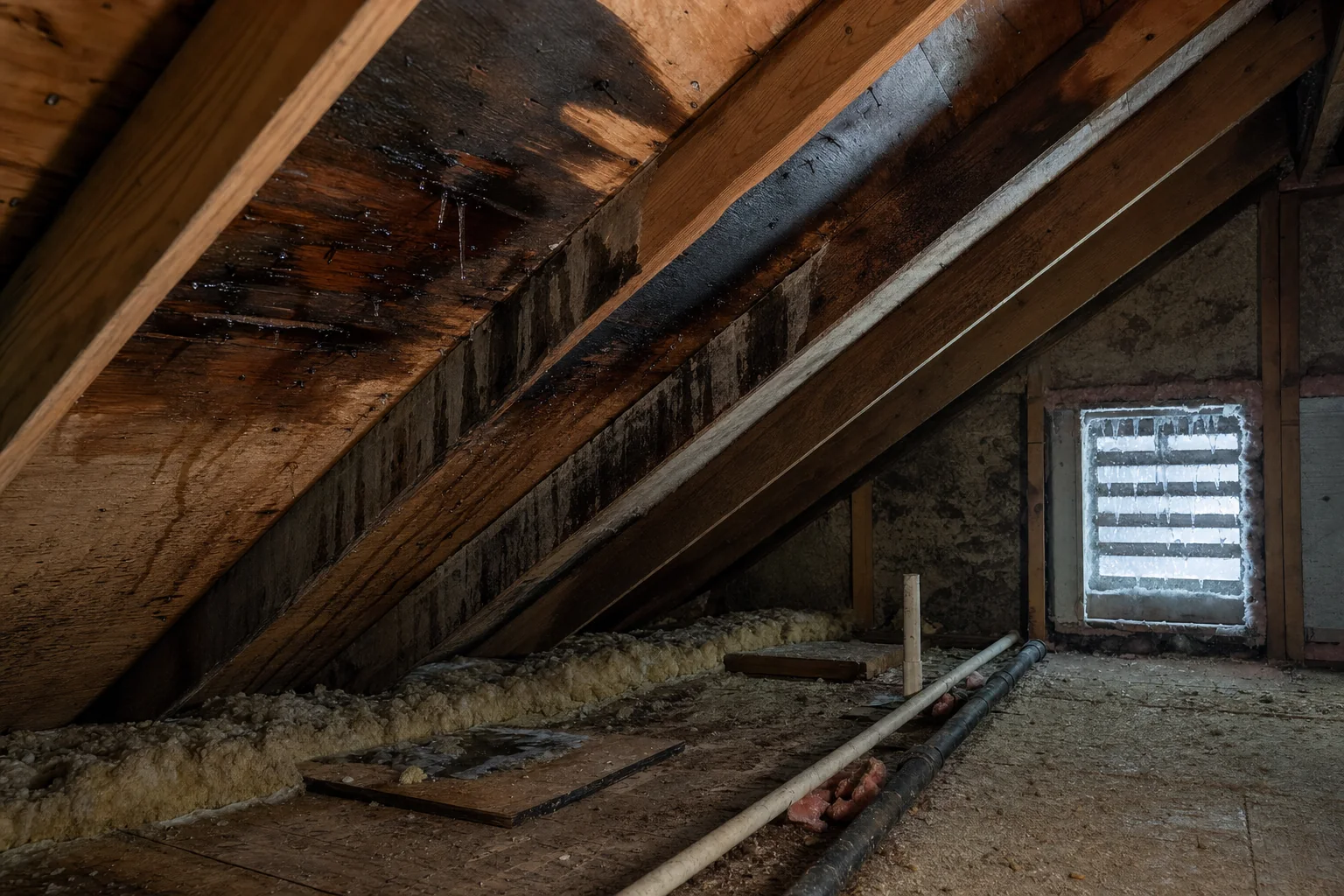
The mitigation phase covers the urgent, time-sensitive work: water extraction, structural drying, soot and smoke cleanup, mold removal, board-up and tarping, or sewage decontamination. This work has to start within hours, because secondary damage compounds fast. Standing water wicks into drywall and subfloor within a day, and microbial growth can begin in as little as 24 to 48 hours in our humid Virginia summers.
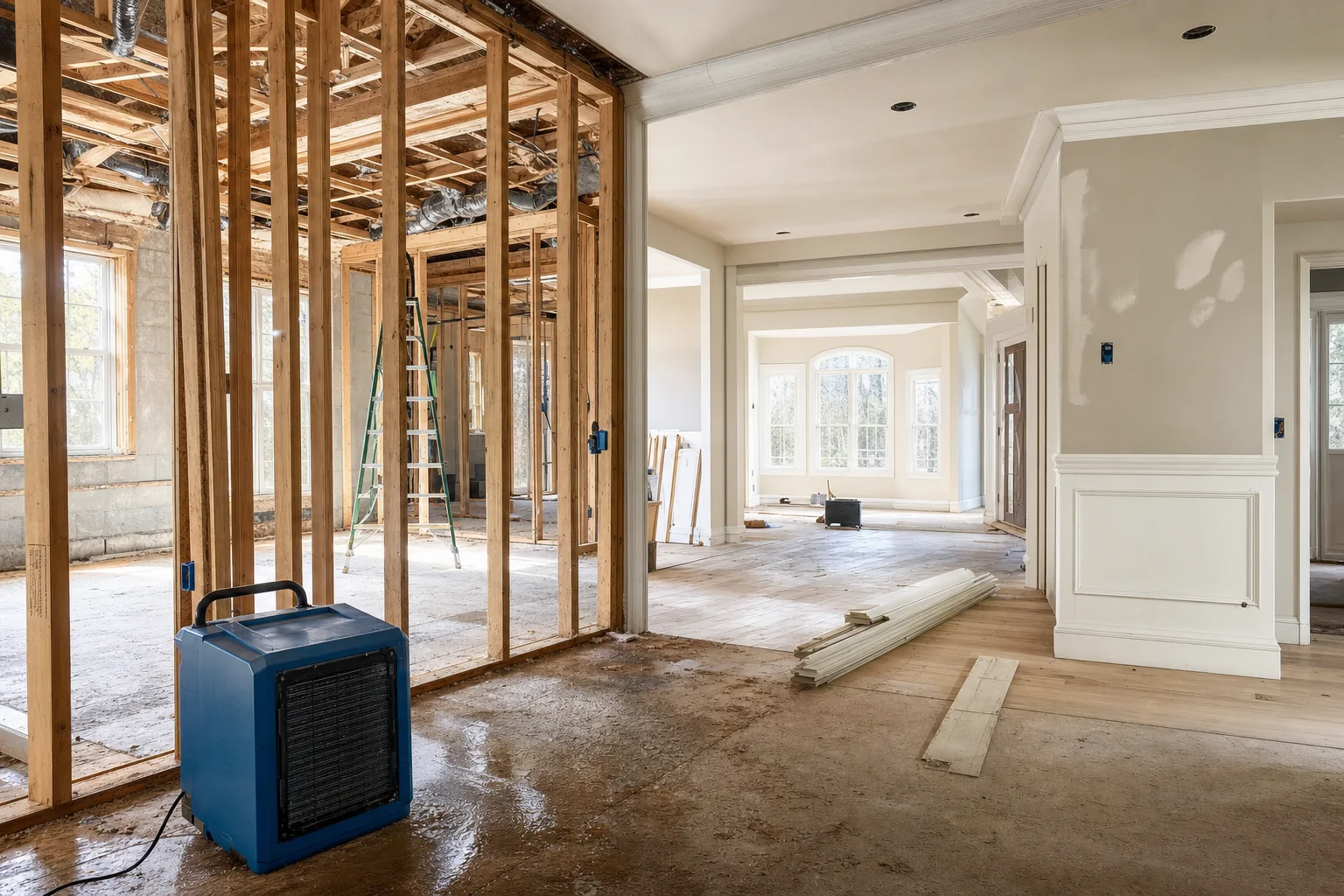
The reconstruction phase is true general contracting: framing, drywall, insulation, flooring, cabinetry, painting, electrical, plumbing, roofing, and finish carpentry. This is where a home goes from "stabilized and gutted" back to "finished and livable." Because AZA Restoration is a Class A licensed general contractor as well as a restoration specialist, the same company that tore out your water-damaged kitchen also rebuilds it. You can see the full scope of that rebuilding capability on our reconstruction services page.
Mitigation versus reconstruction: where most homeowners get stuck
The break point in a fragmented recovery almost always lands between these two phases. A water-mitigation-only company dries your home, pulls its equipment, hands you a moisture report, and leaves. Now you are holding a half-finished project and a stack of insurance paperwork, and you have to find, vet, and schedule a separate general contractor for the rebuild. That contractor was not there for the demolition, did not document the original damage, and has every incentive to question what the first company did. Weeks pass while you play project manager between two firms that have never met.
Why does one-stop restoration save Northern Virginia homeowners money?
One-stop restoration saves money primarily by eliminating duplicated mobilization, preventing scope gaps between vendors, and giving your insurance company a single, consistent estimate to approve. When mitigation and reconstruction are split, you pay for two separate companies to mobilize, document, and coordinate, and the seams between their scopes become disputes you end up funding out of pocket.
Consider how costs stack up across the most common Northern Virginia disasters. The ranges below reflect typical market pricing for the full job, not specific invoices, and a single accountable contractor keeps you toward the efficient end of each range rather than the inflated end created by coordination failures.
| Disaster type | Typical full-project cost range | Typical timeline |
|---|---|---|
| Localized water damage | $1,200 - $5,500 | Structural drying 3-5 days |
| Major / whole-home water damage | $8,000 - $25,000+ | Drying days; rebuild weeks |
| Flood damage | $3,000 - $15,000+ (higher for Category 3) | Cleanup and dry 5-10 days |
| Mold remediation | $500 - $6,000 (hidden/widespread can exceed $10,000) | 1-5 days |
| Fire and smoke | Soot cleanup from ~$3,000; full rebuild up to $50,000+ | Cleanup days; rebuild weeks |
| Smoke and odor removal | $2,000 - $15,000 | Days to weeks |
| Storm and wind damage | Emergency tarp/board-up $300 - $1,500; full repairs $2,500 - $20,000+ | Hours for stabilization; weeks for repair |
| / sewage | $1,500 - $10,000+ | 1-3 days cleanup |
| Reconstruction (rebuild) | ~$10,000 single room to $100,000+ major rebuild | Weeks to months |
The hidden cost of the handoff
The most expensive line item in a fragmented restoration is invisible on any estimate: the scope gap. When the mitigation company documents the loss one way and the rebuild contractor sees it differently, your adjuster receives conflicting paperwork, and the difference becomes a delay or a denied claim. Every week your home sits half-finished is a week of rented dehumidifiers, temporary housing, or a commercial space you cannot reopen. With a single restoration and reconstruction contractor, the demolition photos, moisture logs, and rebuild estimate all come from the same source, so the claim moves cleanly.
There is also a real labor savings. A one-stop crew that already gutted your bathroom knows what is behind the walls, where the plumbing runs, and what the original finishes were. A new contractor has to re-investigate all of that, and that discovery time is billable.
Disaster does not wait, and neither do we. AZA Restoration guarantees a 90-minute on-site arrival anywhere in Northern Virginia, 24/7, and we bill your insurance directly. Call (571) 506-6668 the moment you discover damage, and let one team carry your home from emergency stabilization all the way to the final walkthrough.
How does the restoration-to-reconstruction process work, step by step?
A properly sequenced disaster recovery follows a predictable order. When the same company owns every step, each phase is documented for the next, and nothing falls through the cracks. Here is the process AZA Restoration follows on a typical Northern Virginia loss.
- Emergency response and stabilization. We arrive within 90 minutes, stop the source (shut off water, board up openings, tarp the roof), and make the structure safe to enter.
- Damage assessment and documentation. We photograph, measure, and log every affected area, including hidden moisture readings, before anything is removed. This documentation becomes the backbone of your insurance claim.
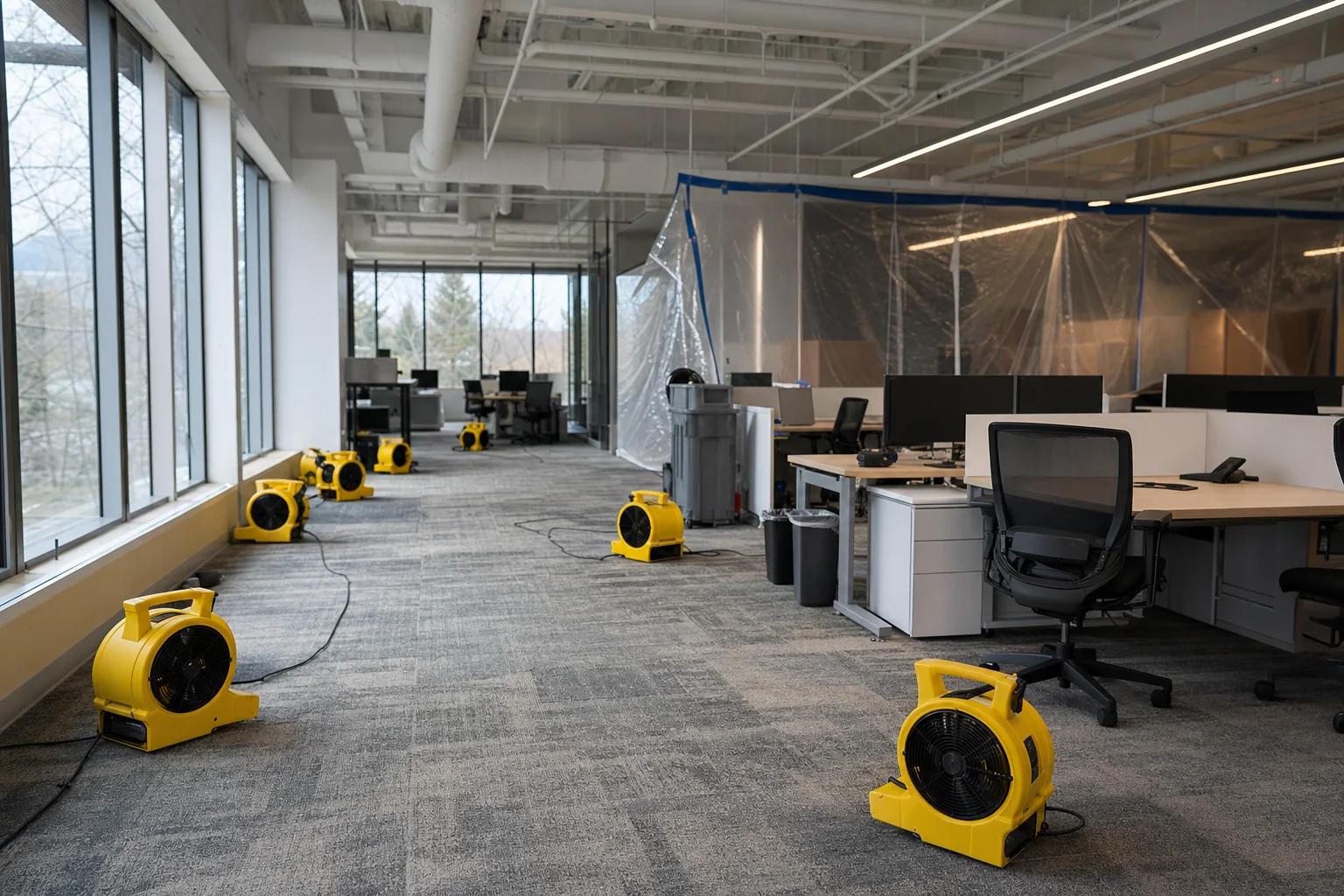
- Water extraction and structural drying. Industrial extractors, air movers, and dehumidifiers pull standing water and drive moisture out of framing and subfloor, typically over three to five days, with daily moisture monitoring.
- Cleanup, remediation, and decontamination. Depending on the loss, this means soot and smoke removal, mold remediation, antimicrobial treatment, odor neutralization, or decontamination to industry restoration standards.
- Controlled demolition. Unsalvageable materials, swollen drywall, ruined flooring, contaminated insulation, are removed cleanly, with the structure prepared for rebuild.
- Reconstruction and rebuild. Framing, drywall, insulation, flooring, cabinetry, electrical, plumbing, and paint bring the home back to pre-loss condition or better, with required permits pulled and inspections passed.
- Final walkthrough and closeout. We verify every detail with you, confirm the work meets code, and finalize the documentation your insurer needs to close the claim.
Why sequencing matters
Each step depends on the one before it. You cannot rebuild a wall that is still wet, and you cannot dry a cavity that is still leaking. When one company controls the sequence, the rebuild crew is scheduled before the dryers come out, so there is no dead time. When two companies share the job, the rebuild only starts after a separate bidding, contracting, and scheduling cycle, which routinely adds two to four weeks to an already disruptive event.
What is the Northern Virginia angle? Climate, watersheds, and risk
Northern Virginia presents a specific combination of risk factors that make fast, coordinated restoration especially important. The region sits within the Potomac River watershed, with tributaries like Bull Run, Cub Run, Difficult Run, and Accotink Creek threading through Fairfax, Loudoun, and Prince William Counties. Properties near these waterways and their floodplains face elevated flood risk during the heavy rain events that have become more frequent in our mid-Atlantic climate.
The seasonal pattern compounds the risk. Hot, humid summers create ideal conditions for mold the moment moisture intrudes, so a water loss in July behaves very differently than one in January. Spring and summer bring severe thunderstorms, downbursts, and the occasional remnant of a tropical system, all capable of driving wind-borne rain through a compromised roof. Winter delivers freeze-thaw cycles that burst pipes and ice dams that back water under shingles. Each season has its signature failure mode, and each demands a contractor who can respond fast across the whole region.
Local response across the counties we serve
AZA Restoration's 90-minute arrival guarantee covers Fairfax, Loudoun, Prince William, Stafford, Fauquier, and Arlington Counties, plus Alexandria, Falls Church, Herndon, Manassas, and Manassas Park and the towns and neighborhoods within them. That geographic reach matters because the first hours after a loss determine how much of your home is salvageable. A company headquartered far away that "services" Northern Virginia cannot make the same promise to a homeowner in Haymarket at 2 a.m. as one staged here in Chantilly.
Do you need a permit to rebuild after disaster in Virginia?
In Virginia, whether you need a building permit depends on the scope of the rebuild. Like-for-like drying and surface repairs, such as replacing drywall, flooring, or paint in the same configuration, are usually exempt. But any work that touches structure, electrical, or plumbing systems requires a permit under the Virginia Uniform Statewide Building Code (USBC), issued by your local county or city building office. Skipping that permit can stall your insurance claim, void your work, and create problems when you eventually sell the home.
The USBC is a statewide code, but it is administered locally. In Fairfax County, permits run through Land Development Services; Loudoun, Prince William, and the independent cities each operate their own building offices with their own submission portals and inspection schedules. A contractor who works here every day knows those processes, knows the inspectors, and knows how to sequence inspections so the rebuild does not stall waiting on a sign-off.
Permit-exempt versus permit-required work
| Usually permit-exempt | Usually permit-required (USBC) |
|---|---|
| Replacing drywall in the same location | Moving or removing load-bearing walls |
| Like-for-like flooring replacement | Structural framing repairs after fire or impact |
| Repainting and surface finishing | Rewiring or new electrical circuits |
| Cosmetic trim and fixture swaps | Replumbing or relocating plumbing |
| Surface mold cleaning on small areas | Roof structure rebuilds and additions |
This is one of the clearest advantages of hiring a combined restoration and reconstruction contractor. A mitigation-only company has no permit relationship with the county because it never does permitted work. When you then hire a separate rebuilder, that firm has to start the permit process cold. AZA Restoration pulls the required permits and builds to code as part of the same continuous job, so the regulatory timeline runs in parallel with the work rather than after it.
Should you repair or replace after major damage?
The repair-versus-replace decision hinges on three factors: the extent of the damage, the type of material affected, and whether the damage is structural or cosmetic. As a general rule, porous materials that have absorbed contaminated water or that show microbial growth are replaced, while non-porous and structurally sound materials are cleaned, dried, and restored. A contractor who profits from both mitigation and reconstruction has an interest in giving you the honest answer, because either path keeps the work in-house.
A practical repair-vs-replace guide
- Drywall: Repair if dampness was minor and caught early; replace if it was saturated, exposed to Category 2 or 3 water, or shows any mold staining.
- Hardwood flooring: Often salvageable through controlled drying if addressed within the first day or two; replace if cupping, crowning, or buckling has set in.
- Carpet and pad: Pad is almost always replaced after water intrusion; carpet may be cleaned and reinstalled after clean-water losses but is discarded after sewage or flood water.
- Cabinetry: Solid-wood boxes can sometimes be dried and refinished; particleboard and MDF cabinets swell and are usually replaced.
- Insulation: Wet fiberglass and cellulose lose their R-value and trap moisture, so they are removed and replaced.
- Framing: Structural lumber is dried in place and retained whenever moisture readings allow; only charred, rotted, or compromised members are replaced.
The danger with a fragmented approach is that a mitigation-only company may over-demolish to bill more drying, while a rebuild-only company may under-document so it is not blamed for what the first firm removed. A single accountable contractor has no reason to play either game, because it answers for the whole result and for your insurer's scrutiny of the complete file.
Why does one team matter for insurance claims?
A single restoration and reconstruction contractor produces one continuous, internally consistent claim file, which is the difference between a smooth approval and a drawn-out dispute. Your insurance adjuster wants matching documentation: the same photos, moisture logs, scope, and pricing flowing from emergency response through final rebuild. When that all comes from one source, the adjuster has nothing to reconcile.
AZA Restoration bills your insurance company directly, so you are not floating tens of thousands of dollars and waiting for reimbursement. We speak the adjuster's language, document to the standard carriers expect, and keep the scope defensible from the first photo to the final invoice. Fragmenting the work across vendors reintroduces exactly the inconsistencies that get claims questioned, supplemented, or partially denied.
Commercial properties raise the stakes
For business owners, every day of downtime is lost revenue, so the speed advantage of a one-stop contractor is even more pronounced. Our commercial restoration team handles offices, retail spaces, multifamily buildings, and other facilities where coordinating mitigation and reconstruction separately would mean weeks of closure. A single contractor compresses that timeline, sequences the work to reopen critical areas first, and keeps the loss documentation clean for both property and business-interruption claims.
How do you choose the right restoration and reconstruction contractor?
Choosing the right contractor comes down to verifying that one company can genuinely carry both phases, with the licensing, response capability, and local knowledge to back it up. Many companies advertise "full-service" restoration but quietly subcontract the rebuild or hand it off entirely. Ask direct questions before you sign anything.
- Are you a licensed general contractor, not just a mitigation company? In Virginia, large rebuilds require a Class A license. AZA Restoration is a Class A licensed and fully insured restoration and general contractor, which is what allows us to legally complete major reconstruction.
- Do you handle both mitigation and reconstruction in-house? If the answer is "we partner with a rebuilder," you are back to the fragmented model with its handoff and accountability gaps.
- What is your guaranteed response time, and where are you based? A local, staged team can promise and keep a 90-minute arrival across Northern Virginia. A distant company cannot.
- Will you bill my insurance directly? Direct billing protects your cash flow and signals that the contractor is confident working with carriers.
- Do you pull permits and build to the USBC? A contractor who shrugs at permitting is one whose work may not survive inspection or resale.
The right answers all point to the same thing: a single team that is accountable from the first emergency call to the final inspection. That is the entire premise of "One call rebuilds it all," and it is why consolidating restoration and reconstruction under one roof consistently serves Northern Virginia homeowners better than juggling separate vendors. You can learn more about our background, licensing, and service philosophy on our about page.
Frequently Asked Questions
What is the difference between restoration and reconstruction?
Restoration, also called mitigation, is the emergency phase that stops and stabilizes damage, including water extraction, drying, smoke and soot cleanup, and mold remediation. Reconstruction is the rebuilding phase that returns the property to its pre-loss condition through framing, drywall, flooring, painting, and finish work. A combined restoration and reconstruction contractor like AZA Restoration performs both phases under one company, eliminating the handoff between separate vendors.
How long does the full restoration and reconstruction process take?
Timelines vary by the type and severity of the loss. Structural drying typically takes three to five days, mold remediation one to five days, and flood cleanup five to ten days. Reconstruction can run from a few days for a single room to several weeks or months for a major rebuild. When one contractor controls both phases, the rebuild is scheduled to begin as soon as drying is complete, often cutting two to four weeks off a fragmented project.
Do I need a permit to rebuild my home after water or fire damage in Virginia?
Like-for-like repairs such as replacing drywall, flooring, or paint in the same configuration are usually exempt from permits. However, any work involving structural framing, electrical, or plumbing requires a building permit under the Virginia Uniform Statewide Building Code, issued by your local county or city building office. AZA Restoration pulls the required permits and builds to code as part of the reconstruction process.
Will my insurance cover restoration and reconstruction?
Most homeowner and commercial policies cover sudden, accidental damage from water, fire, smoke, and storms, though coverage details vary by policy and cause of loss. Flood from rising water typically requires separate flood insurance. AZA Restoration documents the loss thoroughly and bills your insurance company directly, so you are not paying large sums upfront while you wait for reimbursement.
Why is one-stop restoration better than hiring separate companies?
A single restoration and reconstruction contractor eliminates duplicated mobilization costs, prevents scope gaps between vendors, and produces one consistent insurance claim file. It also removes the dead time between mitigation and rebuild, because the same crew that documented and stabilized the damage proceeds directly into reconstruction. The result is a faster, smoother, and typically less expensive recovery with one accountable team.
How fast can AZA Restoration respond to an emergency in Northern Virginia?
AZA Restoration guarantees a 90-minute on-site arrival, 24 hours a day, seven days a week, anywhere in our service area, which includes Fairfax, Loudoun, Prince William, Stafford, Fauquier, and Arlington Counties plus Alexandria, Falls Church, Herndon, Manassas, and Manassas Park. Fast response in the first hours after a loss is the single biggest factor in how much of your property can be saved.
One call rebuilds it all. When disaster strikes your Northern Virginia home or business, AZA Restoration is the single licensed team that handles everything from emergency water extraction to the final coat of paint, with a guaranteed 90-minute response and direct insurance billing. Call (571) 506-6668 now to speak with a trained restoration specialist and start your recovery the right way.