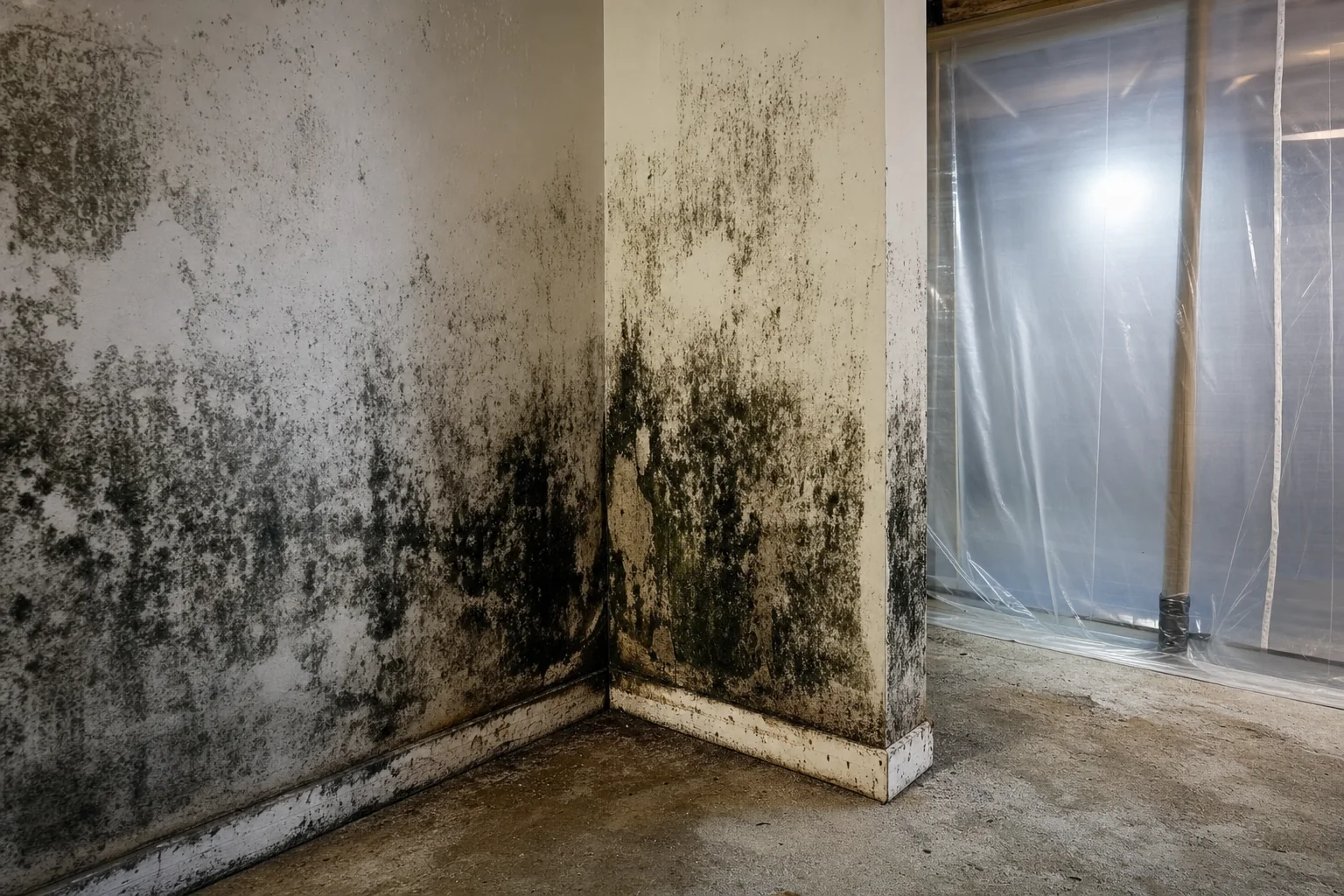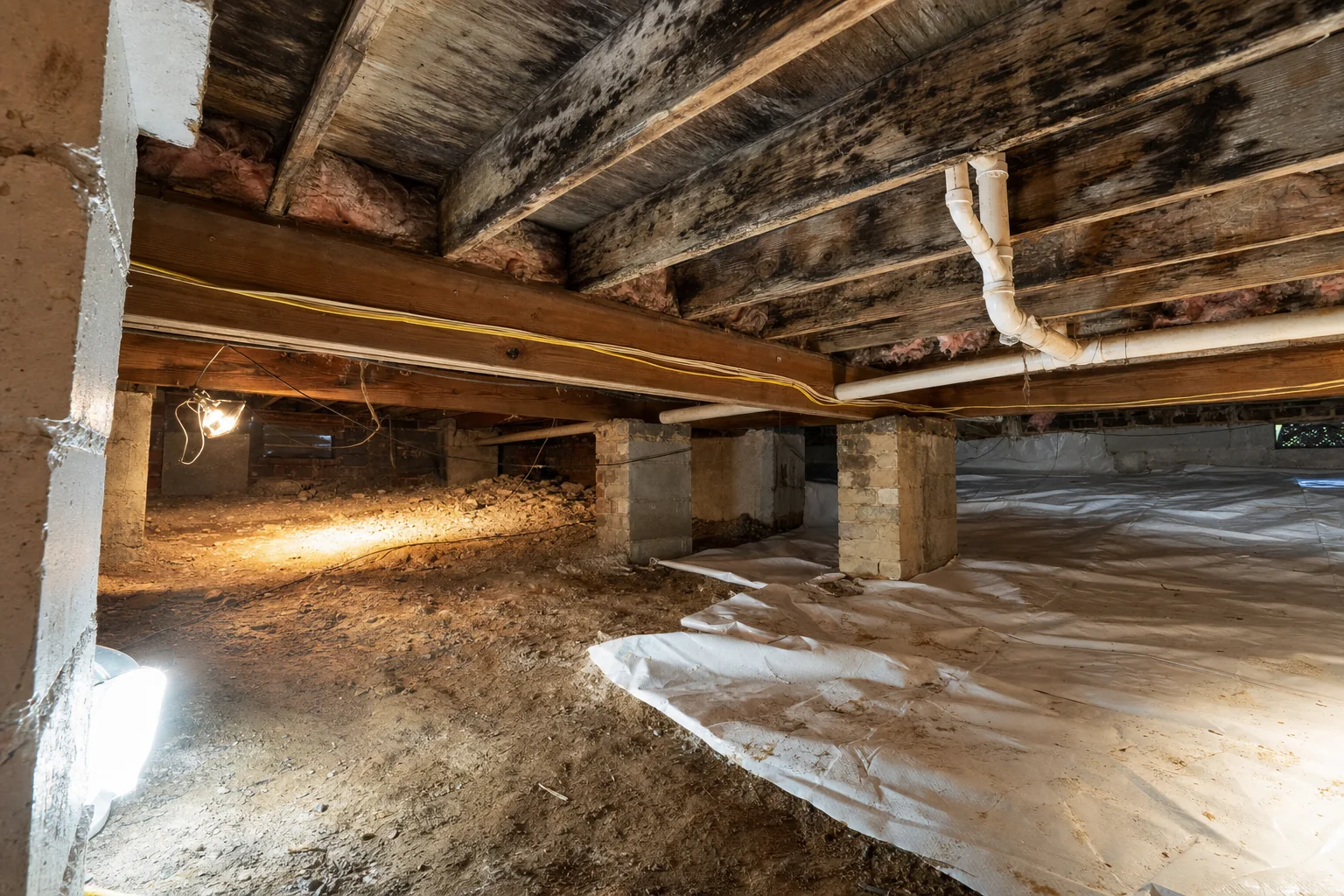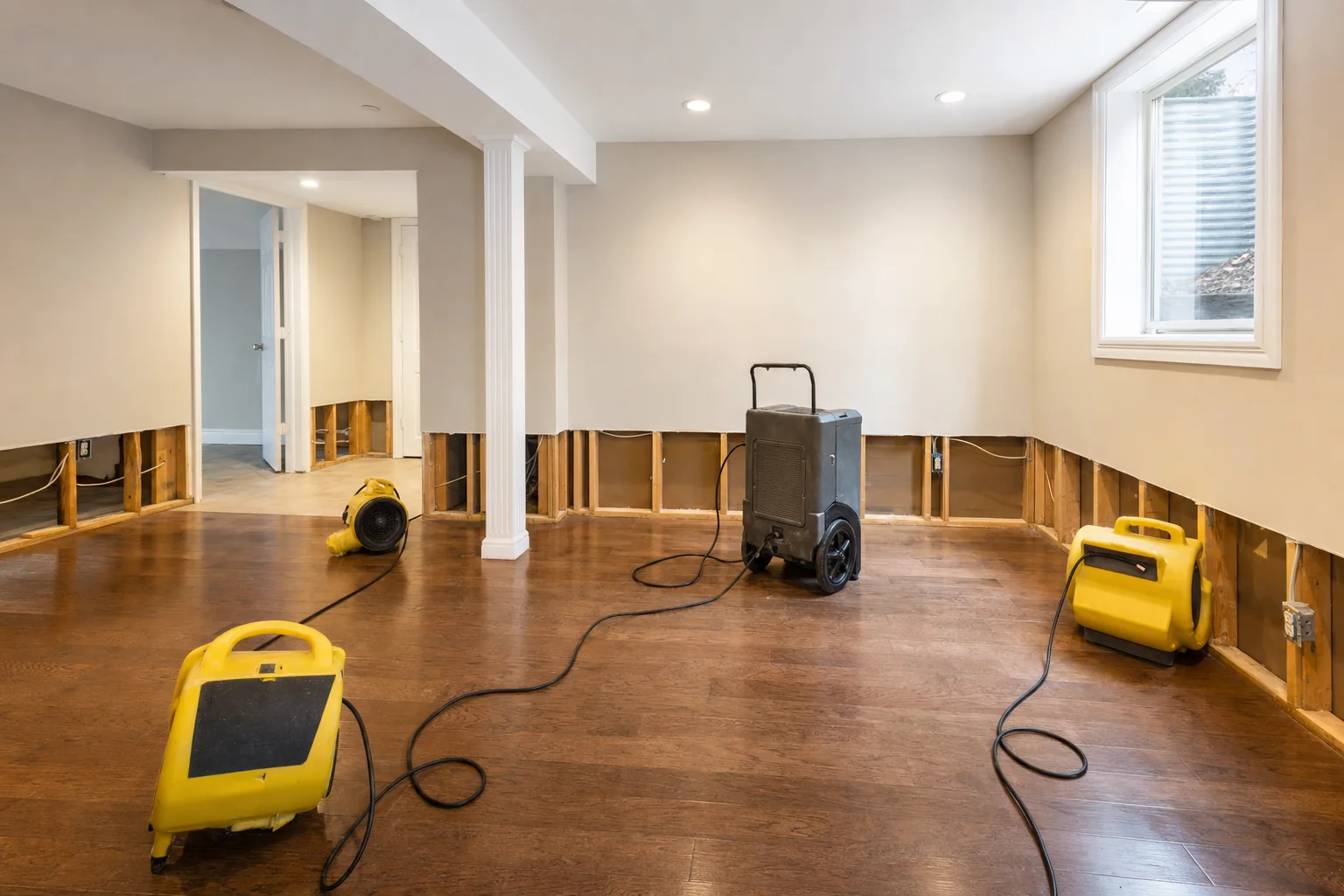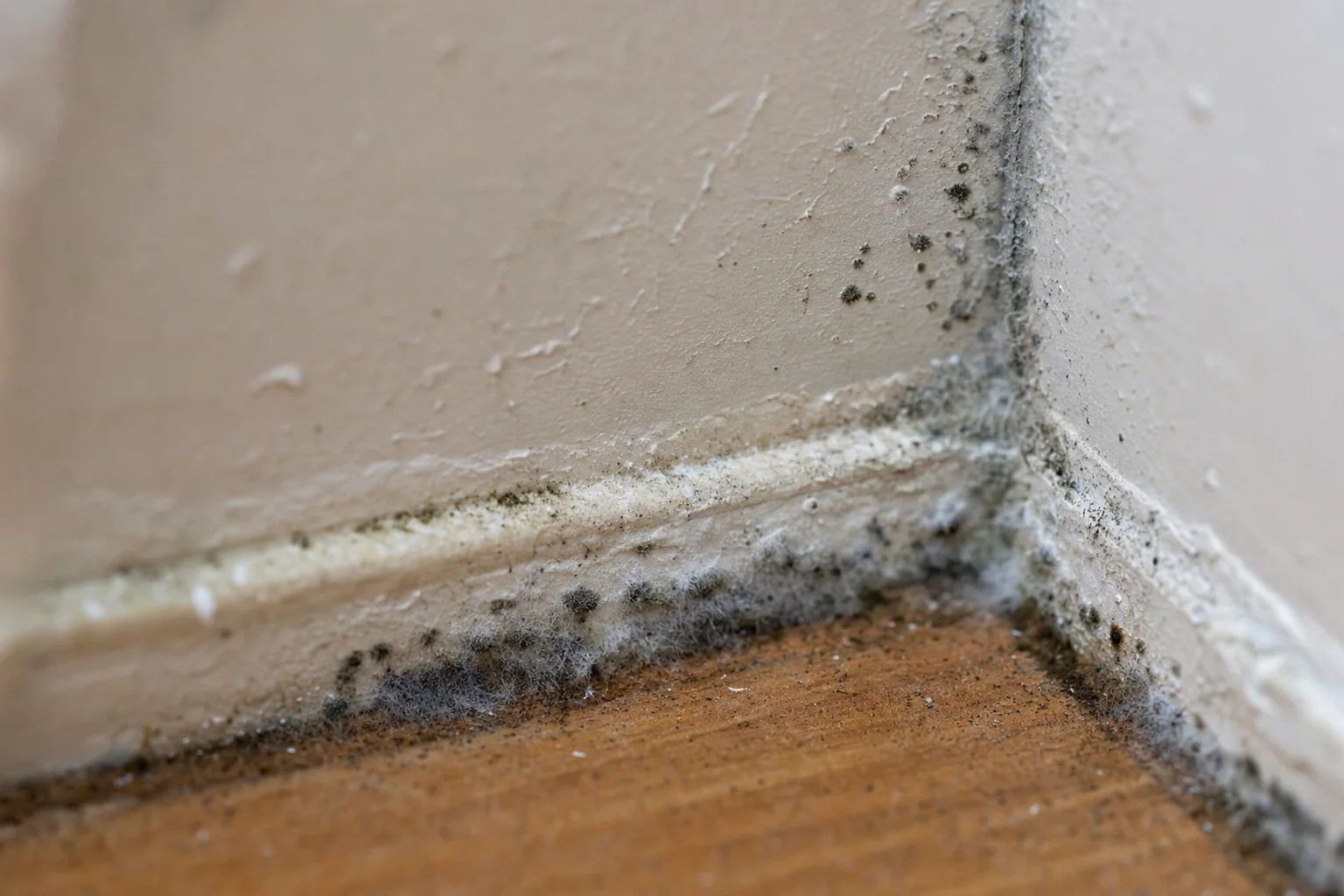
Mold after water damage can begin growing in as little as 24 to 48 hours. In Northern Virginia's humid, four-season climate, that window is often even shorter. Once building materials stay wet and the surrounding air sits above roughly 60 percent relative humidity, dormant mold spores that already exist in every home start to germinate, feed on damp drywall and wood, and spread. That is why the first 48 hours after a leak, burst pipe, or flood are the most important: act inside that window and you usually prevent a mold problem entirely. Wait past it, and a simple drying job can turn into a full mold remediation project costing thousands more.
This guide explains why that 48-hour clock matters, how Virginia's geography and code rules shape the response, and the steps that stop mold before it starts, drawn from the process our crews run every day across Northern Virginia.
Why does mold grow so fast after water damage?
Mold is not an invader that arrives after a flood. Mold spores are already present in virtually every home in Virginia, sitting harmlessly on surfaces and floating in the air. They only become a problem when they get the one thing they lack: sustained moisture. Add water to organic building materials such as paper-faced drywall, wood framing, insulation, carpet padding, and ceiling tiles, and you create an ideal feeding ground.
Three conditions trigger active mold growth, and water damage supplies all three at once:
- Moisture. Wet materials, or air above roughly 60 percent relative humidity, give spores the water they need to germinate.
- A food source. The cellulose in drywall paper, wood, cardboard, and natural fibers is essentially mold food, and it is everywhere in a typical home.
- Time and temperature. Mold thrives in the same comfortable 60 to 80 degree range people live in. Given a day or two of dampness, colonies establish and multiply.
Because spores are already on-site, there is no "incubation delay" waiting for mold to show up from somewhere else. The colony starts the moment conditions allow. That is the core reason professional water damage restoration treats rapid moisture removal, not cleanup, as the true emergency.
What does the 24-to-48-hour timeline actually look like?
Understanding the progression helps explain why speed beats almost everything else. Here is the typical sequence after materials get wet and stay wet:
| Time after water exposure | What is happening |
|---|---|
| 0–24 hours | Water wicks into drywall, baseboards, subfloor, and insulation. Materials swell. Relative humidity in the affected room climbs. No visible mold yet, but conditions are now favorable. |
| 24–48 hours | Dormant spores germinate on the dampest organic surfaces. Microscopic colonies begin forming. Often still invisible, but a musty smell may start. |
| 48–72 hours | Colonies become visible as spots or fuzzy growth. Spores are released into the air and spread to new surfaces, including HVAC ducts. |
| 1–3 weeks | Growth establishes deep in wall cavities, under flooring, and behind cabinets. What started as a drying job is now a remediation and possible demolition job. |
These are general industry timeframes, not guarantees; the exact pace depends on temperature, humidity, the material, and how clean the water was. But the pattern holds: cost and complexity climb sharply each time you cross one of these thresholds. Drying everything within 48 hours is the single most reliable way to keep mold out of the equation.
Why are the first 48 hours different in Virginia?
The 24-to-48-hour rule applies everywhere, but Northern Virginia's environment compresses the window and raises the stakes. Several local factors work against a wet house.
Humidity and the four-season climate
Northern Virginia summers are genuinely humid. From roughly May through September, indoor humidity stays high unless air conditioning and dehumidification are actively pulling moisture out. When a pipe bursts or a basement takes on water during a muggy July week, the surrounding air is already near mold-friendly levels, so wet materials dry painfully slowly on their own. Winter brings the opposite problem: homes are sealed tight, ventilation drops, and a slow leak behind a wall can stay damp for weeks before mold appears.
Basements, watersheds, and the local water table
Much of the region drains toward the Potomac and Occoquan watersheds, and many neighborhoods in Fairfax, Loudoun, and Prince William counties sit on clay-heavy soils that hold water against foundations. Finished basements are extremely common here, and they are the most mold-prone space in the house: below grade, often carpeted, and frequently the first place water collects from storms, sump pump failures, or foundation seepage. A basement that floods on a Friday night and is not dried until Monday is already past the safe window, a recurring pattern in our basement and whole-home water damage calls.
Storms and seasonal flooding
The region sees severe thunderstorms, remnants of tropical systems, and heavy rain events that overwhelm drainage and back up storm sewers. These events often hit many homes at once, so demand for drying equipment spikes exactly when you need it most. Getting on the schedule fast, before mold takes hold, matters even more during storm season.
Water in your home right now? Don't wait out the 48-hour clock. Call AZA Restoration at (571) 506-6668 for 24/7 emergency response with guaranteed 90-minute on-site arrival across Northern Virginia. We extract, dry, and bill your insurance directly, so mold never gets the chance to start.
What are the warning signs mold is already forming?
Even within the first couple of days, your senses can tell you mold has begun before you ever see a spot. Watch and smell for these early indicators:
- A musty, earthy, or damp-basement odor. This is often the very first sign and frequently appears before any visible growth. If a room smells musty after water exposure, treat it as active mold until proven otherwise.
- Discoloration on walls or ceilings. Yellow, brown, black, or greenish staining, especially spreading outward from a known wet spot.
- Peeling paint, bubbling, or warped drywall and trim. Materials distort as they absorb water and as growth develops behind them.
- Visible spots or fuzzy patches. Black, green, gray, or white growth, often starting in corners, along baseboards, behind furniture, or around vents.
- New or worsening allergy-type symptoms. Sneezing, congestion, itchy eyes, throat irritation, or headaches that ease when you leave the house can point to indoor mold.
Some of the most damaging mold hides where you cannot see it: inside wall cavities, under flooring, above ceilings, and inside HVAC systems. If you smell mold after a water event but cannot find it, that hidden growth is exactly why a professional mold damage assessment uses moisture meters and thermal imaging rather than relying on the naked eye.
What should you do in the first 48 hours? A step-by-step plan
If you catch water damage early, your own actions in the first hours can make the difference between a quick dry-out and a remediation project. Follow these steps in order.
- Stop the water source. Shut off the supply valve to a leaking fixture, or close the home's main water shutoff for a burst pipe. For roof or storm intrusion, contain it with buckets and tarps if safe to do so. You cannot dry a space that is still getting wet.
- Protect your safety first. If water is near electrical outlets, panels, or appliances, cut power to that area at the breaker before wading in. Stay out of standing water that may be contaminated by sewage. When in doubt, leave it to trained restoration specialists.
- Remove standing water fast. Use a wet/dry vacuum, mops, and towels to pull out as much water as possible. The less water sitting on materials, the slower mold develops.
- Get air moving and humidity down. Run fans, a dehumidifier, and air conditioning to drop humidity below 60 percent. In a humid Virginia summer, opening windows can make things worse, so favor AC and dehumidification.
- Lift and separate wet items. Pull up soaked rugs, move furniture off wet carpet, prop up cushions, and move wet contents to a dry area so everything dries faster.
- Document everything for insurance. Photograph and video the damage before you move or discard anything. This supports your claim and speeds the process when a restoration company bills your insurer directly.
- Call a professional within hours, not days. Homeowner efforts buy time, but rarely remove moisture trapped inside walls, subfloors, and insulation. Professional extraction and structural drying are what actually beat the 48-hour clock.
One critical caution: never paint over, bleach, or hide a damp or stained area to "deal with it later." Surface treatments do nothing about moisture and growth inside the material, and covering it only lets the colony expand unseen until it becomes far more expensive to remove.
How do professionals stop mold after water damage?
Professional water damage response is built to win the race against mold. The goal is not just to remove visible water but to drive moisture out of every material before colonies can establish. Here is what a proper response looks like.
Inspection and moisture mapping
Crews use moisture meters, hygrometers, and thermal imaging cameras to find every wet area, including hidden moisture inside walls and under floors that looks dry on the surface. This mapping defines what needs drying and prevents the classic mistake of declaring a job "done" while a wall cavity is still soaked.
Water extraction
Truck-mounted and portable extraction units pull out standing water and water held in carpet and padding far faster and more completely than household equipment. Fast, thorough extraction is the foundation of beating the mold window.
Structural drying and dehumidification
Air movers create high-velocity airflow across wet surfaces while commercial dehumidifiers pull moisture out of the air, creating a continuous drying cycle. Technicians monitor moisture readings daily and adjust equipment until materials return to normal, dry levels. In our region, full structural drying typically takes 3 to 5 days, depending on how much material got wet and how saturated it was.
Antimicrobial treatment and verification
Affected surfaces are treated with antimicrobial agents to inhibit any growth that may have started, and final moisture readings confirm the structure is genuinely dry before equipment is removed. When mold has already established, the job shifts into containment and professional mold remediation, which isolates the work area, removes contaminated materials, HEPA-filters the air, and verifies clearance before rebuilding.
What does mold and water damage cost in Northern Virginia?
The single biggest cost lever is how fast you act. Drying a home before mold starts is dramatically cheaper than remediating after it spreads. The figures below are typical market ranges for the Northern Virginia area, not fixed quotes; your actual cost depends on the affected area, the materials, the water category, and how long everything stayed wet.
| Service | Typical cost range | Typical timeline |
|---|---|---|
| Localized water damage (one room, caught early) | $1,200 – $5,500 | Structural drying 3–5 days |
| Major or whole-home water damage | $8,000 – $25,000+ | Drying 3–5 days, plus repairs |
| Flood cleanup (storm or sewage-affected) | $3,000 – $15,000+ | Cleanup and dry 5–10 days |
| Mold remediation (typical) | $500 – $6,000 | 1–5 days |
| Mold remediation (widespread or hidden) | $10,000+ | Several days to a week+ |
| Reconstruction (single room to major rebuild) | ~$10,000 to $100,000+ | Weeks, permit-dependent |
The math is straightforward. A localized leak dried within the safe window might cost a few thousand dollars and finish in under a week. Let that same leak feed a mold colony for two or three weeks, and you face remediation plus demolition plus reconstruction, easily an order of magnitude more. That is the financial argument for treating the first 48 hours as an emergency.
Repair vs. replace: drying out vs. tearing out
One of the most important decisions after water damage is whether materials can be dried and saved or must be removed and replaced. The deciding factors are how long the material was wet, how contaminated the water was, and the material type. This comparison reflects how professionals make that call:
| Situation | Usually dried and saved | Usually removed and replaced |
|---|---|---|
| Clean water, caught within 48 hours | Drywall, framing, hardwood (with monitoring), trim | Saturated carpet padding, soaked low-grade insulation |
| Wet longer than 48–72 hours | Solid wood framing if treatable | Paper-faced drywall, ceiling tiles, particleboard, carpet pad |
| Contaminated water (sewage / Category 3) | Hard, non-porous surfaces after disinfection | Most porous materials: drywall, carpet, padding, insulation |
The pattern is clear: acting early keeps materials in the "dry and save" column, which is cheaper and far less disruptive than tearing out and rebuilding. Every hour you shave off the wet time improves the odds your home can be dried rather than partially demolished.
Do you need a permit to repair mold and water damage in Virginia?
It depends on the scope of work. Like-for-like drying and surface repairs, such as drying out a room, replacing a section of drywall, or repainting, generally do not require a permit. Once the work involves structural elements, electrical, or plumbing, a permit is required under the Virginia Uniform Statewide Building Code (USBC), issued by your local county or city building office.
In practice, that means a basement rebuild after a flood, replacing damaged framing, rewiring an affected area, or moving plumbing will need permits pulled through the relevant authority, for example Fairfax County Land Development Services or your city's building office. Permitting protects you: it ensures the rebuild meets current code and is properly inspected, which matters for both safety and resale.
As a Class A licensed and fully insured restoration and general contractor, AZA Restoration pulls all required permits and rebuilds to code, so one company handles the job from emergency water extraction through final reconstruction, the idea behind our slogan, "One call rebuilds it all." You can read more about how we handle assessment and cleanup on our mold damage and mold remediation service pages.
How do you prevent mold after water damage from coming back?
Once your home is dried and restored, a few habits and upgrades sharply reduce the odds of a repeat, especially in a humid climate like ours.
- Control indoor humidity. Keep relative humidity below 60 percent, ideally 30 to 50 percent. Run dehumidifiers in basements and use AC through Virginia's humid months.
- Fix leaks immediately. A slow drip under a sink or behind an appliance is a mold colony in waiting. Address plumbing and roof leaks the day you find them.
- Maintain your sump pump and grading. Test the sump pump before storm season, add a battery backup, and grade soil so it slopes away from the foundation.
- Ventilate moisture-heavy rooms. Run bathroom and kitchen exhaust fans, and make sure the dryer vents fully outside.
- Respond to every water event fast. The same 48-hour rule applies to small spills and appliance leaks, not just floods.
If that musty smell returns or staining comes back, treat it as a signal that moisture is finding its way in again, and have it assessed before it spreads.
The bottom line on mold after water damage
Mold after water damage is fast, predictable, and, in most cases, preventable. A colony can begin within 24 to 48 hours, and Northern Virginia's humidity, clay soils, and basement-heavy housing only shorten the runway. The homeowners who avoid a mold problem are the ones who treat wet materials as an emergency and get professional drying underway before that window closes. Acting early keeps the job in the affordable "dry and save" range; waiting pushes it toward costly remediation, demolition, and rebuilding.
Beat the 48-hour mold clock. Whether you have a burst pipe, a flooded basement, or already smell something musty, AZA Restoration is ready 24/7 with guaranteed 90-minute on-site arrival across Fairfax, Loudoun, Prince William, Stafford, Fauquier, Arlington, and the surrounding cities. We extract water, dry your home to industry restoration standards, remediate mold, and rebuild to code, all with direct insurance billing. Call (571) 506-6668 now. One call rebuilds it all.
Frequently Asked Questions
How quickly does mold grow after water damage?
Mold can begin growing within 24 to 48 hours of materials getting wet and staying wet. Spores that already exist in the home germinate and form colonies once moisture and an organic food source like drywall or wood are present. In Northern Virginia's humid climate, that window can be even shorter, which is why fast drying is the most reliable way to prevent mold.
Can I prevent mold if I dry everything within 48 hours?
In most cases, yes. If wet materials are thoroughly dried within 24 to 48 hours, mold usually does not have the sustained moisture it needs to establish. The catch is that "thoroughly dried" includes moisture trapped inside walls, subfloors, and insulation, which household fans rarely reach. Professional extraction and structural drying are what reliably beat the window.
Is the mold from water damage dangerous to my health?
Mold can cause health effects, particularly for people with allergies, asthma, or weakened immune systems. Common symptoms include sneezing, congestion, itchy eyes, throat irritation, and headaches that improve when you leave the home. Because exposure risk grows the longer mold is present, it is best to have any active growth assessed and removed promptly rather than living alongside it.
Should I clean up mold myself or call a professional?
Very small surface spots on hard, non-porous surfaces can sometimes be cleaned by a homeowner. Anything beyond a small area, any mold tied to a water damage event, or any musty smell without visible growth should be handled by trained restoration specialists. Disturbing larger colonies without containment spreads spores through the home, and surface cleaning does nothing about moisture or growth inside materials.
Will insurance cover mold and water damage in Virginia?
It depends on the cause and your policy. Sudden, accidental water damage, such as a burst pipe, is commonly covered, and resulting mold may be covered when it stems from a covered loss. Gradual leaks and long-term neglected moisture are often excluded. Documenting the damage immediately and acting fast both help your claim. AZA Restoration works directly with insurers and bills them directly to simplify the process.
How long does it take to dry out a home after water damage?
Structural drying in the Northern Virginia area typically takes 3 to 5 days, depending on how much material got wet and how saturated it was. Flood and contaminated-water situations can run 5 to 10 days for cleanup and drying. If mold remediation or reconstruction is needed, that adds additional days to weeks depending on the scope and any required permits.