Mold remediation cost in Northern Virginia typically runs $500 to $6,000 for most residential jobs, with widespread or hidden infestations sometimes exceeding $10,000. Where your project lands inside that range depends on five main drivers: the square footage of affected material, where the mold is hiding (attic, crawl space, behind drywall, or inside the HVAC system), the type of surface contaminated, whether there is an active moisture source still feeding it, and how much demolition and reconstruction the cleanup requires. Most single-room remediation projects in the region are completed in one to five days. In this guide, AZA Restoration breaks down exactly what you are paying for, why prices vary so much from one Fairfax or Loudoun County home to the next, and how to keep a small problem from turning into a five-figure rebuild.
We restore homes and commercial buildings across Northern Virginia every week, and mold is one of the most misunderstood line items homeowners face. The number on the estimate is rarely about the mold itself, it is about everything that has to happen to remove it safely and stop it from coming back. Understanding those mechanics puts you in a far stronger position whether you are paying out of pocket or filing an insurance claim.
What is the average mold remediation cost in Northern Virginia?
For a typical Northern Virginia home, expect to pay between $500 and $6,000 for professional mold remediation. Small, contained jobs, think a patch of mold on bathroom drywall or a single closet wall, frequently fall in the $500 to $1,500 range. Mid-size projects involving a finished basement wall, a section of attic sheathing, or a contaminated crawl space commonly run $2,000 to $6,000. When mold has spread through multiple rooms, infiltrated the HVAC system, or grown undetected behind finished surfaces for months, total project costs can climb past $10,000.
Those figures are market ranges, not fixed prices. A proper estimate only comes after an on-site assessment, because the visible mold is almost never the whole story. To understand the full scope of what professional treatment involves, our overview of mold remediation services walks through the inspection-to-clearance process step by step.
Mold remediation cost breakdown by project size
| Project Scope | Typical Cost Range | Typical Timeline | Common Examples |
|---|---|---|---|
| Small / contained | $500 - $1,500 | 1 - 2 days | Bathroom wall, single closet, under a sink |
| Medium | $2,000 - $6,000 | 2 - 4 days | Finished basement section, attic sheathing, crawl space |
| Large / widespread | $6,000 - $10,000+ | 3 - 5+ days | Multiple rooms, HVAC contamination, whole-level spread |
| Severe / hidden | $10,000+ | 5+ days plus rebuild | Long-term water intrusion, structural rot, major demo |
Notice that timeline and cost track together. The remediation labor is only part of the picture, the larger expense often appears after the mold is gone, when contaminated drywall, flooring, and trim have to be rebuilt.
What drives the price of mold remediation up or down?
Mold remediation pricing is built from a handful of measurable factors. When two homes a mile apart in Herndon get wildly different quotes, it is almost always because of differences in these variables, not because one contractor is overcharging.
Square footage and severity of the affected area
Remediation is priced largely by the size of the contaminated zone. A few square feet of surface mold is a contained job. Once growth exceeds roughly 10 square feet, industry restoration standards call for full containment, negative-air pressure, and HEPA filtration, all of which add labor and equipment cost. The larger the colonized area, the more material must be removed, bagged, and replaced.
Location and accessibility of the mold
Where the mold grows matters as much as how much there is. Surface mold on a painted wall is straightforward. Mold inside a wall cavity, under subflooring, on attic roof decking, or coating ductwork requires demolition or specialized access just to reach it. Crawl spaces and attics, both extremely common trouble spots in Northern Virginia's older housing stock, are tight, hot, and difficult to work in, which raises labor hours. If you are still trying to identify where growth is occurring, our guide on what mold is and how it spreads explains the conditions that let it take hold in hidden spaces.
Type of mold and surface contaminated
The cleanup approach changes with the material. Nonporous surfaces like tile, metal, and sealed concrete can often be cleaned and salvaged. Porous materials, drywall, carpet, insulation, ceiling tile, and upholstered items, generally cannot be fully decontaminated and must be removed and replaced. A bathroom with tile walls costs far less to remediate than a finished basement with carpet, drywall, and wood trim, even at the same square footage, because of how much porous material has to go.
The underlying moisture source
Mold is a symptom, not the disease. The disease is moisture. Any legitimate remediation has to find and address the water source, a roof leak, a failed sump pump, a slab seepage issue, a leaking supply line, or chronic humidity. If the moisture comes from active water damage, that repair becomes part of the project. In many cases mold is discovered during a water damage cleanup, and addressing both at once is more efficient than treating them as separate events. Skipping the moisture fix guarantees the mold returns, which is why reputable estimates include it.
Demolition and reconstruction
This is the factor that surprises homeowners most. Removing the mold is one cost, putting the home back together is another. Tearing out and replacing drywall, reinstalling insulation, laying new flooring, repainting, and reframing where rot has set in can easily double or triple the bill on a serious job. AZA Restoration handles both phases under one roof, which is the heart of our promise, "One call rebuilds it all," so you are not coordinating a separate general contractor after the remediation crew leaves.
Worried about a spreading mold problem? Call AZA Restoration now at (571) 506-6668 for a fast on-site assessment. We guarantee a 90-minute on-site arrival across Northern Virginia, offer 24/7 emergency response, and bill your insurance directly so you can focus on your home instead of paperwork.
What does a professional mold remediation project actually include?
When you pay for remediation, you are paying for a controlled, multi-step process designed to remove mold without spreading spores through the rest of your home. Here is what a properly run project looks like from start to finish:
- Inspection and moisture mapping. Trained restoration specialists locate the visible growth, use moisture meters and thermal imaging to find hidden dampness, and identify the water source feeding it.
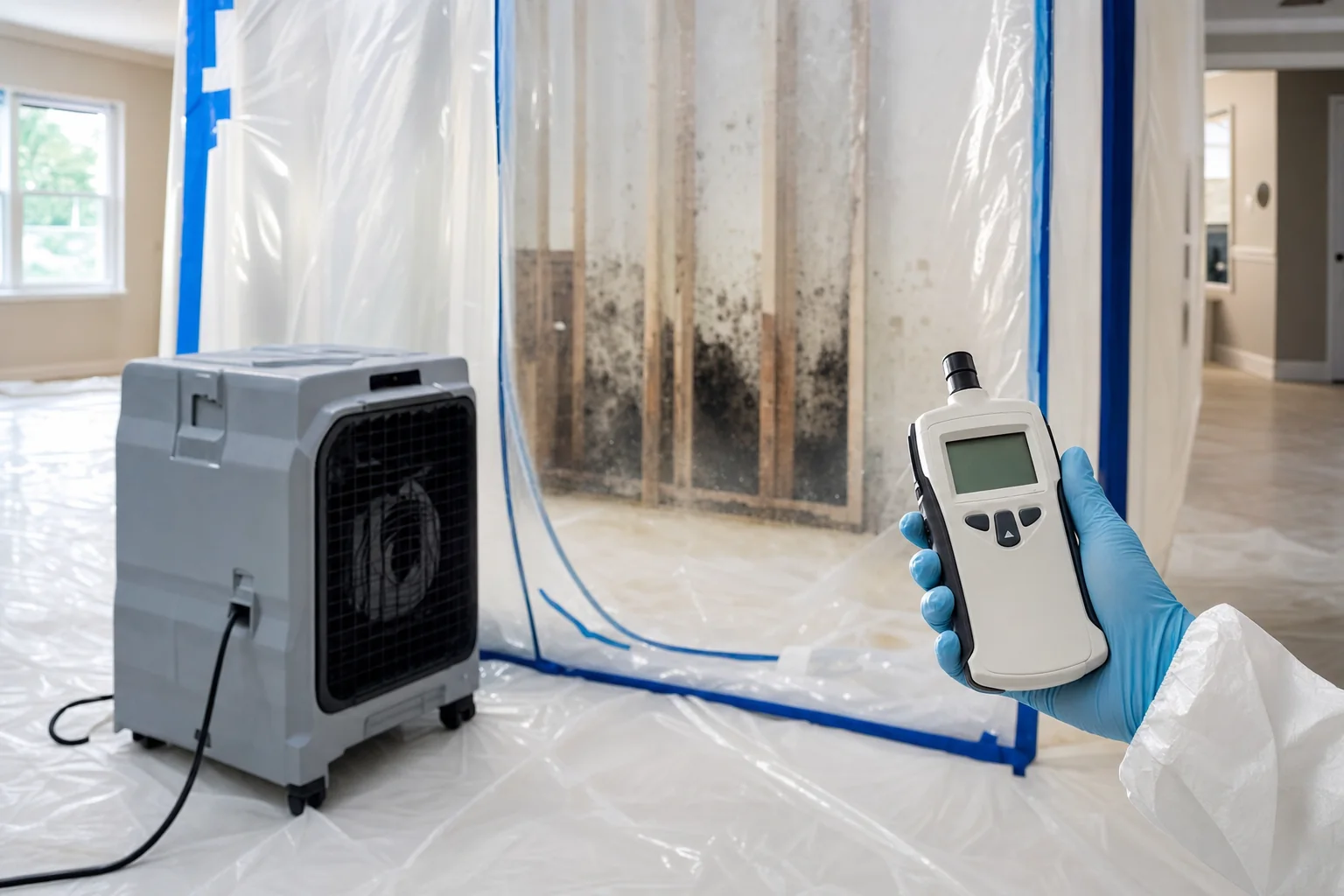
- Containment setup. The work area is sealed with plastic sheeting and placed under negative air pressure so spores cannot migrate to clean areas during demolition.
- Air filtration. HEPA air scrubbers run throughout the job to capture airborne spores.
- Removal of contaminated materials. Porous materials beyond saving, drywall, insulation, carpet, are cut out, bagged, and disposed of as contaminated waste.
- Cleaning and treatment. Salvageable surfaces are HEPA-vacuumed, scrubbed, and treated with antimicrobial agents.
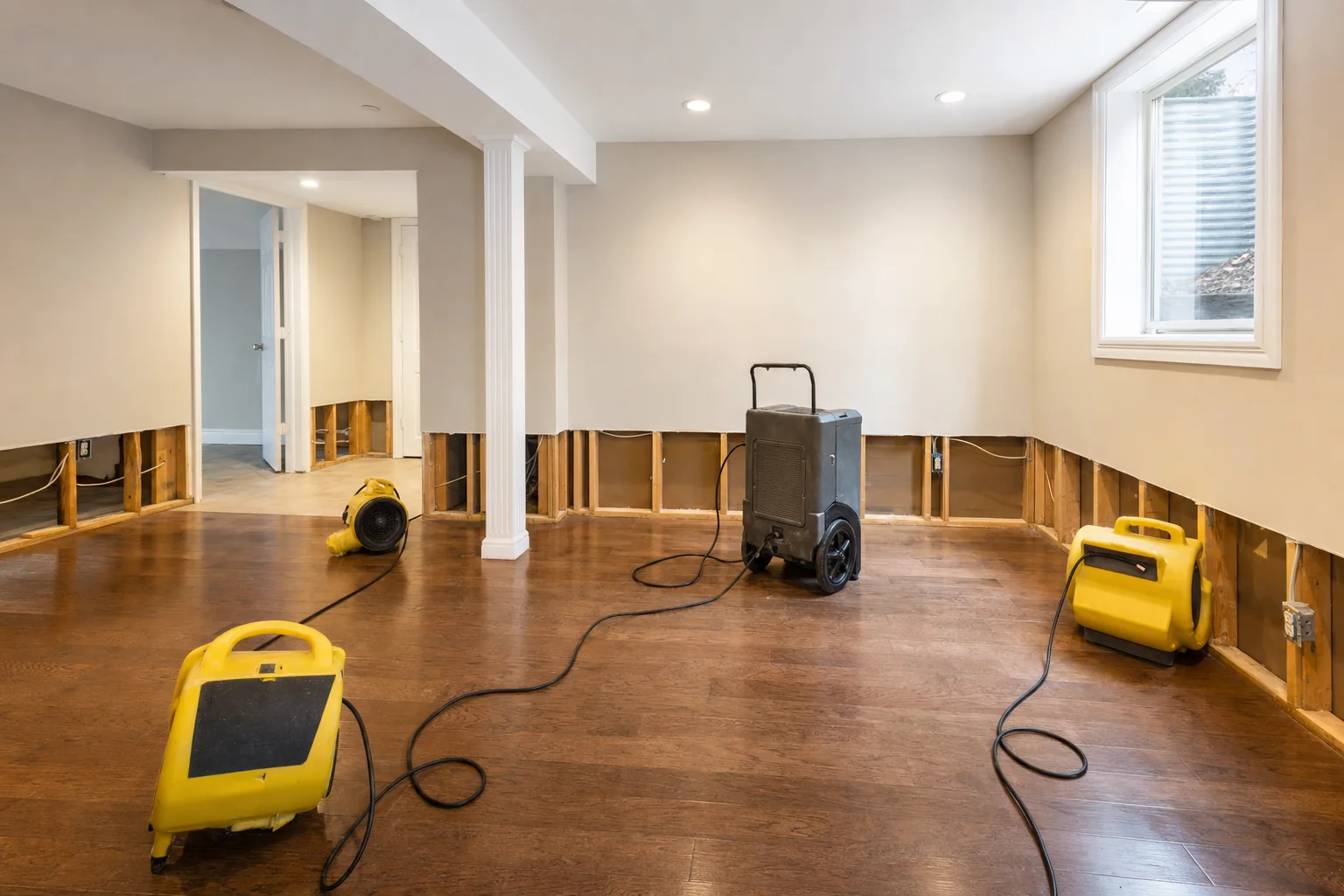
- Drying. The area is dried completely with commercial dehumidifiers and air movers, because residual moisture restarts the cycle.
- Reconstruction. Removed materials are rebuilt to code, drywall, paint, flooring, and trim.
- Verification. Final inspection, and where appropriate, independent post-remediation testing confirms the area is clear.
Each of these steps carries labor and material cost. When you compare quotes, make sure every estimate includes containment, the moisture fix, and a verification step. A suspiciously cheap quote often skips one of these, which is exactly how mold comes back six months later.
Does insurance cover mold remediation in Northern Virginia?
Sometimes, and the answer hinges on the cause. Most homeowners policies cover mold only when it results from a "sudden and accidental" covered event, a burst pipe, an overflowing appliance, or storm-driven water intrusion. In those cases, the mold is treated as part of the underlying water damage claim. Many policies cap mold-specific coverage at a set dollar amount, often somewhere between $1,000 and $10,000, even when the water damage itself is fully covered.
What insurance generally will not cover is mold caused by long-term neglect, deferred maintenance, or gradual leaks the homeowner should have caught, or flooding from outside the home, which falls under separate flood insurance. This is why documentation and speed matter so much. AZA Restoration provides detailed moisture readings, photos, and scope reports, and because we handle mold remediation and reconstruction together, your insurer sees one coordinated claim rather than fragmented bills. We bill insurance directly, so covered work does not come out of your pocket up front.
Repair vs. replace: when does it pay to rebuild?
One of the biggest cost decisions in any mold project is whether a material gets cleaned or removed. The rule of thumb professionals follow comes down to porosity and structural integrity.
| Material | Usual Recommendation | Why |
|---|---|---|
| Tile, metal, sealed concrete, glass | Clean and keep | Nonporous, surfaces can be fully decontaminated |
| Solid wood framing (light growth) | Clean, treat, sometimes sand | Structurally sound wood can often be saved |
| Drywall, insulation, ceiling tile | Remove and replace | Porous, spores penetrate and cannot be fully cleaned |
| Carpet, padding, upholstery | Remove and replace | Porous and moisture-retaining, rarely salvageable |
| Rotted or delaminated framing | Replace | Compromised structure must be rebuilt to code |
Replacing porous materials looks more expensive on paper, but trying to "clean" carpet or drywall that has been colonized almost always leads to a repeat job. Spending the money once to do it right is cheaper than paying twice. For a deeper look at how growth damages building materials over time, our resource on mold damage and its effects on a home covers what is and is not recoverable.
Why does Northern Virginia have such a persistent mold problem?
Northern Virginia is, climatically, close to ideal for mold. The region sits in a humid subtropical zone with hot, sticky summers where outdoor humidity routinely climbs above 70 percent for weeks at a time. Mold needs only moisture and an organic food source to thrive, and our summers supply the first ingredient generously. That is a major reason mold calls spike here from late spring through early fall.
Watersheds, basements, and crawl spaces
Geography compounds the climate. Much of the region drains toward the Potomac and Occoquan watersheds, and heavy rain events, increasingly common, saturate soil and push moisture into basements and crawl spaces. Homes across Fairfax, Loudoun, Prince William, Stafford, Fauquier, and Arlington counties, plus Alexandria, Falls Church, Herndon, Manassas, and Manassas Park, frequently have below-grade finished space or vented crawl spaces that trap humidity. These are the single most common locations we find hidden mold in the area.
Older housing stock and seasonal swings
Northern Virginia's housing ranges from new construction to homes many decades old. Older properties often have less-effective vapor barriers, aging windows, and original plumbing more prone to slow leaks. Add the region's sharp seasonal temperature swings, which drive condensation inside walls and attics, and you have a recipe for moisture that homeowners never see until growth appears. Storm-driven water intrusion is another frequent trigger, when a roof or siding breach goes unaddressed after a wind event, our water damage and structural drying work often uncovers mold that started weeks earlier.
Do you need a permit for mold remediation in Virginia?
For the mold cleanup itself, usually no. Mold remediation, antimicrobial treatment, and like-for-like surface repairs are generally exempt from permitting. The permit question arises during reconstruction. Under the Virginia Uniform Statewide Building Code (USBC), any work that touches structure, electrical, or plumbing typically requires a permit issued by your local building office, for example, Fairfax County Land Development Services or the equivalent department in Loudoun, Prince William, or Arlington.
In practice, this means a project that ends at drying and repainting a wall rarely needs a permit, while a project that involves replacing rotted floor joists, rewiring a damaged circuit, or rebuilding a section of bathroom plumbing does. Pulling the correct permit protects you at resale and ensures the rebuild is inspected and safe. AZA Restoration pulls all required permits and builds to code as part of the project, so you are never left guessing whether the work was done legitimately. As a Class A licensed and fully insured restoration and general contractor, we are equipped to handle the entire scope from demolition through final inspection.
How can you reduce mold remediation costs?
The most expensive mold job is the one you let grow. Cost is overwhelmingly a function of how long the problem has been developing and how much it has spread. A few practical habits keep your eventual bill at the low end of the range, or prevent it entirely:
- Act on water fast. Mold can begin developing within 24 to 48 hours of water exposure. Drying out a spill or leak quickly is the single best thing you can do.
- Control humidity. Keep indoor humidity below 60 percent, ideally 30 to 50 percent. Run dehumidifiers in basements and use bathroom exhaust fans.
- Inspect the usual suspects. Check under sinks, around water heaters, behind washing machines, and in crawl spaces and attics seasonally.
- Address leaks immediately. A small roof or plumbing leak is cheap to fix and expensive to ignore once mold sets in.
- Do not paint over it. Painting over mold hides it temporarily but lets it keep spreading inside the wall, turning a $1,000 job into a $6,000 one.
- Call early. A small, contained job costs a fraction of a whole-level remediation. The moment you smell a persistent musty odor or see discoloration, get it assessed.
Catching mold early is not just cheaper, it limits disruption to your home and reduces the chance that porous materials and structure are lost. The earlier the call, the smaller the scope.
How long does mold remediation take?
Most residential mold remediation projects in Northern Virginia take one to five days for the remediation phase itself. A small bathroom or closet job may be done in a single day. A medium project involving containment, demolition, and thorough drying usually runs two to four days. Large or hidden infestations can take five days or more before any reconstruction begins.
Reconstruction adds time on top of remediation. Replacing drywall, flooring, and trim, plus paint cure time, can extend a project by several days to a few weeks depending on scope. The drying step in particular cannot be rushed, residual moisture is the number one cause of mold returning, so a reputable crew will verify the area is fully dry before rebuilding. Bundling remediation and reconstruction with a single contractor keeps the overall timeline tight because there is no handoff delay between two companies.
Frequently Asked Questions
How much does mold remediation cost in Northern Virginia?
Mold remediation in Northern Virginia typically costs $500 to $6,000, with most single-room jobs falling in that range. Small contained jobs like a bathroom wall run $500 to $1,500, while widespread or hidden infestations involving multiple rooms, HVAC contamination, or structural rot can exceed $10,000. The final price depends on the size of the affected area, where the mold is located, how much porous material must be replaced, and whether reconstruction is needed. An on-site assessment is the only way to get an accurate figure.
Is mold remediation covered by homeowners insurance?
It can be, when the mold results from a sudden, accidental, covered event such as a burst pipe or storm-driven water intrusion. In those cases mold is usually treated as part of the water damage claim, though many policies cap mold-specific coverage between roughly $1,000 and $10,000. Insurance generally will not cover mold from long-term neglect, gradual leaks, or outside flooding. AZA Restoration documents the cause with moisture readings and photos and bills insurance directly to support your claim.
Do I need a permit for mold remediation in Virginia?
The mold cleanup itself, including antimicrobial treatment and like-for-like surface repairs, is usually exempt from permitting. Permits become necessary during reconstruction when the work touches structure, electrical, or plumbing, which falls under the Virginia Uniform Statewide Building Code and is issued by your local building office such as Fairfax County Land Development Services. AZA Restoration pulls all required permits and builds to code so the rebuild is properly inspected.
How long does mold remediation take?
The remediation phase typically takes one to five days. A small contained job may finish in a single day, a medium project usually takes two to four days, and large or hidden infestations can take five days or more. Reconstruction, replacing drywall, flooring, and trim, adds several days to a few weeks depending on scope. The drying step cannot be rushed, since residual moisture is the leading cause of mold returning.
Can I remove mold myself or do I need a professional?
Very small surface patches under about 10 square feet on a hard, nonporous surface can sometimes be cleaned by a homeowner with proper precautions. Anything larger, anything involving porous materials like drywall or carpet, anything inside walls or HVAC systems, and anything tied to an active water source should be handled by trained restoration specialists. Professional remediation uses containment and HEPA filtration to prevent spores from spreading through the rest of the home, which DIY methods typically do not.
What happens if mold is left untreated?
Untreated mold continues to spread, consuming drywall, insulation, and wood framing and increasing both remediation cost and the amount of reconstruction required. It can compromise structural materials over time and worsen indoor air quality. A small, inexpensive problem caught early can grow into a five-figure project if ignored, which is why a prompt assessment at the first sign of musty odor or discoloration is the most cost-effective response.
Found mold or suspect a hidden moisture problem? Do not wait for it to spread. Call AZA Restoration at (571) 506-6668 for 24/7 emergency response and a guaranteed 90-minute on-site arrival anywhere in Northern Virginia. We are Class A licensed and fully insured, we bill your insurance directly, and we handle everything from inspection through final reconstruction. One call rebuilds it all.