Whether you repair or replace water-damaged drywall, hardwood, and subfloor comes down to three things: how long the material stayed wet, how much it absorbed, and whether the water was clean or contaminated. As a general rule, drywall that was wet for under 24-48 hours by clean water and shows no swelling, sagging, or mold can usually be dried and saved; drywall that is crumbling, bulging, or was soaked by sewage or floodwater should be cut out and replaced. Solid hardwood that cupped from a short, clean-water exposure can often be dried and re-sanded, while engineered wood, laminate, and any flooring with delamination or buckling almost always needs replacement. Subfloor is judged by structural integrity: surface dampness can be dried, but spongy, swollen, or delaminated subfloor that has lost its load-bearing strength must come out. Below, we walk through exactly how trained restoration specialists make these calls in the field, the cost and timeline ranges you can expect in Northern Virginia, and how local building code shapes what work requires a permit.
This guide reflects the real, hands-on decision process we use on jobs across Fairfax, Loudoun, Prince William, Stafford, Fauquier, and Arlington counties. Two walls soaked by the same leak can have completely different outcomes depending on insulation, paint type, and how fast moisture was extracted. Our job is to dry and save everything that can be safely saved, replace only what genuinely needs replacing, then rebuild it to code.
What Determines Whether Water-Damaged Materials Can Be Saved?
Three factors drive every repair-or-replace decision in water restoration. Understanding them helps you read your own home and ask the right questions before anyone starts demolition.
1. Water category (how clean or contaminated the water was)
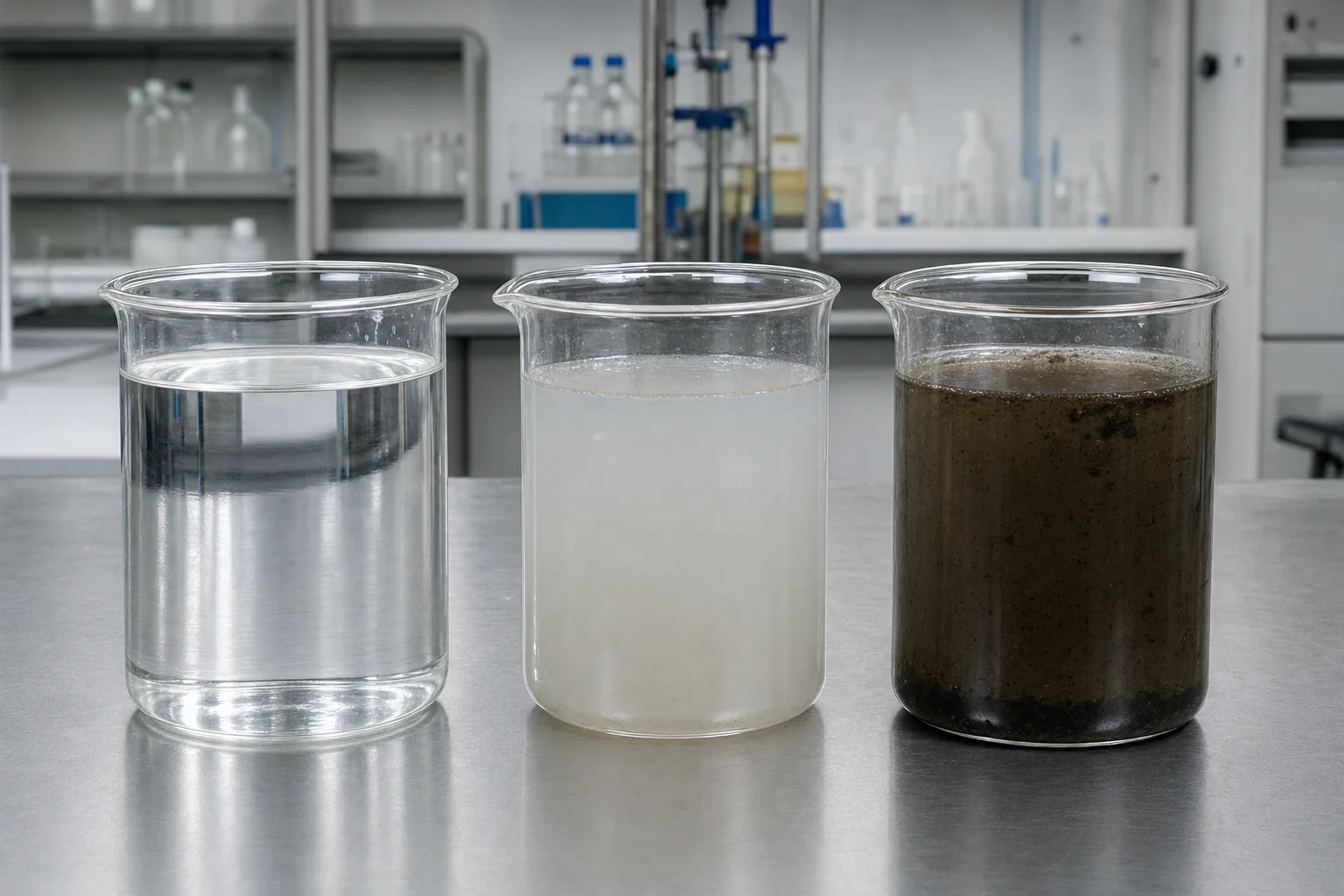
Restoration work classifies water into three categories, and the category often overrides everything else:
- Category 1 (clean water): from a supply line, water heater, or burst pipe. This is the most salvageable. If caught early, drywall, hardwood, and subfloor frequently survive.
- Category 2 (gray water): from a dishwasher, washing machine, or aquarium overflow. It carries some contamination and degrades materials faster. Porous materials soaked by gray water are often replaced.
- Category 3 (black water): from sewage backups, toilet overflows with solids, or rising floodwater from outside. This water is dangerous. Drywall, insulation, carpet pad, and saturated subfloor exposed to Category 3 water are removed and disposed of, not dried. Our water damage restoration teams treat any Category 3 event as a containment and disposal job first.
Important: clean water does not stay clean. Category 1 water degrades to Category 2 within roughly 48 hours, and to Category 3 not long after, especially in the warm, humid conditions common in Northern Virginia summers. The clock starts the moment the water appears.
2. Duration of exposure
Time wet is the single biggest predictor of whether a porous material is salvageable. The first 24-48 hours are the salvage window. After about 48-72 hours, mold colonization begins on damp organic surfaces, gypsum loses structural strength, and wood fibers swell past the point of recovery. This is why our guaranteed 90-minute on-site arrival matters: getting extraction and drying running within hours, not days, is often the difference between drying a wall and tearing it out.
3. How much the material absorbed
A splash on a baseboard is not the same as a wall that wicked moisture two feet up. Restoration technicians use penetrating and non-penetrating moisture meters to map exactly how far water traveled and how saturated each material is. A reading is taken at the same spot daily to confirm the material is actually drying, not just dry on the surface while saturated inside. Professional water extraction and structural drying uses this data to make defensible save-or-replace decisions rather than guessing.
Repair or Replace Water-Damaged Drywall: How to Decide
Drywall (gypsum board) is one of the most water-sensitive common building materials. The paper facing feeds mold, and the gypsum core loses cohesion once thoroughly soaked. Here is how the decision usually breaks down.
When water-damaged drywall can be repaired and dried
- The water was Category 1 (clean) and present for under 24-48 hours.
- The drywall is still firm — it does not crumble, flex, or feel soft when pressed.
- There is no visible sagging, bulging, or seam separation.
- No mold growth is present on the surface or behind the wall.
- Moisture meter readings drop steadily once drying equipment is running.
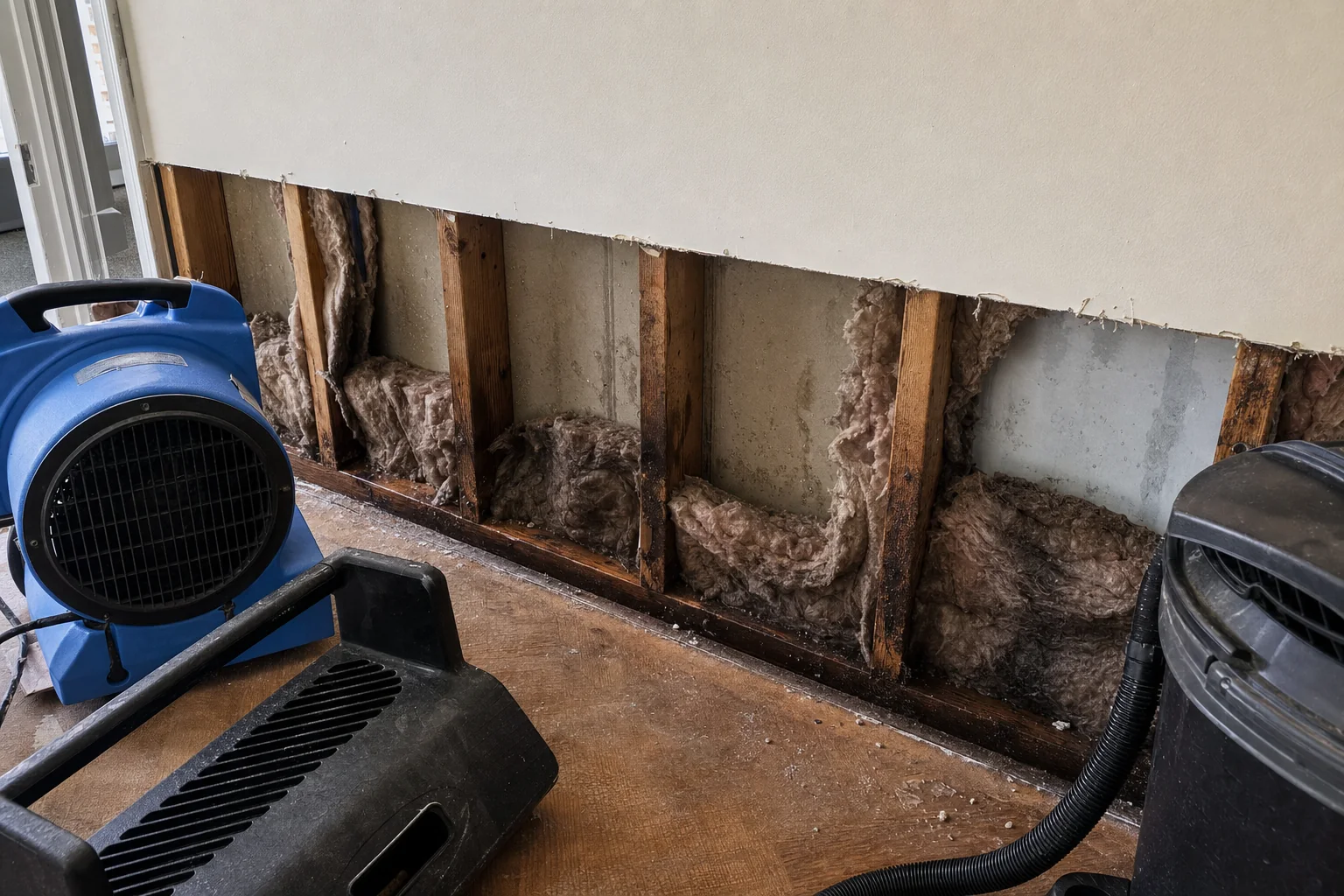
In these cases, technicians often dry the wall in place using air movers and dehumidifiers. Where moisture is trapped behind the board, controlled "weep holes" or the removal of just the bottom few inches of drywall (a "flood cut") may be used to ventilate the cavity and dry the insulation and framing behind it without replacing the entire wall.
When water-damaged drywall must be replaced
- It is sagging, swollen, bubbling, or the seams have separated.
- It crumbles or feels spongy — the gypsum core has lost integrity.
- It was soaked by Category 2 or Category 3 water.
- Mold is visible, or the cavity behind it has been wet long enough to colonize.
- It stayed wet beyond roughly 48-72 hours despite drying efforts.
A standard practice after flooding is a flood cut: removing drywall to a line 12-24 inches above the visible water mark to access and dry (or replace) the wall cavity, insulation, and framing. Wet fiberglass or cellulose insulation rarely dries effectively inside a closed wall and is usually removed regardless of the drywall's condition.
| Sign | Repair / Dry in Place | Replace |
|---|---|---|
| Water category | Category 1, caught early | Category 2 or 3 |
| Time wet | Under ~48 hours | Over ~48-72 hours |
| Physical condition | Firm, no sag, no swelling | Sagging, crumbling, bulging |
| Mold | None present | Visible or suspected in cavity |
| Insulation behind it | Dry or quickly dried | Saturated fiberglass/cellulose |
Repair or Replace Water-Damaged Hardwood Flooring?
Wood flooring behaves very differently depending on whether it is solid hardwood, engineered wood, or laminate. The type you have largely dictates the answer.
AZA Restoration answers 24/7 with a guaranteed 90-minute on-site response across Fairfax, Loudoun, Prince William, Stafford, Fauquier, and Arlington counties — plus Alexandria, Falls Church, Herndon, Manassas, and Manassas Park. We bill your insurance directly.
Call (571) 506-6668Solid hardwood: often salvageable
Solid hardwood can absorb moisture and "cup" (edges rise higher than the center) or "crown" (center rises higher than edges) without being ruined. If the water was clean, the exposure was short, and the subfloor underneath is sound, solid hardwood can frequently be dried slowly with specialized floor-drying mats and dehumidification, then sanded flat and refinished once moisture content returns to normal. Drying hardwood too fast causes cracking, so a controlled dry-down over several days is normal.
Engineered wood and laminate: usually replaced
Engineered flooring is a thin hardwood veneer over plywood or fiberboard layers. Once those layers absorb water, they delaminate and the surface peels — this is generally not repairable, and the affected planks are replaced. Laminate flooring, which has a fiberboard core under a printed wear layer, swells and crumbles when wet and almost always must be removed and replaced. If you see swollen edges, peeling, or planks lifting at the seams, plan on replacement for those materials.
The decision signals for wood floors
- Dry and refinish: solid hardwood, clean water, short exposure, mild cupping, sound subfloor.
- Replace affected planks: engineered wood with delamination, hardwood with severe crowning or buckling, any wood lifting off the subfloor.
- Replace fully: laminate, or any wood flooring exposed to Category 3 water.
A key complication: even when the hardwood itself looks fine, moisture often travels down into the subfloor beneath it. Drying the surface while leaving a saturated subfloor below traps moisture and guarantees mold, which is why floors are always assessed top-to-bottom.
Repair or Replace Water-Damaged Subfloor?
Subfloor is the structural layer beneath your finished floor — usually plywood or oriented strand board (OSB) on a wood-frame home, or a concrete slab in basements and some additions. Because it is load-bearing, the standard for saving subfloor is stricter than for drywall.
When subfloor can be dried and saved
- It is plywood (which tolerates moisture better than OSB) with only surface dampness.
- Moisture meter readings confirm it returns to normal moisture content during drying.
- It remains firm and structurally sound — no sponginess, no flex underfoot.
- There is no visible delamination, swelling, or separation between layers.
When subfloor must be replaced
- It is soft, spongy, or flexes when walked on — a sign it has lost structural strength.
- OSB that has swollen, crumbled at the edges, or begun to delaminate (OSB rarely recovers once thoroughly soaked).
- It was exposed to Category 3 water or stayed saturated for days.
- Mold has penetrated the wood, or the subfloor has separated from the joists.
Concrete slabs are different: concrete itself does not rot, so the slab is typically dried and cleaned rather than replaced. The real concern with slabs is moisture migrating into framing, baseboards, and any flooring glued or floated on top, plus mold under floor coverings. Replacing subfloor often means the finished floor above it comes up too, which is where a job moves from drying into full reconstruction — rebuilding the floor system and refinishing back to its original condition.
Not sure whether your floor or wall can be saved? Don't wait — the salvage window closes in 24-48 hours. Call AZA Restoration at (571) 506-6668 for a 24/7 emergency response with guaranteed 90-minute on-site arrival across Northern Virginia. We assess, extract, and dry with proper moisture mapping, and we bill your insurance directly.
Water Damage Repair vs. Replace: Cost and Timeline Ranges in Northern Virginia
Costs vary with the size of the affected area, water category, and how much structure must be rebuilt. The figures below are typical Northern Virginia market ranges, not quotes. Direct insurance billing means many homeowners pay only their deductible on covered claims.
| Scenario | Typical Market Range | Typical Timeline |
|---|---|---|
| Localized water damage (one room/area) | $1,200 - $5,500 | Structural drying 3-5 days |
| Major / whole-home water damage | $8,000 - $25,000+ | Drying days; rebuild weeks |
| Flood cleanup and drying | $3,000 - $15,000+ | 5-10 days (longer for Category 3) |
| Mold remediation (if growth set in) | $500 - $6,000 (hidden/widespread $10,000+) | 1-5 days |
| Reconstruction (single room to major rebuild) | $10,000 to $100,000+ | Weeks, depending on scope |
Why "repair" is almost always cheaper than "replace"
Drying a wall or floor in place avoids demolition, disposal, materials, rebuild labor, and refinishing. That is why the early hours matter so much financially: a clean-water leak dried within the salvage window might fall at the bottom of the localized range, while the same leak left for a week can require flood cuts, insulation removal, subfloor replacement, mold remediation, and reconstruction — pushing it into the major-damage range. Fast professional drying is not just about saving materials; it is about keeping the entire claim smaller.
How the Repair-or-Replace Assessment Works, Step by Step
When our team arrives, the save-or-replace decision is not made on a hunch. It follows a repeatable process designed to be documented for your insurer.
- Safety and source control. We stop the water source, address any electrical hazards, and identify the water category before anyone touches saturated materials.
- Moisture mapping. Using moisture meters and thermal imaging, we map how far water traveled — including behind walls and under flooring — and mark the affected zone.
- Extraction. Standing water and saturation are removed with truck-mounted and portable extraction units. Removing bulk water fast dramatically improves what can be saved.
- Containment and demolition (only where needed). Unsalvageable materials — soaked insulation, Category 3-exposed drywall, delaminated subfloor — are removed under containment to prevent cross-contamination.
- Structural drying. Air movers and commercial dehumidifiers create the right conditions to pull moisture out of materials we are saving. Daily moisture readings confirm progress toward dry standard.
- Verification. We document that materials have returned to normal moisture content before closing anything back up — drying to a number, not to "looks dry."
- Reconstruction. Replaced drywall, flooring, and subfloor are rebuilt and refinished to match, and to code. One call rebuilds it all.
The Northern Virginia Angle: Climate, Watersheds, and Building Code
Local conditions shape both the damage we see and the rules we work under. Northern Virginia's humid summers mean drying takes more aggressive dehumidification than a drier climate would, and they shorten the window before mold appears on damp materials. Homes near the Potomac, Occoquan, and Bull Run watersheds, and low-lying neighborhoods across Fairfax, Loudoun, Prince William, and Stafford counties, face elevated flood and storm-surge risk, which tends to produce Category 3 water and therefore more replacement than repair.
When water damage repairs require a permit
Permitting in Virginia follows the Virginia Uniform Statewide Building Code (USBC), and permits are issued by your county or city building office — for example, Fairfax County Land Development Services, or the building official in Loudoun, Prince William, Stafford, Fauquier, and Arlington, and in Alexandria, Falls Church, Herndon, Manassas, and Manassas Park.
- Usually permit-exempt: like-for-like surface repairs and drying — replacing a section of drywall, refinishing a hardwood floor, swapping baseboards, or repainting.
- Usually requires a permit: structural repairs to subfloor or framing, and any electrical or plumbing work involved in the rebuild.
This matters for your repair-or-replace decision because replacement work that touches structure, wiring, or plumbing must be permitted and inspected. As a Class A licensed and fully insured restoration and general contractor, AZA Restoration pulls the required permits and builds to code, so you are not left with unpermitted work that surfaces later during a home sale.
Older homes and finished basements
Northern Virginia has a wide mix of housing stock, from newer Loudoun County developments to older homes in Arlington, Alexandria, and Falls Church. Finished basements — extremely common throughout the region — concentrate water damage in below-grade spaces where moisture lingers and where Category 3 backups are more likely. Basement subfloor and drywall decisions skew toward replacement for these reasons.
How to Protect Salvageable Materials Before Help Arrives
What you do in the first hour directly affects how much can be repaired rather than replaced. While you wait for our team:
- Stop the source if safe — shut off the water main or the supply valve to the failed fixture.
- Kill power to affected areas if water is near outlets or electrical panels, and avoid standing water near energized circuits.
- Remove standing water you safely can with towels, a wet/dry vacuum, or a mop, and lift small furniture off wet flooring.
- Get air moving — open windows on a dry day and run fans to begin surface drying.
- Do not use a household vacuum on water, lift glued-down or buckled flooring yourself, or assume a dried surface means a dry cavity.
- Document everything with photos and video for your insurance claim before any cleanup.
These steps buy time, but they do not replace professional extraction and metered drying. The materials most worth saving — hardwood, structural subfloor, and intact drywall — are exactly the ones that need fast, controlled drying.
Frequently Asked Questions
Can water-damaged drywall be saved, or does it always need replacing?
Water-damaged drywall can often be saved if it was exposed to clean (Category 1) water for less than 24-48 hours, remains firm without sagging or crumbling, and shows no mold. In those cases it can be dried in place with air movers and dehumidifiers. Drywall that is swollen, soft, sagging, mold-affected, or soaked by gray or black water should be cut out and replaced rather than dried.
How long does water-damaged hardwood take to dry?
Structural drying typically takes 3-5 days for a localized event, and salvageable solid hardwood is dried slowly within that window using floor-drying mats and dehumidification to prevent cracking. Drying continues until moisture meters confirm the wood and the subfloor below it have returned to normal moisture content — drying to a verified number, not just until the surface feels dry. Severely cupped or buckled wood, or engineered and laminate flooring, usually needs replacement instead.
How do I know if my subfloor needs to be replaced after water damage?
Subfloor needs replacement when it is soft, spongy, or flexes underfoot, when OSB has swollen or delaminated, when it was exposed to Category 3 (black) water, or when mold has penetrated the wood. Plywood subfloor with only surface dampness that dries back to normal moisture content and stays structurally firm can usually be saved. Because subfloor is load-bearing, the standard for keeping it is stricter than for drywall.
Does water damage repair require a permit in Northern Virginia?
Like-for-like surface repairs and drying — replacing drywall sections, refinishing floors, or repainting — are usually exempt. Structural repairs to subfloor or framing, and any electrical or plumbing work in the rebuild, typically require a permit under the Virginia Uniform Statewide Building Code, issued by your county or city building office such as Fairfax County Land Development Services. AZA Restoration pulls required permits and builds to code.
Is it cheaper to repair or replace water-damaged materials?
Repairing and drying in place is almost always cheaper than replacing, because it avoids demolition, disposal, new materials, rebuild labor, and refinishing. A clean-water leak dried within the first 24-48 hours might fall at the low end of the $1,200-$5,500 localized range, while the same leak left for days can require flood cuts, subfloor replacement, mold remediation, and reconstruction, pushing it toward the $8,000-$25,000+ major-damage range. Fast professional drying keeps the entire claim smaller.
Will insurance cover repairing or replacing water-damaged drywall and flooring?
Most homeowners policies cover sudden and accidental water damage, such as a burst pipe, including the repair or replacement of affected drywall, flooring, and subfloor, though coverage varies and gradual leaks or external flooding may be excluded. AZA Restoration provides direct insurance billing and documents the moisture readings and scope of work your insurer needs, so on covered claims many homeowners pay only their deductible.
Water damage gets harder to reverse every hour it sits. If you're facing wet drywall, cupping hardwood, or a soaked subfloor, call AZA Restoration now at (571) 506-6668. We offer 24/7 emergency response with guaranteed 90-minute on-site arrival across Fairfax, Loudoun, Prince William, Stafford, Fauquier, and Arlington, Class A licensed and fully insured work, and direct insurance billing. One call rebuilds it all.