Water damage is sorted into three categories based on how contaminated the water is: Category 1 is clean water from a sanitary source, Category 2 is "gray water" carrying significant contamination, and Category 3 is "black water"—grossly unsanitary water that can cause serious illness or death. The category determines almost everything about your cleanup: what can be dried and saved, what has to be removed and thrown away, the protective equipment crews wear, and the final cost. Category 3 water damage is the most dangerous and expensive class because it involves sewage, flooding from outside, or standing water that has turned toxic—and it requires specialized handling that goes well beyond ordinary drying.
If you are a homeowner in Northern Virginia staring at a flooded basement or a soaked ceiling, knowing which category you are dealing with helps you make fast, correct decisions. This guide explains the three water classes in plain language, how they are determined, what each one means for your repair plan and budget, and how a trained crew responds to each—including the local angle, since our clay soils, aging sewers, and storm patterns make certain scenarios more common than homeowners expect.
What Are the Three Categories of Water Damage?
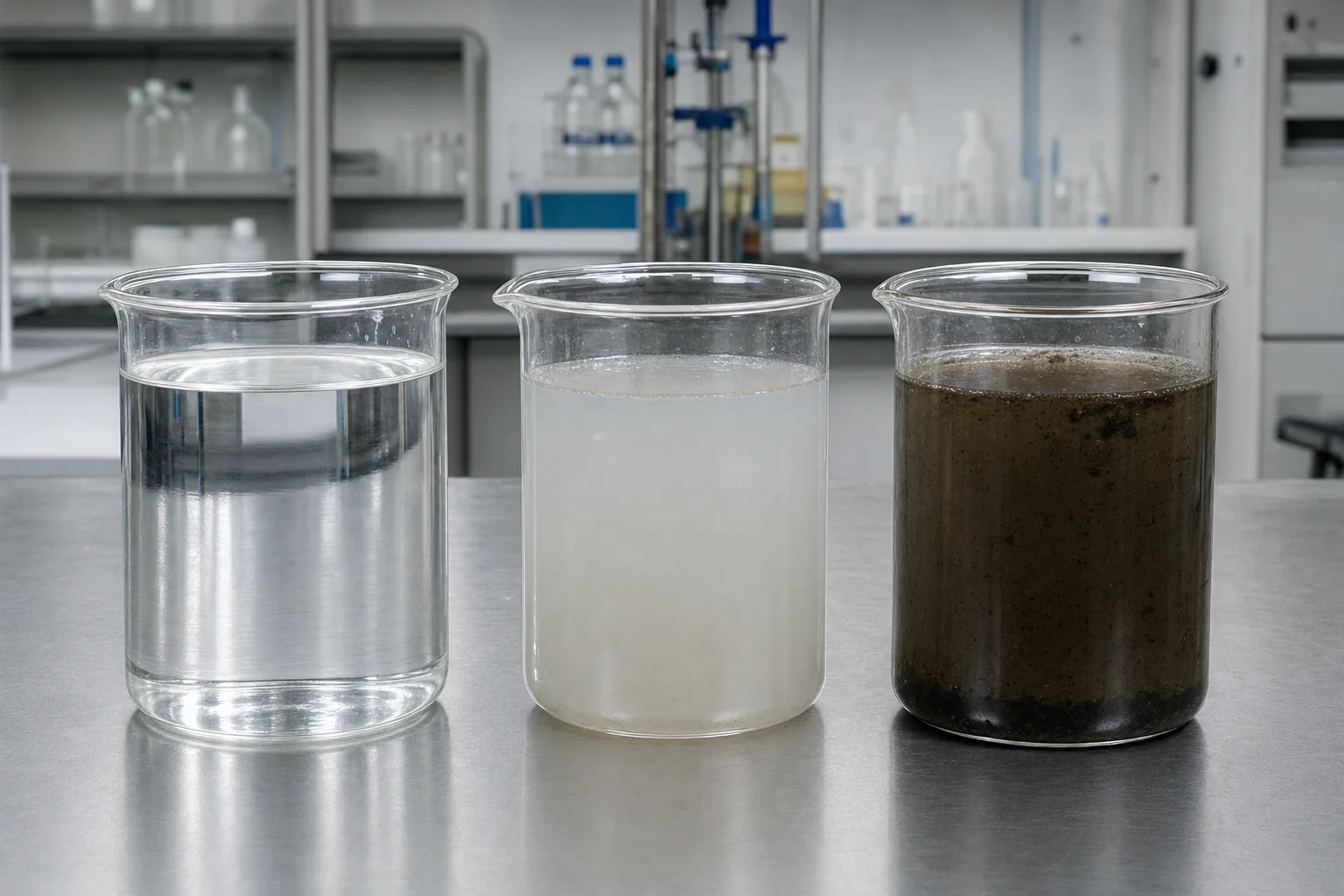
The category system is the restoration industry's standard way of classifying water by its level of contamination and the health risk it poses, and it underpins every professional water damage restoration plan. It is not about how much water there is or how deep it sits—that is a separate measure called "class." Category is strictly about cleanliness and what is dissolved or suspended in the water. The three categories are:
- Category 1 (Clean Water): Water from a sanitary source that poses no substantial health risk at the moment it escapes.
- Category 2 (Gray Water): Water containing significant chemical, biological, or physical contamination that can cause discomfort or illness if ingested or contacted.
- Category 3 (Black Water): Grossly contaminated water containing pathogens, toxins, or other harmful agents. Exposure can cause serious illness.
One concept matters more than any other: water categories degrade over time. Clean water does not stay clean. The moment Category 1 water sits in your home, it picks up contaminants from flooring, drywall, dust, and whatever it touches, and warmth speeds this up. A clean supply-line leak left for two or three days can deteriorate into a Category 2 or even Category 3 situation. That is why fast response is not just convenient—it directly changes how much of your home survives and what the repair costs.
Category 1: Clean Water Explained
Category 1 water originates from a source that does not carry contaminants. It is the best-case water-loss scenario because, when addressed quickly, most affected materials can be dried in place and saved rather than torn out. Common Category 1 sources include:
- A broken or leaking water supply line feeding a sink, toilet tank, or refrigerator.
- An overflowing bathtub or sink with no added contaminants.
- A failed water heater releasing potable water.
- Rainwater entering through a roof or window before it contacts contaminated surfaces.
- Melting snow or HVAC condensation lines.
How Category 1 Water Is Handled
With clean water, the goal is to dry the structure thoroughly before mold or secondary damage takes hold. A trained crew extracts standing water, sets up air movers and commercial dehumidifiers, and monitors moisture in walls, subfloors, and framing daily until the materials return to a dry baseline. Most clean-water losses dry within three to five days, and because the water is sanitary, materials like hardwood, drywall, and carpet padding can often be saved if the crew arrives quickly. Localized clean-water losses typically run from $1,200 to $5,500, while a major or whole-home event can range from $8,000 to $25,000 or more.
The Catch: Clean Water Has a Clock
Category 1 water only stays Category 1 for so long. Industry restoration standards generally treat clean water as beginning to degrade within roughly 24 to 48 hours, faster in warm or humid conditions. If a clean leak runs behind a wall undetected for several days, the trapped moisture feeds bacteria and mold and reclassifies the loss upward—which is why calling for help the same day you discover water almost always saves money.
Category 2: Gray Water Explained
Category 2—gray water—contains significant contamination that can make people sick through ingestion or contact. It is dirtier than clean water but does not yet carry the heavy pathogen load of sewage, so it requires more aggressive cleaning, antimicrobial treatment, and selective removal of porous materials. Typical Category 2 sources include:
AZA Restoration answers 24/7 with a guaranteed 90-minute on-site response across Fairfax, Loudoun, Prince William, Stafford, Fauquier, and Arlington counties — plus Alexandria, Falls Church, Herndon, Manassas, and Manassas Park. We bill your insurance directly.
Call (571) 506-6668- Discharge or overflow from a dishwasher or washing machine (detergents, food residue, and fibers).
- Toilet overflow containing urine but no solid waste.
- A sump pump failure where the collected water has begun to stagnate.
- Water from an aquarium or a waterbed.
- Clean water (Category 1) that has sat long enough to degrade or has passed through contaminated building materials.
How Category 2 Water Is Handled
Gray-water response combines drying with sanitation. Crews extract the water, apply EPA-registered antimicrobial agents to inhibit bacterial growth, and make case-by-case decisions about what to keep. Carpet may be salvageable, but carpet padding—which acts like a contaminated sponge—is usually removed, and drywall that wicked up gray water is often cut out to a measured height above the waterline. The crew also protects the indoor air and adjacent rooms while they work. Untreated gray water that lingers will degrade into Category 3, just as clean water degrades into gray.
Category 3: Black Water Explained
Category 3 water damage is the most hazardous classification. Known as black water, it is grossly unsanitary and may contain harmful bacteria, viruses, parasites, fungi, chemicals, and other toxic agents. Contact or inhalation can cause serious illness, and in vulnerable people, life-threatening infection. Category 3 is never a do-it-yourself cleanup; it demands containment, personal protective equipment, controlled removal, disinfection, and verified drying by professionals. Sources of black water include:
- Sewage backups and any water containing solid human or animal waste.
- Toilet overflow originating beyond the trap (from the sewer side).
- Flooding from rivers, streams, or storm surge that enters the home from outside (ground-surface water is presumed contaminated).
- Rising groundwater that carries soil pathogens, pesticides, or chemicals.
- Any Category 1 or Category 2 water that has been left standing long enough to become grossly contaminated and to support significant microbial growth.
How Category 3 Water Is Handled
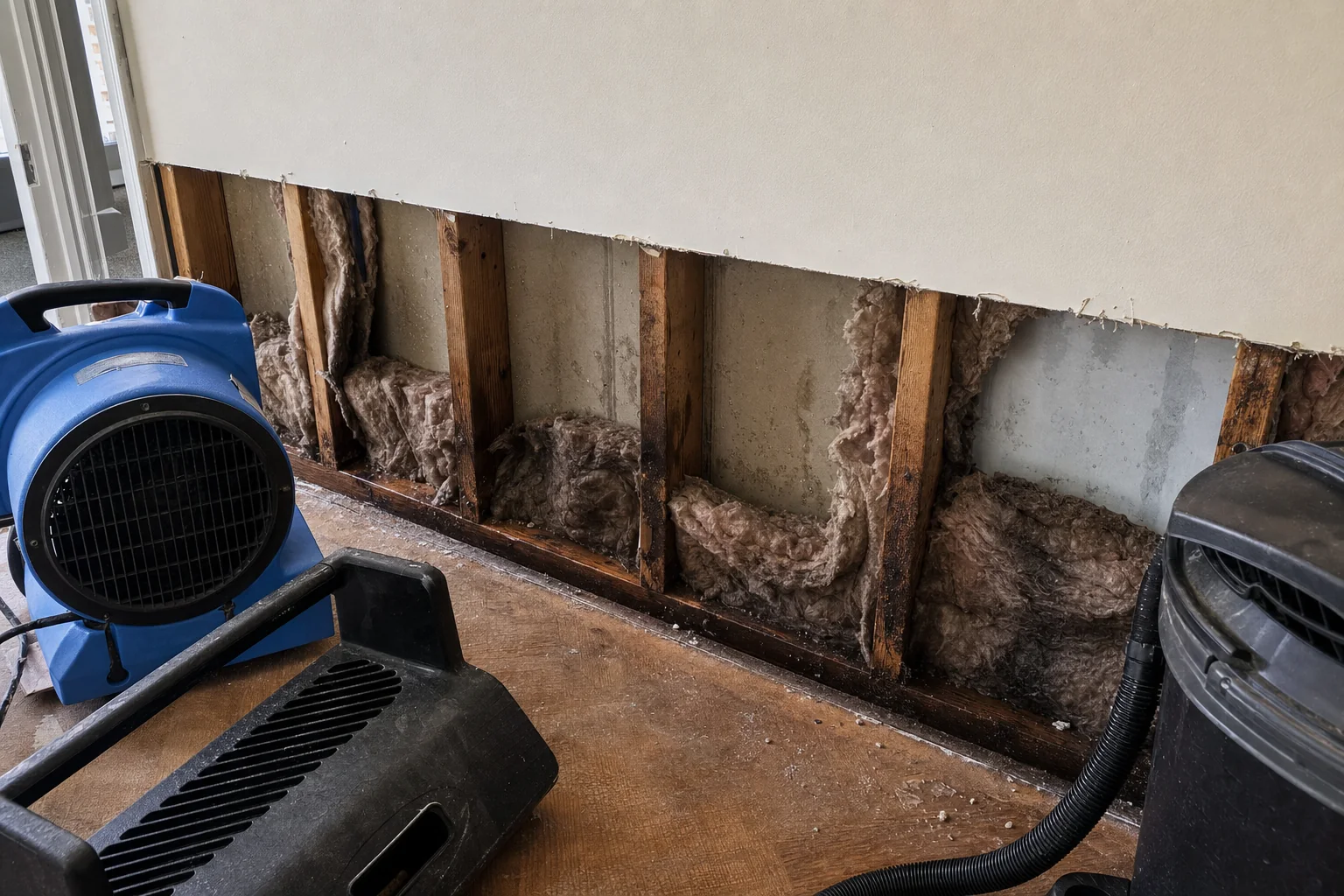
Black-water remediation follows a strict, health-first sequence. Crews establish containment to keep contaminants from spreading, wear full personal protective equipment, and remove porous materials that absorbed contaminated water—carpet, padding, soaked drywall, insulation, and often baseboards and subflooring. Non-porous surfaces are cleaned and disinfected, the space is dried and dehumidified, and the air is filtered. Because the work overlaps with sewage and pathogen handling, many Category 3 jobs are coordinated alongside our , which are built specifically for contaminated environments.
When the source is outdoor flooding, the response also draws on dedicated flood damage restoration methods—managing mud and silt, sanitizing everything the floodwater touched, and addressing the high humidity that lingers afterward. Category 3 cleanups commonly run from $1,500 to $10,000 or more for the contaminated work, and full flood-related losses frequently fall in the $3,000 to $15,000+ range, with the higher end reserved for the most severe events. Flood cleanup and drying typically takes five to ten days.
Standing water gets more dangerous every hour. If you are dealing with a sewage backup, a flooded basement, or any water you are not certain is clean, call AZA Restoration now at (571) 506-6668. We provide 24/7 emergency response with a guaranteed 90-minute on-site arrival across Northern Virginia, and we bill your insurance directly. One call rebuilds it all.
Water Categories at a Glance: Comparison Table
The table below summarizes how the three categories differ across the factors that matter most to a homeowner. Use it as a quick reference, but remember that any category can escalate to a higher one if water is left to sit.
| Factor | Category 1 (Clean) | Category 2 (Gray) | Category 3 (Black) |
|---|---|---|---|
| Typical source | Supply line, water heater, rainwater (before contact), melting snow | Appliance discharge, sump failure, urine-only toilet overflow | Sewage, outdoor flooding, groundwater, long-standing water |
| Health risk | Minimal at the source | Illness possible on contact or ingestion | Serious illness; pathogens and toxins present |
| Usually salvageable | Most materials if dried quickly | Hard surfaces; carpet sometimes; padding often removed | Hard, non-porous surfaces only after disinfection |
| Usually removed | Little, if addressed fast | Carpet padding, water-wicked drywall | Porous materials: carpet, drywall, insulation, subfloor |
| Crew protection | Standard equipment | Enhanced PPE and antimicrobials | Full PPE, containment, air filtration |
| Typical cost range | $1,200–$5,500 (localized) | Varies with removal scope | $1,500–$10,000+; floods $3,000–$15,000+ |
| Typical timeline | 3–5 days to dry | Several days | 5–10 days for flood cleanup + drying |
Repair vs. Replace: How Category Drives the Decision
One of the most common questions homeowners ask is whether their flooring, drywall, and belongings can be saved or must be replaced. The honest answer depends on the water category, the type of material, and how fast you acted. The principle professionals follow is straightforward—the dirtier the water and the more porous the material, the more likely it must be removed rather than restored.
The Porous vs. Non-Porous Rule
- Non-porous materials (sealed concrete, glass, metal, glazed tile, solid plastics) can usually be cleaned and disinfected even after Category 3 contact, because contaminants stay on the surface.
- Semi-porous materials (hardwood, some engineered flooring, unsealed concrete) fall in the middle—often salvageable from clean water, frequently lost to black water.
- Porous materials (carpet padding, drywall, insulation, particleboard, upholstered furniture, mattresses) absorb water and trap contaminants deep inside, beyond reliable cleaning. These are typically removed in Category 2 and almost always in Category 3.
A Quick Decision Framework
- Identify the category honestly. When in doubt, assume the higher one—it is safer and prevents costly mistakes.
- Assess elapsed time. Materials wet under 24–48 hours from clean water are strong candidates for drying in place.
- Separate porous from non-porous. Disinfect hard surfaces and remove saturated porous items in gray- and black-water losses.
- Test for hidden moisture. Dry-looking drywall can hide saturated framing behind it, so use professional moisture meters before calling anything dry.
- Document everything with photos before removal for your insurance claim.
This is where professional judgment pays for itself. Removing too much wastes money and extends the rebuild; removing too little leaves contamination and moisture behind, inviting mold. Mold remediation alone typically costs $500 to $6,000, and widespread or hidden growth can exceed $10,000—a strong financial reason to dry and disinfect correctly the first time.
Why Water Categories Matter Especially in Northern Virginia
The category system is national, but how often each one shows up is very local. Several features of Northern Virginia make certain water-damage scenarios more likely—worth understanding if you own property in Fairfax, Loudoun, Prince William, Stafford, Fauquier, or Arlington counties, or in Alexandria, Falls Church, Herndon, Manassas, or Manassas Park.
Clay Soils and Wet Basements
Much of our region sits on dense clay soil that drains slowly. After heavy rain, water pools against foundations instead of percolating away, raising hydrostatic pressure and pushing moisture through foundation walls and floor seams. The result is a steady stream of basement-seepage calls—often starting as Category 1 rainwater but degrading toward Category 3 once it picks up soil contaminants and sits. Homes near the Potomac watershed and the creeks feeding Bull Run, the Occoquan, and the Accotink see this routinely.
Storms, Wind, and Sudden Flooding
Northern Virginia gets the tail end of tropical systems, summer thunderstorm cells, and winter freeze-thaw cycles that burst pipes. Wind-driven rain and storm surge produce outdoor floodwater, automatically treated as Category 3 and handled through dedicated flood damage restoration. Emergency tarping or board-up after storm damage typically runs $300 to $1,500, while full storm repairs range from $2,500 to $20,000 or more.
Aging Sewer and Stormwater Infrastructure
Older neighborhoods across the region have aging sewer laterals and combined drainage that can back up during intense rainfall. A municipal or lateral sewer backup pushes black water directly into basements—an unambiguous Category 3 event requiring full , not a mop and a fan.
Permits and the Virginia Uniform Statewide Building Code
Category matters for permitting, too. Like-for-like drying and surface repairs—replacing the same drywall, repainting, swapping carpet—are usually exempt. But when a Category 3 loss forces structural removal, or when the rebuild touches electrical or plumbing systems, a permit is required under the Virginia Uniform Statewide Building Code (USBC). Those permits are issued by your local building office—for example, Fairfax County Land Development Services—and the work must be inspected and built to code. As a Class A licensed restoration and general contractor, AZA Restoration pulls the required permits and rebuilds to code, so a black-water disaster does not become a code-compliance headache later. Reconstruction ranges from roughly $10,000 for a single room to $100,000 or more for a major rebuild.
What to Do the Moment You Discover Water Damage
Your actions in the first hour shape the entire outcome. Follow these steps, adjusting for safety based on the suspected category.
- Stop the source if it is safe. Shut off the water at the fixture or main valve. Do not wade into water near electrical outlets or panels.
- Treat unknown water as contaminated. If you cannot confirm the source is clean, or if there is any odor, discoloration, or sewage, keep people and pets out and avoid contact.
- Cut power to affected areas at the breaker if you can do so safely without standing in water.
- Protect what you can. Move undamaged belongings to a dry area and lift furniture off wet carpet, but do not handle items soaked by Category 2 or 3 water without gloves.
- Document the damage with photos and video for your insurance claim before anything is removed.
- Call a professional restoration team immediately. Fast extraction and drying keep a clean-water loss from becoming a contaminated, far costlier one.
Notice what is not on this list: trying to dry a sewage backup with household fans, or skipping professional moisture testing to save money. Those shortcuts are how a manageable loss becomes a mold problem or a hidden-moisture failure that surfaces months later.
How a Professional Crew Determines the Category
When our team arrives, classifying the water is one of the first things we do, because everything else flows from it. The assessment weighs the source, how long the water has been present, what it has contacted, color and odor, and moisture-meter readings. The crew then documents conditions and builds a scope that matches the category—dry-in-place for clean water, sanitize-and-selectively-remove for gray water, and contain-remove-disinfect for black water.
This first-hand classification is not a formality. It determines whether your hardwood floor can be saved, whether the drywall comes out, what protective measures the crew uses, and how the insurance scope is written. The crew re-checks moisture daily and adjusts equipment until verified dry, then transitions into any needed repairs or full reconstruction—so you deal with one team from emergency response through rebuild.
Not sure what category of water you are facing? We are. AZA Restoration responds 24/7 across Northern Virginia with a guaranteed 90-minute on-site arrival, direct insurance billing, and the equipment to handle everything from a clean-water leak to a Category 3 sewage backup. Call (571) 506-6668 now, and let our trained restoration specialists classify the loss, stop the damage, and rebuild it right. One call rebuilds it all.
Frequently Asked Questions
What is the difference between Category 1, 2, and 3 water?
The three categories describe how contaminated the water is. Category 1 is clean water from a sanitary source such as a supply line or water heater. Category 2, or gray water, carries significant contamination from sources like dishwashers, washing machines, or a failed sump pump and can cause illness on contact. Category 3, or black water, is grossly unsanitary water from sewage, outdoor flooding, or long-standing water, and can cause serious illness. Any category can degrade into a higher one if left to sit.
Is Category 3 water damage dangerous to my health?
Yes. Category 3 water damage is the most hazardous classification because the water may contain bacteria, viruses, parasites, chemicals, and other toxic agents. Contact or inhalation can cause serious illness, with elevated risk to children, older adults, and anyone with a weakened immune system. Category 3 cleanups require containment, personal protective equipment, and professional disinfection—never a do-it-yourself project.
How long before clean water becomes contaminated?
Clean Category 1 water generally begins to degrade within roughly 24 to 48 hours, and faster in warm, humid conditions. As it sits, it absorbs contaminants from the materials it touches and supports bacterial and mold growth, shifting it toward Category 2 and eventually Category 3. This is why same-day extraction and drying are so important—acting quickly keeps a clean-water loss in the least costly, most salvageable category.
Will insurance cover Category 3 water damage cleanup?
Coverage depends on your specific policy and the cause of the loss. Many homeowners policies cover sudden and accidental water damage, including some Category 3 events like a sudden sewer backup if you carry the appropriate endorsement, while gradual leaks and external surface flooding may require separate coverage. AZA Restoration bills insurance directly and documents the loss thoroughly to support your claim. Call us to review your situation before you begin any cleanup.
Can carpet and drywall be saved after Category 3 water?
Usually not. Porous materials like carpet padding, drywall, insulation, and particleboard absorb contaminated water and trap pathogens deep inside, where cleaning cannot reliably reach, so they are typically removed and replaced after Category 3 exposure. Non-porous surfaces such as sealed concrete, tile, glass, and metal can often be cleaned and disinfected. A professional assessment confirms what can be salvaged versus what must be removed.
How much does Category 3 water damage cleanup cost in Northern Virginia?
Category 3 cleanup typically ranges from $1,500 to $10,000 or more for the contaminated work, and full flood-related losses commonly fall between $3,000 and $15,000 or more, with the highest figures tied to severe sewage or flooding events. If structural rebuilding is needed, reconstruction can range from about $10,000 for a single room to $100,000 or more for a major rebuild. These are typical market ranges; an on-site assessment provides an accurate estimate.