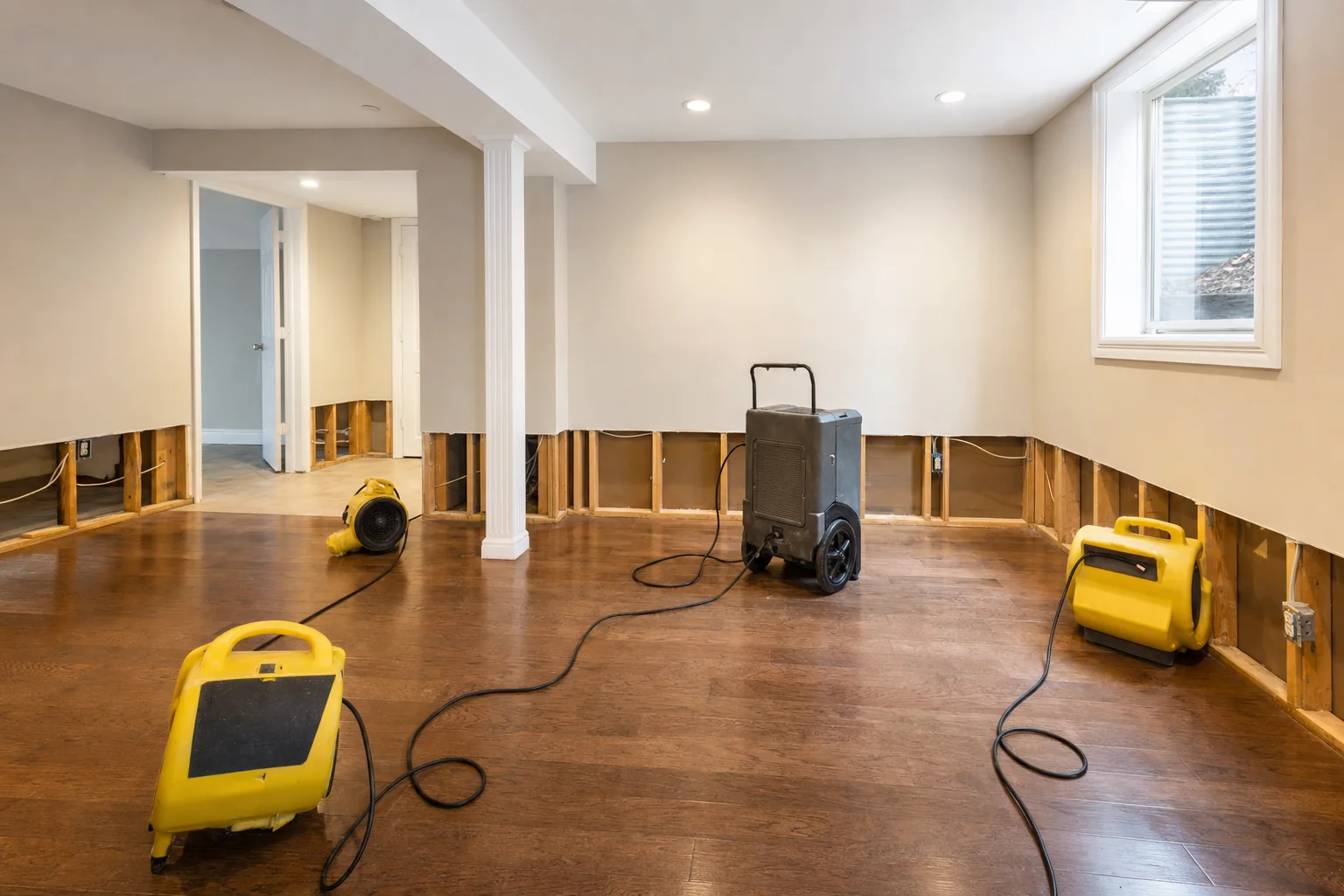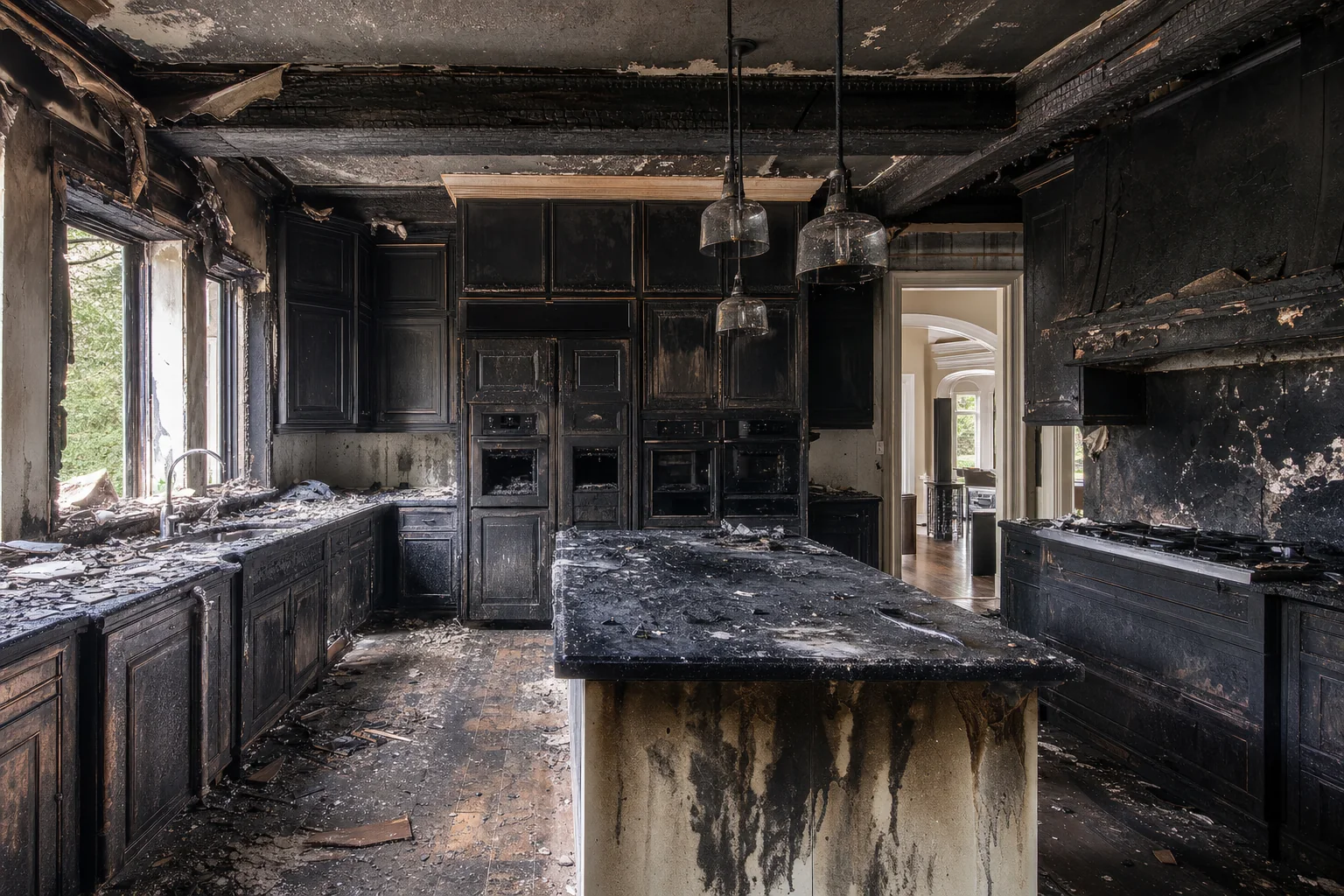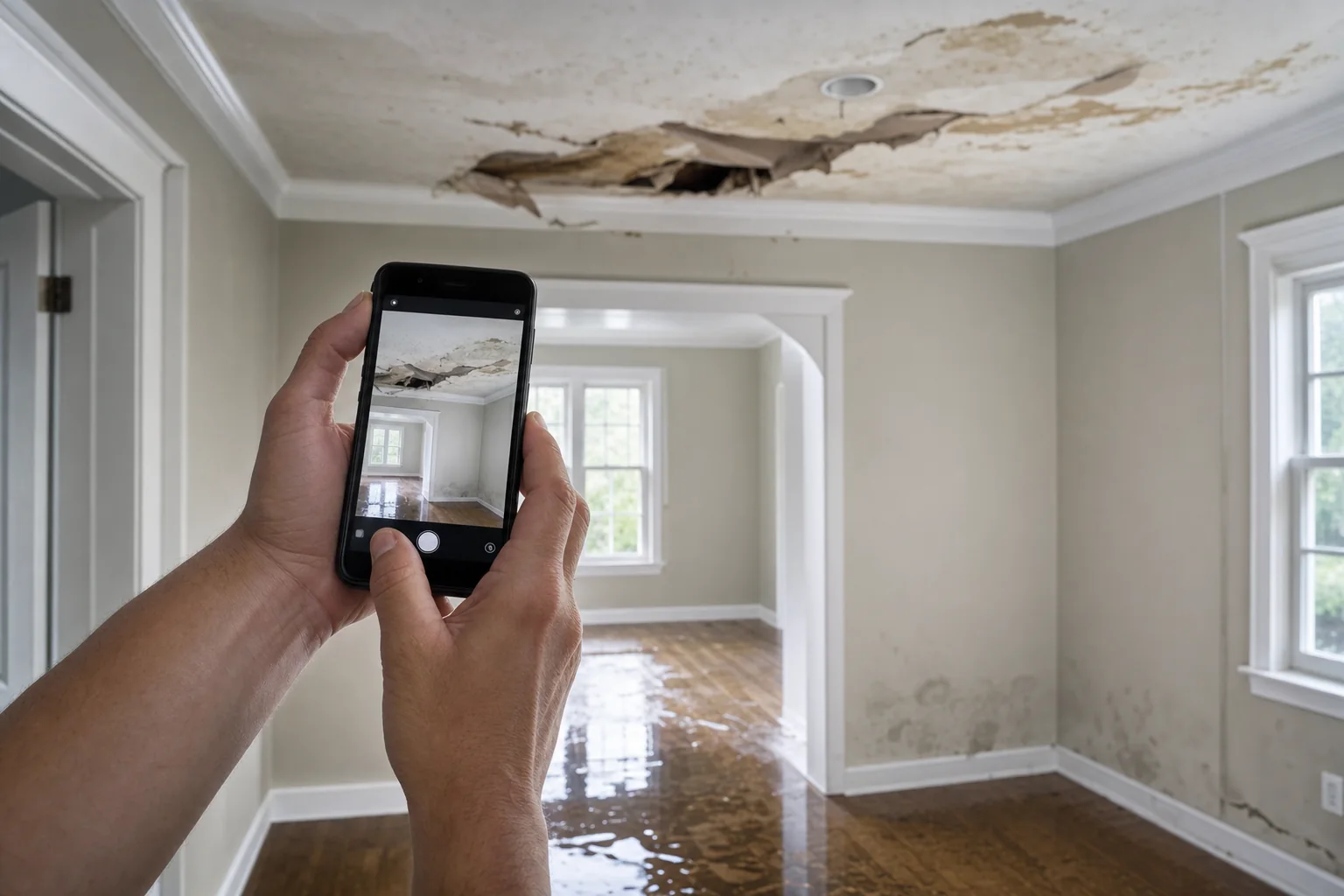
In most Virginia homeowner policies, "water damage" and "flood damage" are two completely different things — and that distinction decides whether you get a check or a denial. A standard homeowners policy generally covers sudden, accidental water damage that originates inside your home (a burst pipe, a failed water heater, an overflowing washing machine), but it almost never covers flood damage — rising water that comes from outside, such as overflowing creeks, storm surge, or surface runoff. Flood damage requires a separate flood insurance policy, typically through the National Flood Insurance Program (NFIP) or a private flood insurer. Knowing which category your loss falls into is the single most important factor in whether insurance covers your repair bill in Virginia.
If you are standing in a wet basement in Fairfax or Loudoun County right now, the accurate answer matters: the wrong words on a claim form can cost you thousands. This guide breaks down how Virginia insurers separate water damage from flood damage, what each pays for, what they exclude, and how to document a loss so your claim holds up. AZA Restoration handles both types of losses every week across Northern Virginia, working directly with your adjuster, so we will show you what we see from inside the claims process.
Does insurance cover water damage in Virginia?
Yes — a standard Virginia homeowners policy (typically an HO-3 form) usually covers sudden and accidental internal water damage: damage from an event that happens quickly and unexpectedly, originating from a system or appliance inside the home. The classic covered scenarios are a pipe that bursts in a January freeze, a supply line that ruptures behind a dishwasher, a water heater that lets go, or a toilet supply line that fails while you are at work.
What homeowners policies generally do not cover is damage caused by neglect, long-term seepage, or lack of maintenance. If a drip under a sink leaked for eight months and rotted the cabinet and subfloor, an adjuster will likely call that a maintenance issue and deny it. The policy line is "sudden and accidental" versus "gradual and preventable" — and it is the most common reason internal water claims get reduced or denied in Virginia.
There is also a critical exclusion that surprises homeowners: water that backs up through sewers or drains is usually excluded unless you bought a specific sewer/drain backup endorsement. Sewage backups are common in older Northern Virginia neighborhoods with aging municipal lines, and many homeowners learn too late that they declined the inexpensive add-on. If you have a finished basement in Fairfax, Arlington, or Prince William County, this endorsement is worth requesting at renewal.
The three categories of water restoration specialists use
When our crews assess a loss, we classify the water by contamination level, because that drives both the cleanup method and how the insurer treats the claim:
- Category 1 (clean water): from a sanitary source like a broken supply line or overflowing sink. Lowest risk, fastest dry-out.
- Category 2 (gray water): contains some contamination — dishwasher or washing-machine overflow, toilet overflow with no solids. Requires more aggressive sanitizing.
- Category 3 (black water): grossly contaminated — sewage backups, rising floodwater, or water that has sat long enough to grow bacteria. Affected porous materials usually must be removed and replaced.
Category matters for coverage: Category 3 from a sewer line points back to that backup endorsement, and Category 3 from rising outdoor water points to flood insurance — not your homeowners policy. The same wet carpet can be a covered claim or a denied one depending entirely on where the water came from. Read more about how we approach each loss type on our water damage restoration page.
What is the difference between water damage and flood damage?
The difference comes down to where the water originated, not how much there is or how much it cost you. Insurers define a "flood" specifically. Under the NFIP, a flood is "a general and temporary condition of partial or complete inundation of two or more acres of normally dry land area or of two or more properties" from sources such as overflowing inland or tidal waters, rapid accumulation of runoff or surface water, or mudflow.
In plain terms: if the water came up from the ground or in from outside — a swollen creek, storm surge, saturated soil pushing through your foundation, surface runoff flowing into your garage — that is flood damage, and your homeowners policy will not pay for it. If the water came down or out from a failure inside the home — a pipe, an appliance, or a roof leak after wind tore off shingles — that may be covered water damage.
The "rising vs. falling" rule of thumb
A simple test our project managers use: did the water rise up from below, or fall from above? Water that rises from the ground (groundwater, overflowing waterways, surface flooding) is almost always a flood-policy issue. Water that falls or sprays from above the floor (a burst pipe in the ceiling, a leaking water heater upstairs, a roof breach) is almost always a homeowners-policy issue. It is not a perfect legal definition, but it correctly predicts coverage in the large majority of cases.
The gray area: storms and wind-driven rain
The trickiest claims sit in between. If a storm rips shingles off your roof and rain then pours through the ceiling, that is generally covered under homeowners — the proximate cause was wind damage to the structure, and the water intrusion follows from a covered peril. But if that same storm dumps eight inches of rain that overwhelms the storm drains and water rises into your basement from the ground, that is a flood, and it falls to flood insurance. The same storm can produce both a covered claim and an excluded one in the same house. This is exactly the nuance an experienced restoration contractor documents carefully, because mislabeling the cause is what triggers denials.
Comparison: homeowners water coverage vs. flood coverage in Virginia
The table below summarizes how the two coverage types typically line up. Always confirm against your own declarations page, because endorsements and limits vary by carrier.
AZA Restoration answers 24/7 with a guaranteed 90-minute on-site response across Fairfax, Loudoun, Prince William, Stafford, Fauquier, and Arlington counties — plus Alexandria, Falls Church, Herndon, Manassas, and Manassas Park. We bill your insurance directly.
Call (571) 506-6668| Factor | Standard Homeowners (HO-3) | Flood Insurance (NFIP / Private) |
|---|---|---|
| Covers | Sudden, accidental internal water (burst pipe, appliance failure, water heater) | Rising external water, surface runoff, overflowing waterways, storm surge, mudflow |
| Typically excludes | Flood, surface water, sewer backup (unless endorsed), gradual leaks, neglect | Anything not caused by a qualifying flood event |
| Where you buy it | Your regular homeowners carrier | NFIP (via an insurance agent) or a private flood insurer |
| Waiting period | Effective with the policy | Usually a 30-day waiting period before coverage begins |
| Contents coverage | Personal property usually included | Building and contents are separate coverages you must each elect |
| Basement coverage | Generally covered for internal water events | Limited — NFIP restricts coverage for finished basements and below-grade contents |
That last row catches many Northern Virginia homeowners off guard. Even with flood insurance, NFIP coverage for finished basements is sharply limited — it generally covers structural elements and mechanicals (furnace, water heater, electrical panel) but not finished walls, flooring, or belongings stored below grade. If you have a finished basement near a floodplain, understand this limit before water ever arrives.
Why the Northern Virginia landscape makes this distinction urgent
Northern Virginia sits across several watersheds feeding the Potomac and Occoquan rivers, and the region's mix of rapid development, clay-heavy soils, and aging stormwater infrastructure makes both internal water failures and external flooding common. Knowing your local flood risk directly determines whether you should be carrying flood insurance at all.
Local flood-prone factors by county
- Fairfax County: dense development has increased impervious surfaces, so heavy rain produces fast surface runoff. Streams like Accotink Creek and Difficult Run regularly overtop their banks during major storms.
- Loudoun County: rapid growth on former farmland and clay soils means new neighborhoods can experience surface flooding where drainage has not kept pace.
- Prince William and Stafford: proximity to the Occoquan, the Potomac, and numerous tributaries creates genuine floodplain exposure for many homes.
- Arlington and Alexandria: older combined and separated sewer infrastructure in parts of these jurisdictions raises the risk of drain backups during intense rain — a homeowners-endorsement issue, not a flood issue.
- Fauquier: more rural, but creek and river flooding along low-lying parcels remains a real exposure.
Climate trends matter too. Northern Virginia has seen more frequent intense rainfall events that overwhelm storm drains in minutes. A property that has never flooded can flood when an inch of rain falls in twenty minutes onto saturated ground. If you are unsure of your flood-zone designation, your county's GIS mapping or FEMA's Flood Map Service Center will show whether your parcel sits in a Special Flood Hazard Area. Homes in those zones with a federally backed mortgage are typically required to carry flood insurance.
Standing water in your home right now? Do not wait to sort out coverage first — water spreads and damage compounds by the hour. Call AZA Restoration at (571) 506-6668 for 24/7 emergency response with guaranteed 90-minute on-site arrival across Northern Virginia. We bill your insurance directly and document the loss correctly from the first minute. One call rebuilds it all.
How to file a water or flood claim in Virginia (step by step)
The actions you take in the first few hours shape your entire claim. Adjusters reward documentation and prompt mitigation, and they penalize delay and "secondary damage" — the mold and rot that grows because a homeowner waited. Here is the sequence we walk clients through.
- Stop the source if it is safe. Shut off the water main for a plumbing failure, or the supply valve to a failed appliance. For external flooding, do not enter water that may be electrified or contaminated.
- Document before you touch anything. Photograph and video every affected room, the water source, standing-water depth, and damaged contents. Timestamped media is your strongest evidence of cause and extent.
- Call your insurer to open a claim — and note the claim number. Report it as exactly what it was: an internal failure (homeowners) or external rising water (flood). Be precise; the cause you describe sets the coverage track.
- Mitigate immediately. Virginia policies impose a "duty to mitigate" — you must take reasonable steps to prevent further damage. Calling a restoration contractor to extract water and begin drying satisfies this duty and protects you from a denial for neglect.
- Keep every receipt and record. Hotel costs, fans you bought, the restoration invoice — covered claims reimburse reasonable mitigation expenses.
- Let the pros and the adjuster coordinate. A restoration company that bills insurance directly can speak the adjuster's language, justify the scope of work, and prevent the lowball estimate that leaves you paying out of pocket.
This is where working with a contractor who understands the claims process pays off. Our team documents moisture readings, photographs concealed damage behind walls, and produces the line-item scope adjusters expect. Learn how we support the paperwork side on our insurance claims page.
What does water and flood restoration cost in Virginia?
Costs vary with the water category, the square footage affected, and how long the water sat before drying began. The ranges below reflect typical Northern Virginia market pricing — your actual figure depends on the specific loss, and on a covered claim insurance, not you, typically carries most of it after your deductible.
| Loss type | Typical cost range | Typical timeline |
|---|---|---|
| Localized water damage (one room, clean water) | $1,200 - $5,500 | Structural drying 3-5 days |
| Major / whole-home water damage | $8,000 - $25,000+ | 3-5 days dry, plus repairs |
| Flood cleanup (external rising water) | $3,000 - $15,000+ | Cleanup + dry 5-10 days |
| Sewage / (Category 3) | $1,500 - $10,000+ | Varies with contamination |
| Mold remediation (if drying was delayed) | $500 - $6,000 (hidden can exceed $10,000) | 1-5 days |
| Full reconstruction (single room to major rebuild) | $10,000 - $100,000+ | Weeks, scope-dependent |
Flood losses tend to run higher and longer than internal water losses for the same square footage, because floodwater is usually Category 3 — contaminated. That means porous materials such as drywall, insulation, carpet, and pad generally must be removed and replaced rather than dried in place. Our flood damage restoration process prioritizes contaminant removal and structural drying before any rebuild, which also keeps mold from taking hold.
Repair vs. replace: how the decision gets made
One of the most common questions homeowners ask is whether materials can be saved. The answer turns on two things: the water category and how long materials stayed wet. Here is the logic restoration specialists apply:
- Repair / dry in place is realistic for Category 1 clean-water losses caught quickly — hardwood can sometimes be saved with controlled drying, drywall that is only damp at the base may be dried and refinished, and structural framing typically dries well.
- Replace becomes necessary for any Category 3 contamination, for porous materials saturated for more than 48-72 hours, and for insulation and carpet pad that hold contaminants and moisture. Trying to "dry and save" contaminated materials is a false economy that leads to mold and health risk.
A trained restoration specialist makes this call with moisture meters and documented readings, not guesswork — and that documentation is exactly what an adjuster needs to approve the scope.
Do you need a permit to repair water or flood damage in Virginia?
It depends on the depth of the repair. Like-for-like drying and surface repairs are usually exempt from permitting — extracting water, running drying equipment, replacing drywall and flooring with the same materials, and repainting generally do not require a permit. But once repairs reach the structure or the home's core systems, a permit is required under the Virginia Uniform Statewide Building Code (USBC).
Permits are typically required when restoration involves structural framing, electrical rewiring, plumbing alterations, or significant reconstruction. The permit is issued by your local building office — for example, Fairfax County Land Development Services, or the equivalent department in Loudoun, Prince William, Arlington, Alexandria, or your town. As a Class A licensed restoration and general contractor, AZA Restoration pulls the required permits and builds every reconstruction to current code, so you are not left with an unpermitted repair that surfaces during a future home sale or appraisal.
Why building to code protects your claim and your resale value
When a loss requires reconstruction, code-compliant work is not optional — and it can actually increase what your policy pays. Many homeowners policies include "ordinance or law" coverage, which pays the extra cost of bringing repairs up to current code even where the old construction was grandfathered. An unpermitted, non-code repair can be flagged during a future inspection or sale and complicate a future claim. Doing it right the first time, with permits and to code, is why working with a licensed general contractor on restoration work matters in Virginia.
How to protect yourself before the next loss
The best time to understand your coverage is before water is on the floor. A few steps prevent the most common Northern Virginia coverage gaps:
- Read your declarations page and confirm whether you carry a sewer/drain backup endorsement. If you have a finished basement, you almost certainly want one.
- Check your flood-zone status through your county GIS or FEMA's map service. If you are in or near a Special Flood Hazard Area, price a flood policy — and remember the typical 30-day waiting period, so you cannot buy it the day a storm is forecast.
- Photograph your home and contents annually so you have a baseline to prove what was lost.
- Maintain to prevent denials: service your water heater, replace rubber supply lines with braided steel, and address small leaks immediately so they never become "gradual damage" exclusions.
- Know who to call before you need them. Save a 24/7 restoration number so the first hour after a loss is action, not searching — and know in advance how emergency water damage response works so you are not learning the process mid-crisis.
Whether your loss is a covered burst pipe or an excluded flood, the response is the same on our end: extract, dry, document, and rebuild — fast and to code. The coverage question determines who pays; the speed of mitigation determines how bad the damage gets.
Frequently Asked Questions
Does homeowners insurance cover water damage in Virginia?
A standard Virginia homeowners policy generally covers sudden and accidental internal water damage, such as a burst pipe, a failed water heater, or an appliance that overflows unexpectedly. It typically does not cover flood damage from external rising water, gradual leaks caused by neglect, or sewer backups unless you have purchased a specific backup endorsement. The cause and origin of the water determine whether the claim is covered.
Why doesn't my homeowners policy cover flooding?
Standard homeowners policies in Virginia exclude flood damage because flooding is defined as external rising water — overflowing waterways, surface runoff, storm surge, or mudflow — which is covered separately through the National Flood Insurance Program (NFIP) or a private flood insurer. This is an industry-wide exclusion, not specific to one carrier. If your home is in or near a Special Flood Hazard Area, you need a dedicated flood policy, which usually carries a 30-day waiting period before it takes effect.
Is sewer or drain backup covered by insurance?
Sewer and drain backups are usually excluded from standard homeowners policies unless you have added a sewer/drain backup endorsement. This add-on is typically inexpensive and is strongly recommended for any Northern Virginia home with a finished basement, especially in older neighborhoods with aging municipal lines. Without the endorsement, a basement backup is often a fully out-of-pocket loss.
How quickly should I start water damage cleanup to keep my claim valid?
You should begin mitigation immediately — within hours, not days. Virginia policies impose a duty to mitigate, meaning you must take reasonable steps to prevent further damage. Mold can begin growing within 24 to 48 hours of materials staying wet, and an insurer can deny or reduce a claim for "secondary damage" that resulted from delay. Calling a restoration contractor to extract water and start drying right away protects both your home and your claim.
Do I need a permit to repair water or flood damage in Virginia?
Like-for-like drying and surface repairs — extraction, drying, replacing drywall and flooring with the same materials, and repainting — are usually exempt from permitting. Permits are required under the Virginia Uniform Statewide Building Code when repairs involve structural framing, electrical, plumbing, or significant reconstruction, and they are issued by your local building office such as Fairfax County Land Development Services. AZA Restoration pulls the required permits and builds to code.
Will insurance pay to upgrade my repairs to current building code?
Possibly. Many homeowners policies include ordinance or law coverage, which pays the additional cost of bringing repairs up to current code even when the original construction was grandfathered. Coverage limits vary by policy, so check your declarations page. Because reconstruction must be permitted and code-compliant under the Virginia USBC, this coverage can be valuable when a loss requires structural rebuilding.
Not sure whether your loss is covered — or just need it fixed now? AZA Restoration responds 24/7 with guaranteed 90-minute on-site arrival across Fairfax, Loudoun, Prince William, Stafford, Fauquier, and Arlington counties. We document every loss to support your claim, bill your insurance directly, and handle everything from emergency extraction through full code-compliant reconstruction. Call (571) 506-6668 today — one call rebuilds it all.